
If you’ve heard a Hawiian say, “Oh – Spam!”, you might have been confused.
Because yes – they mean Spam – The canned meat.
In Hawaii, Spam isn’t a punchline. It’s a staple, home. A small but meaningful piece of island’s history.
And once you know the story, it actually makes perfect sense.
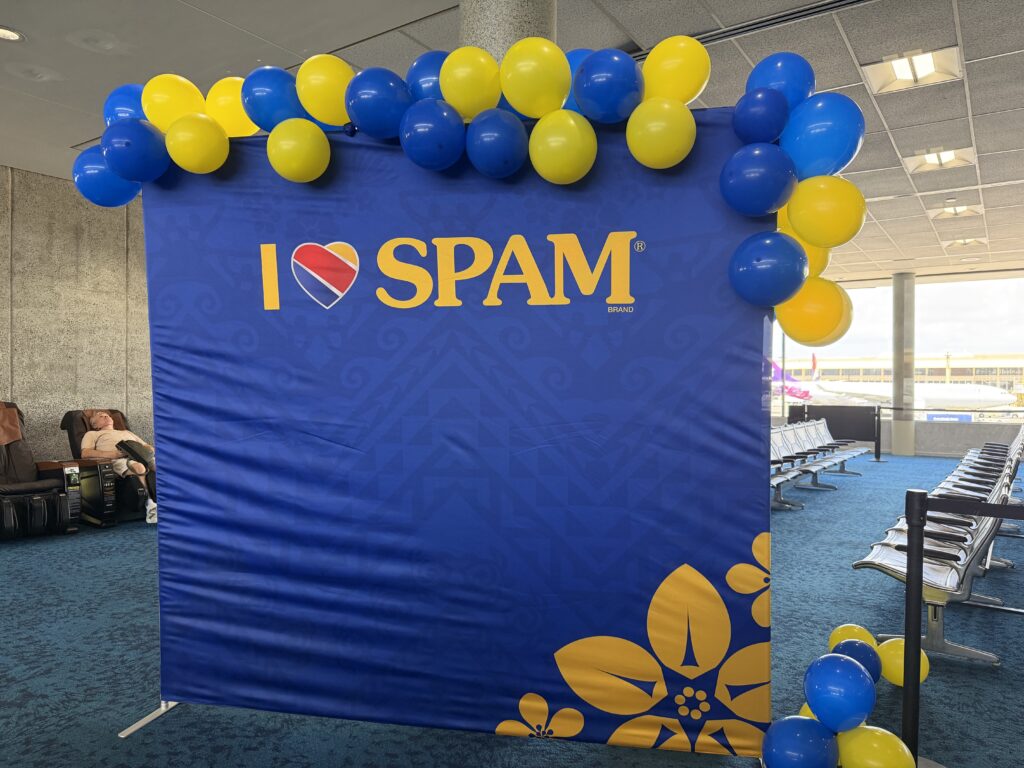
It Didn’t Start as a Trend — It Started as Survival
Spam’s deep roots in Hawaii go back to World War II. After the attack on Pearl Harbor in 1941, Hawaii was placed under martial law. Food imports became uncertain, rationing was strict, and much of the local fishing fleet was grounded.
Fresh meat was hard to come by. Shelf‑stable food mattered.
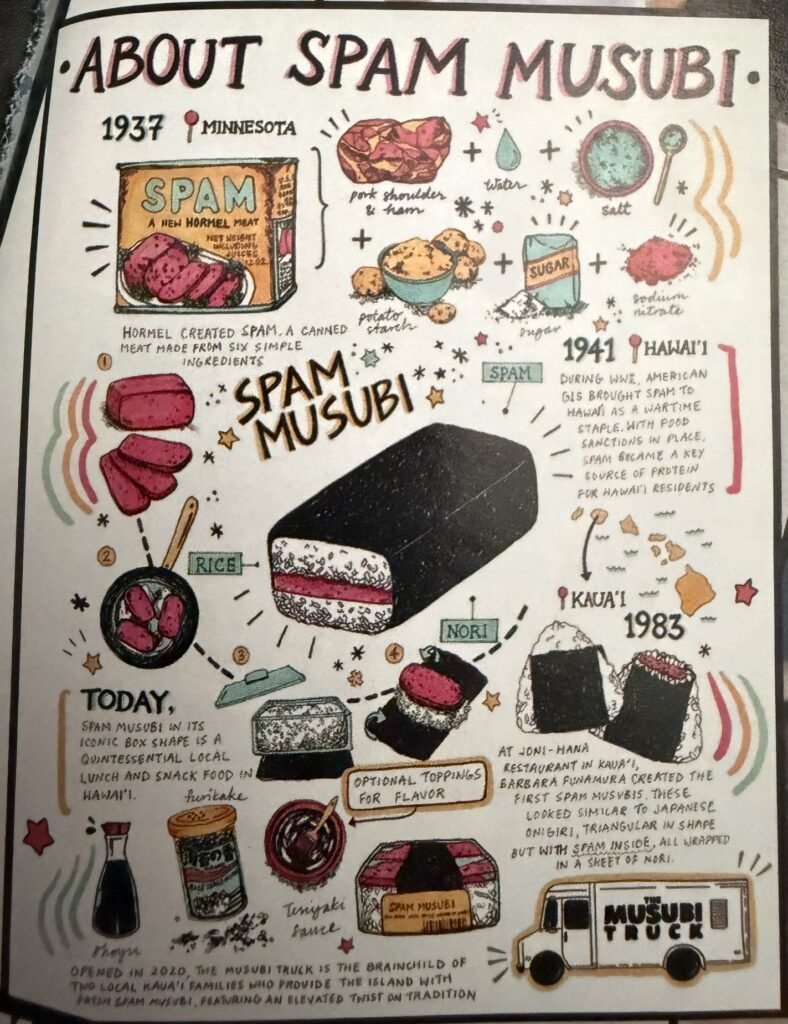
Spam — introduced in 1937 — was inexpensive, protein‑dense, didn’t need refrigeration, and could be shipped in massive quantities. The U.S. military brought it to Hawaii to feed troops, and locals relied on it too during years of scarcity.
And when the war ended, Spam was so intimately woven into their daily life that it continues to be a staple, even today.
Hawaii Eats More Spam Than Anywhere Else in the U.S.
Today, Hawaii consumes about 7 million cans of Spam every year, more than any other U.S. state.
You’ll see Spam piled high in grocery stores.
You’ll see it on breakfast plates next to eggs and rice.
You’ll even see it on local McDonald’s menus in Hawaii (something you won’t find on the mainland).
In other words: this isn’t novelty food, It’s their normal food.
Spam Became Local Because People Made It Local
What made Spam stick around wasn’t just availability — it was creativity.
Local cooks didn’t treat Spam as a last resort. They treated it like a star ingredient. They sliced it thin, fried it crisp, glazed it with soy sauce and sugar, chopped it into fried rice, tucked it next to noodles, and served it the same way they served anything else: with rice.
Spam fit seamlessly into Hawaii’s multicultural food landscape, shaped by Japanese, Chinese, Filipino, Portuguese, and Native Hawaiian influences.
It adapted — and Hawaii claimed it.
Spam shows up in childhood breakfasts, meals cooked by grandparents, late‑night snacks, and moments when “fancy” food wasn’t the point.
For many families, Spam isn’t heritage cuisine — it’s everyday life. It’s home.
Spam Musubi: The Island Icon
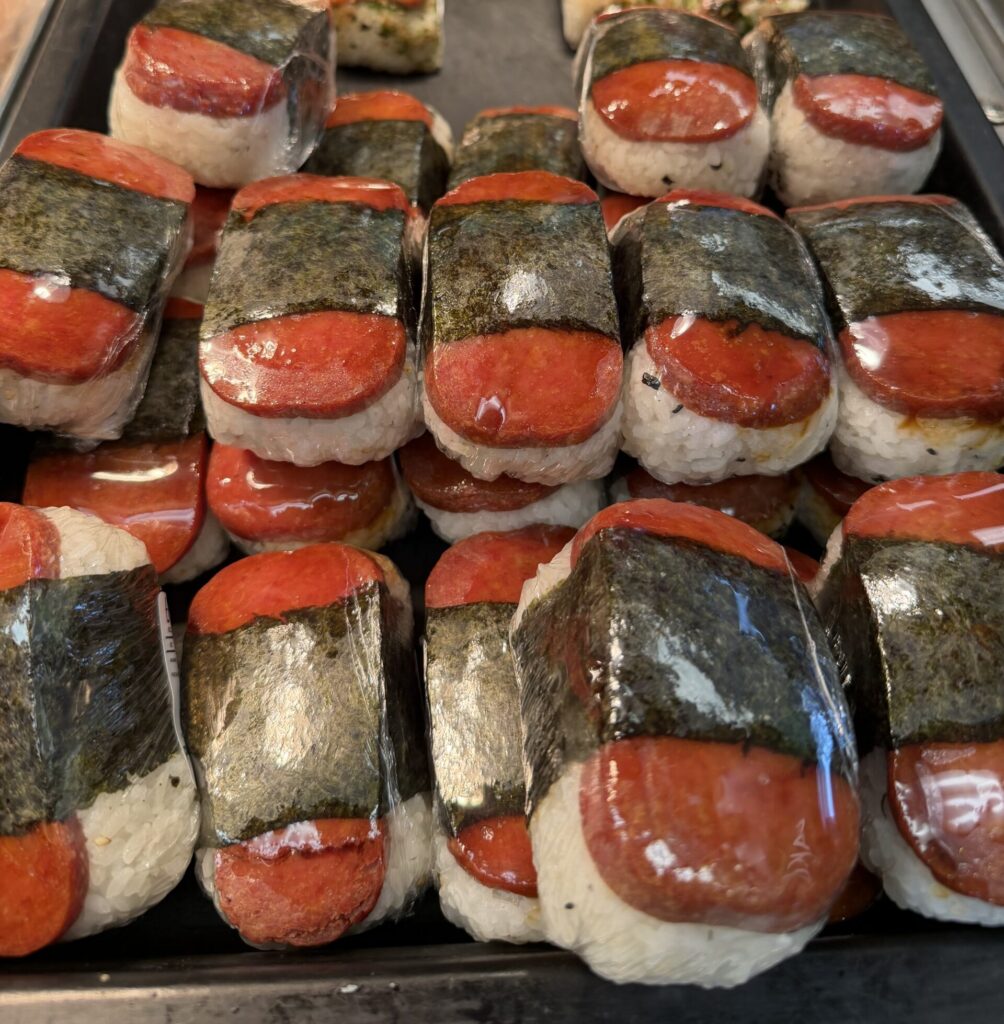
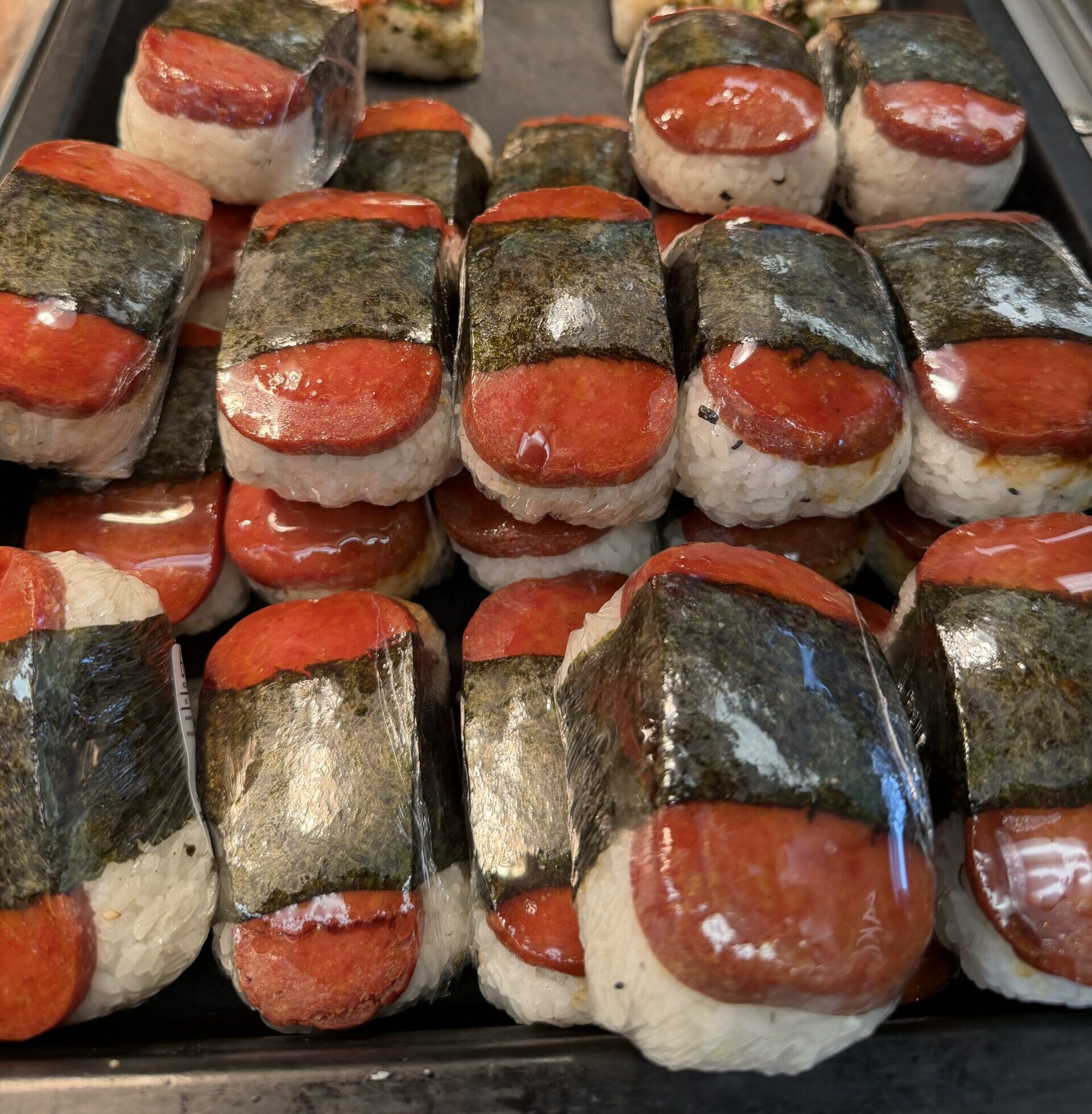
Spam musubi is really the signature dish of Hawaii.
A slice of fried Spam rests on a block of rice, often wrapped with a strip of nori. It’s simple, salty, satisfying — and sold everywhere.
Spam musubi is widely credited to Barbara Funamura, a Japanese‑American woman in Hawaii who adapted rice snacks using accessible ingredients. Over time, Spam musubi became the island’s go‑to grab‑and‑go food: sold at convenience stores, grocery counters, school fundraisers, and beach days.
Think of it as Hawaii’s answer to a sandwich — compact, comforting, and deeply familiar.
Yes, There’s Even a Festival

Proof that Spam in Hawaii is embraced: Waikīkī Spam Jam.
Every year, tens of thousands of people gather to celebrate Spam through creative dishes from local restaurants — from classic musubi to inventive, over‑the‑top creations.
When a food gets its own street festival, it’s clearly earned its place.
Note: We’re sharing stories, not selling products. Around the World in 80 Cards is not affiliated with or paid by any brands mentioned in this post.
Read more of Mimi’s Posts about Hawaii:

🖋️Writer Spotlight: Mimi
🇺🇸 Hawaii (April 2026 Postcard)

🇺🇸🌺 A day in Maui: Road to Hāna
🇺🇸🌺Spam, Rice, Repeat: Why Hawaii Loves Spam!

🇺🇸🌺Chickens, Chickens Everywhere 🐔😲

🇺🇸🌺Waimea Canyon: Where Kauaʻi Shows Its True Colors
🇺🇸🌺The Hula Lesson and the Quiet Wound Beneath Hawaiʻi’s Beauty