Friendly warning to readers: This one is a true deep dive – This conversation goes deeper than most posts on this blog. We touch on Hawaiian language, spirituality, cultural history, and belief systems that are often simplified or misunderstood. Take your time with this one…
Introduction
Before jumping in, I want to introduce the man behind today’s conversation.
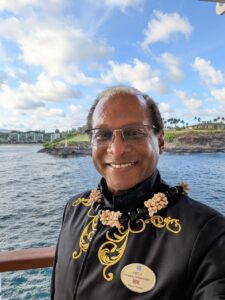
Percell St Thomass, known by his Hawaiian name Anela Uhane ‘Ailanamoku, is a Hawaiian culture expert, teacher, and author of “The ‘Real’ Ho’ oponopono: A Step-by-Step Guide to A Better Life”. Anela is hapa – half Hawaiian – and has spent decades immersed in the study and lived practice of Hawaiian spirituality.
His primary teacher was Priestess Malia Craver (1927–2009), a deeply respected Hawaiian elder, educator, and expert in ho‘oponopono. Malia Craver was widely known for preserving traditional teachings at a time when much of Hawaiian spirituality had been banned, suppressed, or diluted. Under her guidance, Anela learned ho‘oponopono that he repeatedly emphasizes is unchanged, culturally grounded, and not adapted for trends or mass appeal.
We were very fortunate to be able to sit down with him for an interview to explore together what ho‘oponopono actually is, why so much of what we see online is misleading, and how Hawaiian spirituality frames concepts like breath, repentance, forgiveness, and gratitude in ways that are very different from Western interpretations.
Interview Transcript (Mimi x Anela)
Mimi: Anela, thank you for sitting down with me. I really appreciate your time today to share with myself and our members some basics of Hawaiian culture and sprituality.
I want to begin very simply. People see the word ho‘oponopono everywhere now. From your perspective, what is being misunderstood?
Anela: Almost everything.
And I don’t say that to be dramatic – I say it because ho‘oponopono isn’t a slogan. It isn’t a chant someone invented to feel better for five minutes. Ho‘oponopono is a system – a way of correcting imbalance in life by restoring connection.
The mistake happens when people pull pieces out of a spiritual practice without understanding the culture, the language, or the worldview underneath it. You can’t do that and expect to get the same results.
1) Why Translation Isn’t Enough
Mimi: People tend to say, “Well, it just means forgiveness,” or “It just means making things right.” Why is language such a big deal here?
Anela: Because Hawaiian isn’t English with different sounds. It’s a conceptual language.
If you don’t understand the language, you don’t understand the culture. And if you don’t understand the culture, you don’t understand the spirituality. And if you don’t understand the spirituality, you’re just repeating sounds.
Let’s take the word itself: ho‘oponopono.
In Hawaiian, ho‘o is a causative prefix — it turns a noun into action. Like, it makes something happen.
And pono is goodness, righteousness, a true condition or nature — completely, exactly, carefully, satisfactorily. So ho‘oponopono is: “to make completely true and right.”
Now do you see why “say sorry” doesn’t cover it?
Mimi: So it’s deeper than a translation – it’s a worldview.
Anela: Exactly. You can’t just translate languages. You have to understand what’s behind the words.
2) The foundation: Hā (Breath-of-Life) – “Everything in our culture is based on Hā.”
Mimi: You often say everything in Hawaiian culture begins with Hā. Can you explain that?
Anela: Everything begins with Hā because everything begins with life.
And some of you think you know this because you’ve heard people say “breath of God,” “breath of life,” whatever.
But Hawaiians make a distinction.
The breath of life — what wakes you up in the morning, what birthed you in the first place — that’s different than what you breathe every day. The everyday breath, that’s mana. But Hā is the breath-of-life.
So when you hear all these words — aloha, mahalo — people translate them like they’re greeting cards. But they’re not.
Mimi: I loved the way you said it in your talk earlier — that aloha isn’t even just a word.
Anela: Right. And people get mad when I say this, but it’s true: “Aloha is not a word. It’s a sentence.”
People say aloha is hello, goodbye, I love you — all this stuff. Well, it is, and it’s not.
When we say aloha, we’re not just saying “hi.” We’re saying: “Come share the breath of life.”
And when someone leaves and you say aloha, you’re not saying “bye.” You’re saying something like: “May the breath of God go with you.”
That’s why it matters.
Mimi: And you said mahalo is misunderstood too.
Anela: Oh, all the time.
Everybody says mahalo is “thank you.” And I’m like — not really.
Because when we say mahalo, we’re not saying “thanks for the thing.”
We’re saying: “I am grateful for the sharing of your Hā.”
Maybe you gave me something. Maybe you did something for me. Whatever. That’s not what I’m grateful for. I’m grateful that you are the kind of person — the kind of Hā — that would want to do that.
And this is the point:
“Everything in our culture is based on Hā. Everything.”
3) The “internet ho‘oponopono” problem — where the four phrases came from (and why it’s incomplete)
Mimi: Let’s address the version people see online. The four phrases. Where did that come from?
Anela: This is where it gets messy.
You’ve got the modern self-help world. “Manifestation.” “Law of attraction.” All that.
Anybody familiar with The Secret? Rhonda Byrne?
The idea is: want something hard enough, think about it hard enough, you’ll manifest it.
And I’m gonna be blunt:
“That’s nonsense.”
Now – she was on the right track. But she left out important parts.
Then you have the talking heads in that movie. One of them was Joe Vitale — Hollywood self-help writer guy. And I’ve said it before and I’ll say it again:
“Who’s this knucklehead on the web?”
So he comes to Hawai‘i, meets Dr. Hew Len, and he learns a version of ho‘oponopono that was already a modified version — tweaked to be more palatable to modern audiences.
And Hawaiians were like: don’t mess with the spirituality. Leave it alone. It is what it is.
But when they took it out into the world, the question became: “What are the main principles?”
And what did people end up with online?
“I love you. I’m sorry. Forgive me. Thank you.”
And here’s my problem:
“You cannot just translate languages!”
Because those phrases are not the principles as taught traditionally in the lineage I was taught in.
4) The Four Principles (NOT the four internet phrases)
Mimi: This feels like the right moment. What are the four principles, as you teach them?
Anela: The principles are:
- I am of The Hā
- I am of Repentance
- I am of Forgiveness
- I am of Gratitude
And yes — the confusion causes real harm. Because people think they’re doing ho‘oponopono, and they’re not even starting at the foundation.
Mimi: Ok, I know you are going to kill me… but those 4 principles sound almost the same as the internet ones… please help me understand the difference
Anela: (looks at me noticeably agitated and a bit upset 😬)
Principle 1: “I am of The Hā” (not “I love you”)
Mimi: You’ve explained this one a bit already, but why must “I am of the Hā” come first?
Anela: Because if you don’t remember who you are, nothing else works.
And this is where the internet version really breaks down. Online, you’ll see the first principle translated as “I love you.” And that’s not the same thing – not even close.
In fact, when I first saw that, I called Joe Vitale myself. I said, “What the hell is this?”
And he told me, “Well, you don’t understand. God is love. We’re supposed to love one another.”
And I said, “This is exactly the problem. You can’t just translate languages.”
Because if I say to you, “I love you,” what do you think?
You don’t think, “Oh, we’re all from the same breath of God.” You think I’m hitting on you.
But “I am of the Hā” isn’t emotional language. It’s identity.
It’s saying: I come from the breath of life. We all come from the same source.
In Hawaiian spirituality, separation is the illusion. Disconnection is what causes wrong. And ho‘oponopono begins by undoing that illusion—not by throwing around words that feel nice in English, but by remembering what we actually are.
Principle 2: “I am of Repentance” (not “I’m sorry”)
Mimi: Repentance is a loaded word for many people. When most of us hear it, we think guilt, shame, or punishment. What does repentance actually mean in Hawaiian spirituality?
Anela: Yeah – and that right there is part of the problem.
Repentance does not mean groveling.
It does not mean self-hatred.
And it definitely does not mean, “Oh, I did something bad and now I have to feel terrible about myself.”
On the web, they translate this principle as “I’m sorry.”
It’s not the same thing.
“I’m sorry” means you did something wrong and you wish you hadn’t. Okay?
But “I am of repentance” in Hawaiian spirituality means something very different.
If I do something wrong, it was out of my naturally created nature to do that.
Because my naturally created nature was what? One of those three triangles, right?
(Sorry, Anela is referring to the trinity that he discussed in his talk before this interview. Don’t worry, I’m going to ask him to walk us through this concept later in the interview. )
Those are the three creations.
This white one in the middle – that’s not where I was supposed to be.
So if I did something wrong, it came from something that was not supposed to be me.
So when I say, “I am of repentance,” what I’m saying is:
Take this away.
Clean it.
Make it right.
Not, “Oh, sorry, I did that, dude.”
Principle 3: “I am of Forgiveness” (not “forgive me”)
Mimi: Principle three is “I am of forgiveness.” On the internet, it’s usually translated as “forgive me.” At first glance, that sounds close. But you’ve said it’s not the same thing.
Anela: No. It’s really not the same thing at all.
And this is another place where Hawaiian spirituality completely challenges Western thinking.
On the web, it says “forgive me.”
That sounds nice. That sounds polite.
But it misses the point.
In Hawaiian belief, forgiveness is not something I ask you for.
It’s something I do inside myself.
Mimi: That’s the part that surprises people.
Anela: It surprises people because we’ve been taught that forgiveness is moral. That it’s social. That it’s something you give to someone else as a kind of favor.
That’s not how this works.
Let me ask you something.
Has someone ever done something to you that really pissed you off?
I mean really. Something that just… made you angry?
Mimi: (laughs) Yes.
Anela: Okay. So who’s angry?
You are.
Where does that anger live?
Inside you.
That person may have done something — absolutely.
But the anger? The resentment? The bitterness?
That’s not living in them. That’s living in you.
So when Hawaiians talk about forgiveness, they’re not talking about letting someone else off the hook.
They’re talking about not poisoning yourself.
Principle 4: “I am of Gratitude” (not “Thank You”)
Mimi: And gratitude?
Anela: This one might actually be the most misunderstood of all of them.
On the internet, it gets reduced to one word: thank you.
And again – it sounds right. It sounds polite. It sounds spiritual.
But that’s not what this principle is talking about.
In Hawaiian spirituality, gratitude is not manners. It’s not politeness. And it’s not something you do because things turned out the way you wanted.
Gratitude is a state of alignment.
People hear mahalo and think it simply means “thank you.” But mahalo was never just about appreciation for an object or an outcome. It’s gratitude for the sharing of Hā – the breath-of-life itself.
When Hawaiians say mahalo, they’re not saying, “Thanks for what you gave me.”
They’re saying, “I recognize the life-force that moved through you in this moment.”
That’s very different.
Gratitude, in this context, is not emotional. It’s not conditional. And it’s not dependent on whether the experience felt good. It’s an acknowledgment that life moved – through people, through events, through correction – and that movement itself deserves recognition.
That’s why gratitude comes at the end of ho‘oponopono.
After repentance removes what doesn’t belong, and forgiveness releases what would keep poisoning you, gratitude restores alignment with life itself. It prevents you from hardening. It keeps you connected to the breath that carried you through the experience – whether you liked it or not.
Gratitude does not mean approval.
It does not mean bypassing pain.
It does not mean pretending everything was wonderful.
It means you recognize that the breath-of-life was still present, still moving, still correcting.
In Hawaiian understanding, rejecting that movement – especially when it challenged you – is another form of disconnection. Gratitude keeps that from happening.
So “I am of gratitude” isn’t about saying thank you out loud.
It’s about choosing not to reject life.
It’s about remaining aligned with Hā, even when the breath came through discomfort instead of ease.
That’s gratitude.
5) Lōkahi: the triangles, the three worlds, and “where wrong comes from”
Mimi: I want to go back to the part about the triangles and the trinity. You explained it during your talk, but could you recap again for the readers of this interview?

(often seen in Hawiian Tatoos)
Anela: Sure. And this part matters, because this is where a lot of misunderstanding started – historically.
When the missionaries came to Hawaiʻi in the early 1800s, they didn’t arrive to a people without spirituality. That’s one of the biggest misconceptions. Hawaiians already had a highly developed spiritual system, one that governed daily life, relationships, health, and balance. Religion and culture weren’t separate – they were the same thing.
So when the missionaries arrived with the Christian Trinity – God the Father, God the Son, God the Holy Spirit – they presented it as something entirely new. And Hawaiians looked at it and said, “We already have that.”
That did not go over well.
Mimi: Oh boy!
Anela: Yes – we had a trinity, but not in the way the missionaries framed it.
In the Hawaiian understanding I was taught, there are three primary divine aspects:
- E Akua Lēhova — God the Father
- Iesu — God the Embodiment, the lived expression
- E Akua Uhane — God the Spirit
Each of these is whole. Each is complete. None of them depends on the others in order to be God. They are God – each with a different function. That’s why they’re represented as three separate triangles, each one fully darkened in. Finished.
The shape matters. A triangle is the strongest structure there is – but only when all sides are intact.
Now, when these three are placed into relationship – when they exist in unity – you don’t just get three points. You get a whole system.
And that’s when the fourth triangle appears.
“Wrong happens. Where does it come from?”
Mimi: And that’s where your “wrong happens” question comes in.
Anela: Exactly.
Can God the Father be wrong? No.
Can God the Embodiment be wrong? No.
Can God the Spirit be wrong? No.
So wrong happens.
Where does it come from?
The missionaries said, “the devil.”
And Hawaiians were like – no. That’s nonsense.
God created the devil and what God creates can’t be wrong. So wrong isn’t a created “thing.” Wrong is a result.
It comes from God the Man — from imbalance, from misalignment, from forgetting who and what we are.
6) Impact on History
Mimi: How did this difference in worldview affect what happened next?
Anela: It affected everything.
The missionaries didn’t just bring religion – they brought rules about what was acceptable, what was sinful, what was civilized. Over time, Hawaiian spiritual practices were banned. The language was restricted. Hula was outlawed. Teaching the old ways became punishable. Teaching the old ways became dangerous. So a lot of this knowledge went underground—passed quietly in families, by elders, behind closed doors.
The missionary worldview was about sin, guilt, obedience, fear of punishment.
The Hawaiian worldview was about balance, alignment, and restoration.
And as I said before, when you remove the language, you remove the framework.
That’s how you end up centuries later with people repeating four English phrases, thinking they’re doing ho‘oponopono.
They don’t know what problem the system was designed to solve in the first place.
Mimi: So when you talk about the triangles today, you’re not just explaining theology – you’re actually restoring historical and cultural – context.
Anela: Exactly.
The triangles explain where responsibility lives.
They explain why ho‘oponopono is about correction, not punishment.
They explain why you don’t look outward for someone to blame—you look inward for where balance was lost.
The middle triangle—the human experience—that’s where work happens.
And that’s not a flaw.
That’s the design.
7) Kuleana: privilege + right + responsibility (two-way care)
Mimi: And then there’s Kuleana — which, honestly, might be my favorite part because it ties everything together.
Anela: Kuleana ties everything together because it’s relationship.
This is another word that got flattened in translation. People translate kuleana as “duty, obligation, responsibility.” That’s only half.
Kuleana also means privilege. It means right.
In Hawaiian thinking, if you have the privilege to exist within something – within a family, a relationship, a land, a system – you also have the responsibility to care for it.
Those two things come together. Always.
Kuleana is not punishment.
It’s not someone telling you what you owe.
It’s the understanding that if you are part of the whole, you participate in maintaining the balance of that whole.
8) Prosperity and health: the natural state of balance
Mimi: You talk about prosperity and health as outcomes of balance. Can you connect that to everything we’ve covered?
Anela: Remember what we said: the Father, the Embodiment, the Spirit – those three triangles – they’re whole. Complete. Darkened in.
And then you have the center triangle. The human.
Each part is whole, yes.
But none of them exists in isolation.
So each part has kuleana to the others.
The human has kuleana to remain aligned with Source.
The spiritual has kuleana to remain present, not abstract.
The embodied world has kuleana to remain in balance with life.
If any one part stops holding up its end – if it stops caring for the others – all suffer equally.
Not just the human.
Not just the spiritual.
The entire system destabilizes.
Kuleana is the glue.
It’s what keeps Lōkahi—unity, balance, harmony—from being just a nice idea.
You don’t get unity just by believing in it.
You don’t get harmony by wishing for it.
You get it by participating in it.
Mimi: How does ho‘oponopono fit into this?
Anela: Ho‘oponopono is what you do when kuleana has been neglected.
It’s the process of restoring right relationship – within yourself, between people, within the larger system you’re part of.
Ho‘oponopono doesn’t erase kuleana.
It reinforces it.
It says: I recognize my place in the whole, and I’m willing to correct what went out of balance.
Closing
Mimi: As we come to the end of this conversation, it feels like we’ve covered a lot – language, history, spirituality, responsibility. If there’s one thing you’d want readers to sit with after reading all of this, what would it be?
Anela: I’d say this – ho‘oponopono isn’t something you use.
It’s not a tool. It’s not a mantra. It’s not four words you repeat until you feel better.
It’s something you become.
It’s a way of living in right relationship – with yourself, with other people, with the world you’re part of. And that takes effort. It takes honesty. It takes willingness to look at where balance was lost and do the work to restore it.
If someone walks away remembering one thing, I hope it’s that this tradition isn’t about shortcuts. It’s about alignment.
Mimi: Thank you, Anela. Truly.
Mimi’s Closing Note
This conversation challenged me – not because it was confusing, but because it reminded me how easily we mistake translation for understanding.
So often, when we encounter another culture, we reach for familiar words and try to map them onto our own worldview. We translate meanings into English and assume that, somehow, the essence comes along for free. Listening to Anela, language carries worldview. And when we translate words without translating the way a culture understands life, responsibility, connection, and imbalance, things get lost—or reshaped into something they were never meant to be.
It becomes easy to see how mistranslations happen. Not out of bad intent, but out of habit. We interpret new ideas through the lens of what we already know, instead of pausing to ask how another culture knows what it knows.
On this blog, we try our best to approach other cultures with respect – to listen before labeling, and to learn before simplifying. That said, this conversation was a reminder that respect doesn’t mean perfection. Even the act of translating these ideas into English carries risk. Here at Around the World in 80 cards, we do our best to offer care, humility, we are the first to admit our understanding is woefully incomplete and will never be complete. But we strive to respect and to improve every day.
I’m grateful for that reminder- and for the invitation to slow down, breathe, and try again.
Editor’s Note:
The reflections and interpretations shared in this interview reflect Anela Uhane ʻAilanamoku’s teachings and lived perspective, shaped by his lineage, training, and experience within Hawaiian spirituality. As with many Indigenous knowledge systems, there are diverse traditions, histories, and interpretations. This conversation is offered as one knowledgeable voice within that living tradition, shared here in his own words.