
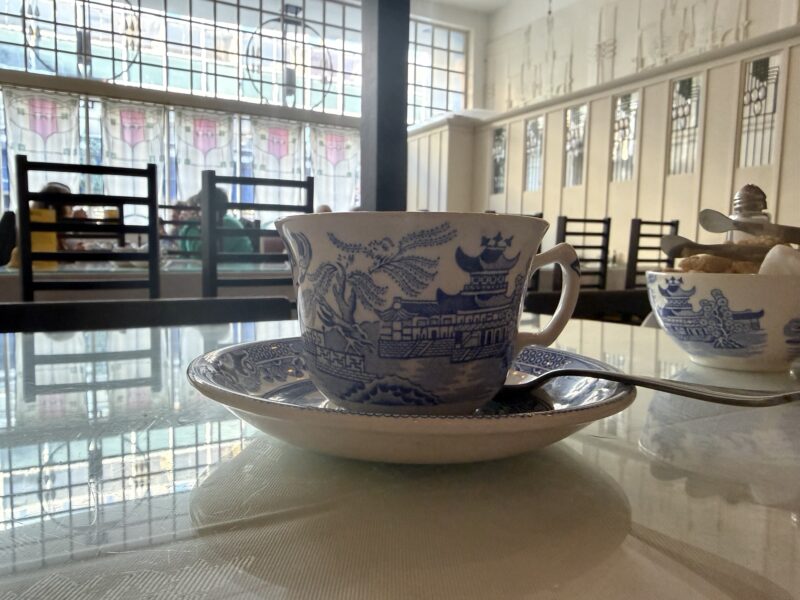
If you had asked me about “Mackintosh,” I probably would have assumed you were talking about an Apple computer or the fruit.
It turns out that in Glasgow, Mackintosh is an absolute design icon.
To experience Mackintosh, I headed to Glasgow’s famous Willow Tea Rooms — originally brought to life by the city’s legendary architect, Charles Rennie Mackintosh, alongside his brilliant artist wife, Margaret Macdonald.
Who Was Charles Rennie Mackintosh? (And Why Should You Care?)
Around the turn of the 20th century, Charles Rennie Mackintosh became Scotland’s answer to Art Nouveau. Together with his wife, Margaret Macdonald, he pioneered the “Glasgow Style” – an aesthetic masterclass blending sleek geometry, dramatic high-backed furniture, delicate stained glass, and stylized floral motifs.
And who financed a lot of his most visionary work? An eccentric and savvy Glasgow businesswoman named Miss Kate Cranston.
The Temperance Twist: Tea as a Social Revolution
Back in late 19th-century Glasgow, the city had a rowdy, industrial reputation, largely fueled by heavy drinking in local pubs. Miss Kate Cranston was a staunch supporter of the Temperance Movement, which aimed to curb alcohol consumption, but her real genius was making tea rooms inclusive for everyone.
At the time, respectable women had almost no public places to meet without a male chaperone, and social classes rarely mixed. Miss Cranston changed all that. She hired Mackintosh to design multi-level tearooms with distinct spaces for every slice of society: elegant salons for ladies, billiard rooms for businessmen, and affordable front rooms for working-class Glaswegians. Everyone entered through the same doors, enjoyed Mackintosh’s stunning designs, and experienced equal, high-quality service – no alcohol required.
Wait, Am I in the Right Place?
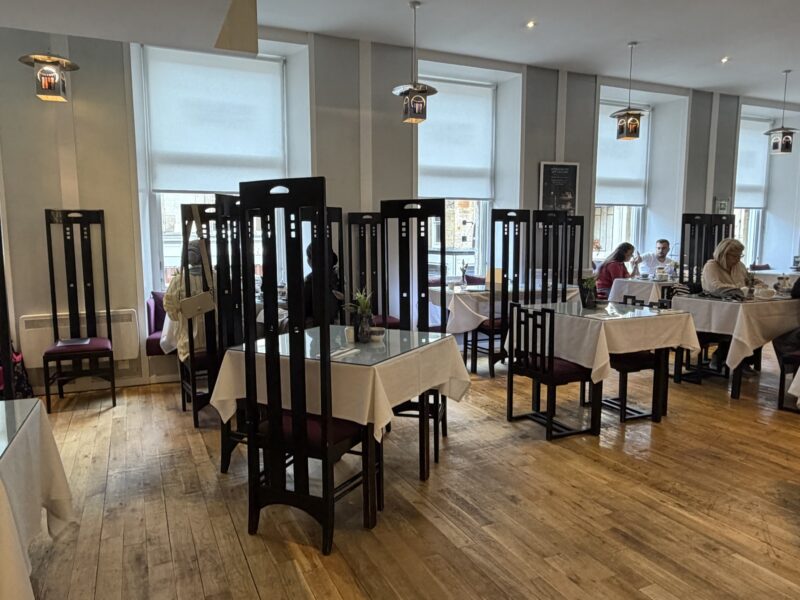
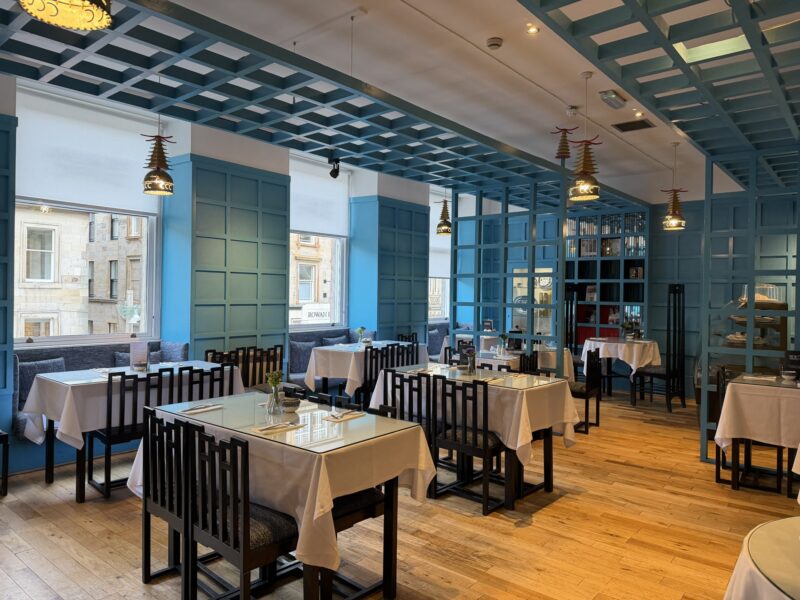
When I arrived, something felt off. It certainly looked like Mackintosh with the high-backed chairs, the clean lines, and the delicate lampshades. But it lacked the stylized floral motifs that I associated with Art Nouveau. I pulled out my phone to compare with the photos online. Some of the photos online looked the same, but others looked completely different. I knew they had just done a multi-million-dollar restoration, but did they remove the stained-glass panels and gesso friezes, or was I at the wrong place altogether?
It turns out my confusion was completely justified, thanks to a high-profile trademark dispute!
Back in 1983, entrepreneur Anne Mulhern re-established The Willow Tea Rooms in the original 217 Sauchiehall Street building, leasing the upper floor and reviving Mackintosh’s vision. However, by 2014, the historic Sauchiehall Street building was suffering from severe structural disrepair. Local campaigner Celia Sinclair formed The Willow Tea Rooms Trust to purchase the entire building and launch a monumental £10 million museum-grade restoration. Once the Trust acquired the property, Mulhern was forced to vacate her original location. Sinclair’s trust then attempted to cut Anne Mulhern out by registering a trademark on “The Willow Tea Rooms,” arguing the name belonged to the historic building itself.
Mulhern fought back legally to protect her business and the brand identity she had built over 30 years. The courts sided with Mulhern, ruling that she owned the trademark. The defeat forced the Trust to rebrand the original restored site as “Mackintosh at the Willow.”
Restoring a 120-year-old architectural masterpiece wasn’t cheap or easy. Following the financial strains of the pandemic, the Trust handed over the keys and full ownership of the building to The National Trust for Scotland, securing the historic site for the public forever.
Anne Mulhern moved the Willow Tea Rooms to a location on Buchanan Street, styled in Mackintosh’s aesthetic and featuring exact replicas of his iconic high-backed chairs.
Stepping Inside:
Walking through the ground floor of the original Sauchiehall Street building reveals Mackintosh’s genius for light, color, and proportion across two connected spaces.
The Front Room: Crisp, Bright, and Geometric
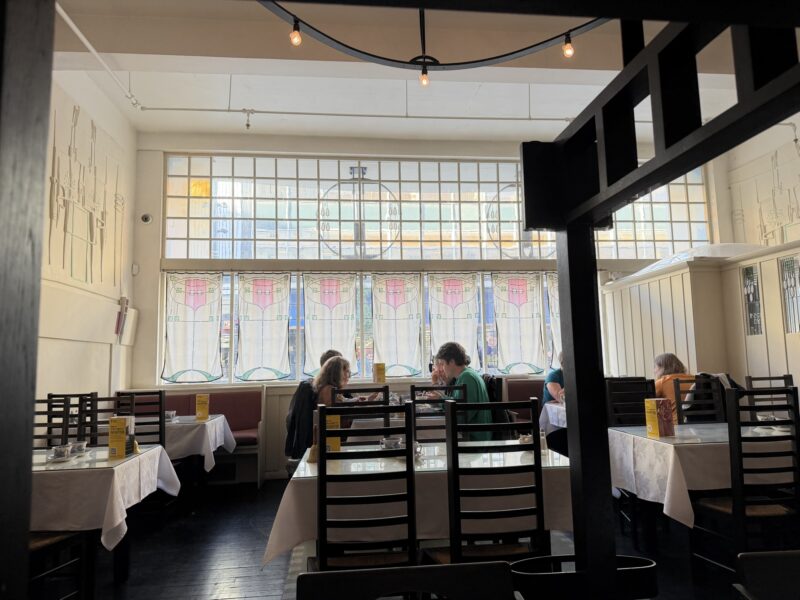
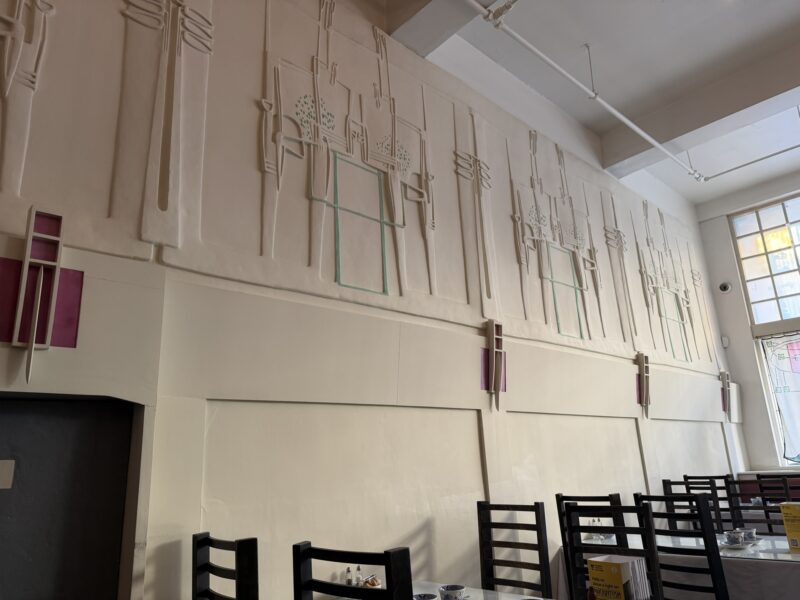
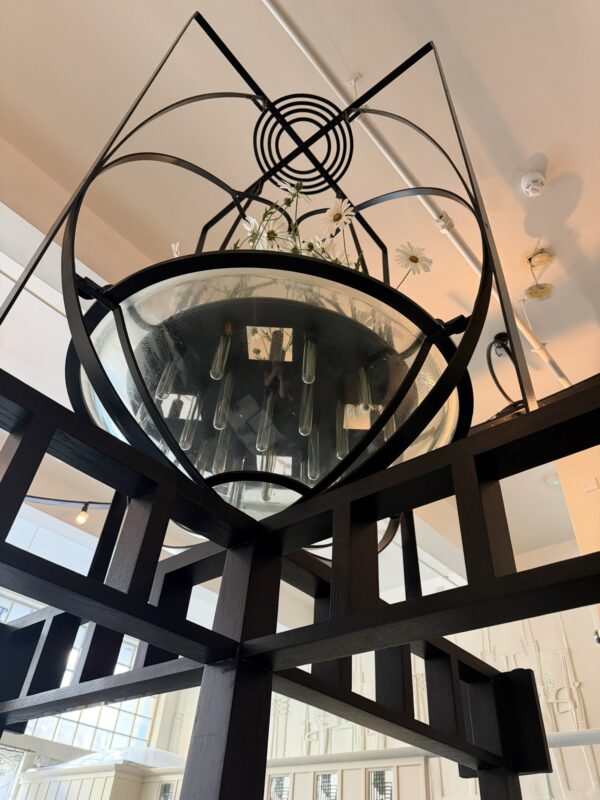
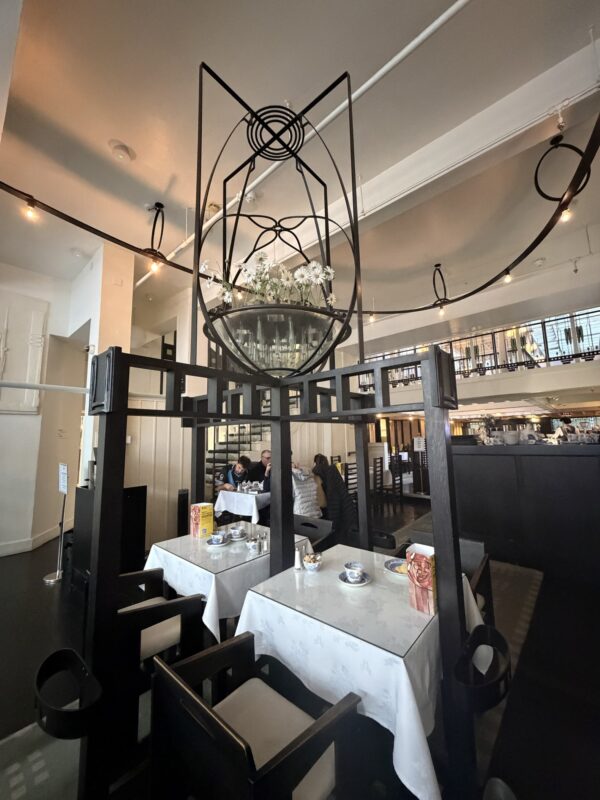
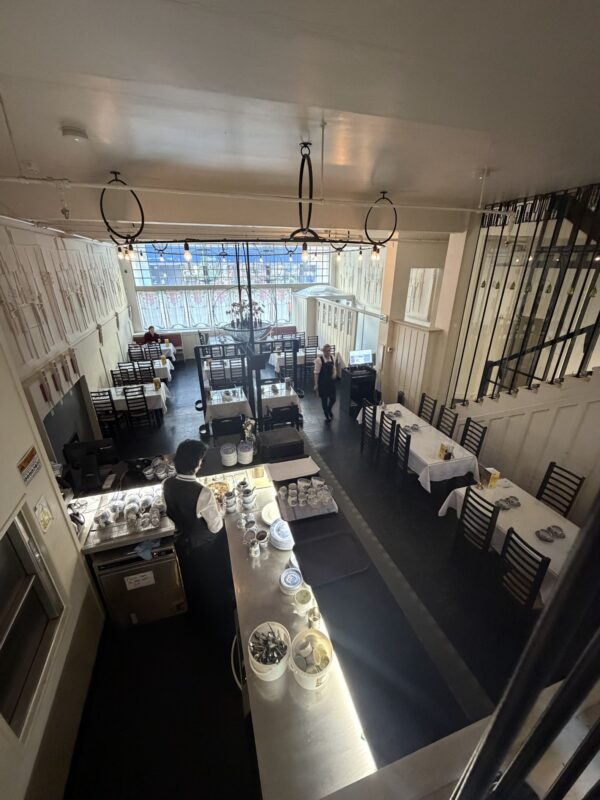
The Front Room greets you immediately with an airy, almost luminous feel. Pale walls, white napery, and delicate leaded glass windows frame the street outside, filtering soft light into the space. Instead of dark Victorian clutter, Mackintosh used clean, dark-stained wood chairs with low, square lattice backs that ground the light room. Subtle stencil motifs of stylised willow trees and soft pastel accents run along the walls, echoing the “Sauchiehall” street name – which literally translates from Gaelic as “alley of the willows.”
The Back Room: Warm, Gold, and Intimate
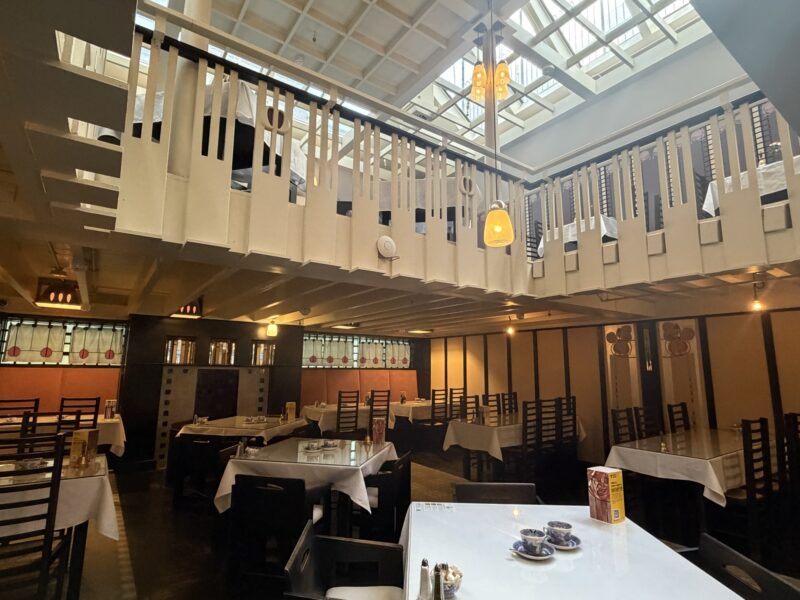
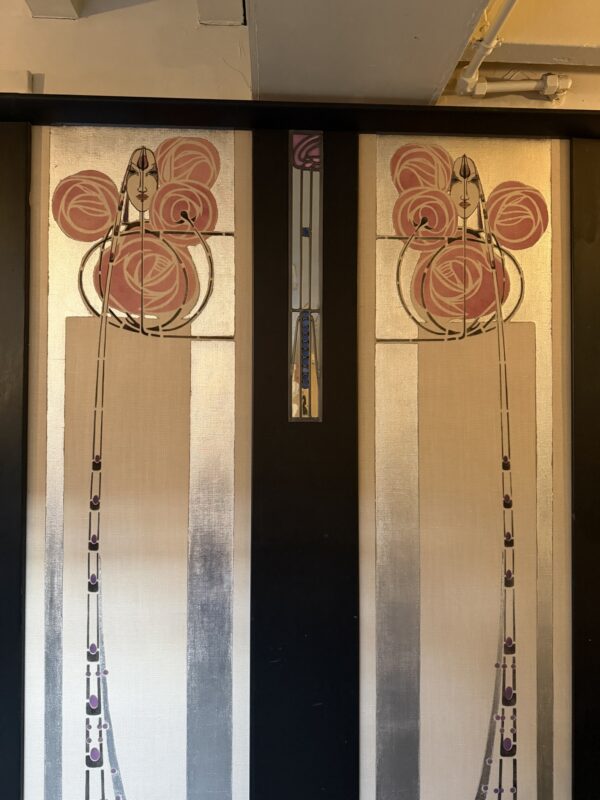
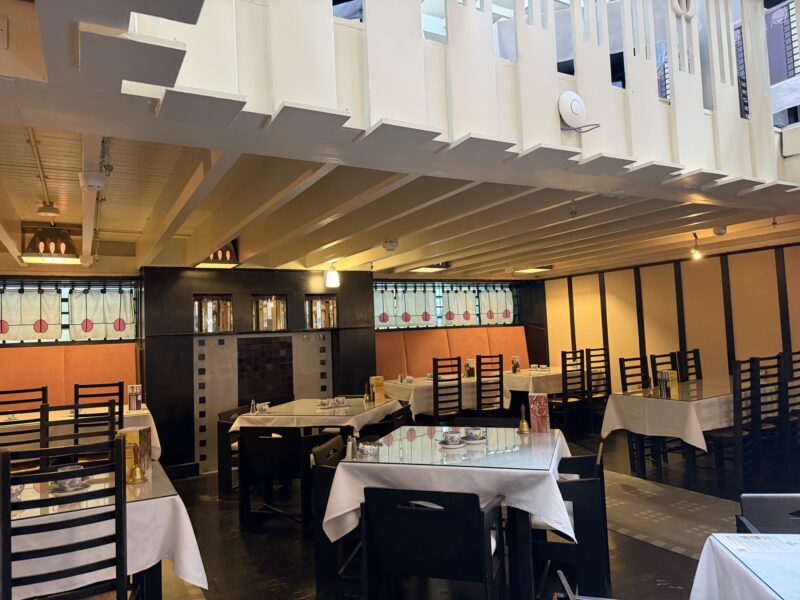
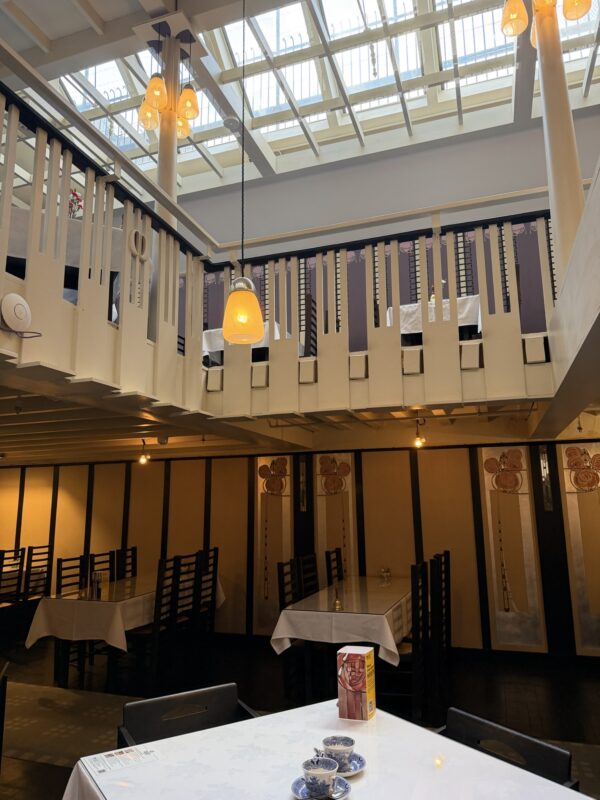
Passing through the partition behind the Front Room, the mood shifts instantly as you step into the lower ground-floor dining space beneath the gallery. Here, the crisp white palette gives way to rich, gilded gold-and-amber walls framed by dark timber. Tucked beneath the balcony overhang, the golden texture catches the soft glow of low-pendant lighting, creating an extraordinarily warm, intimate sanctuary that feels completely different from the bright room upfront.
The Gallery Tea Room: Drama and Depth
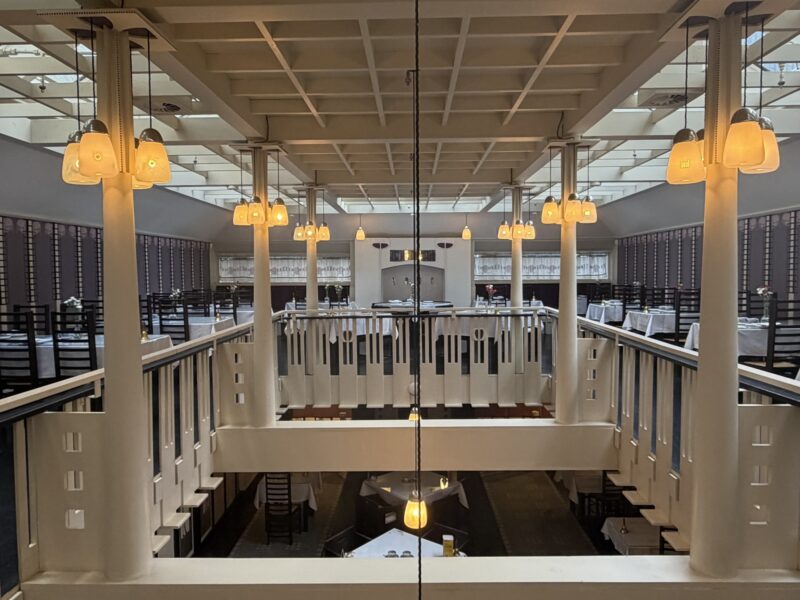
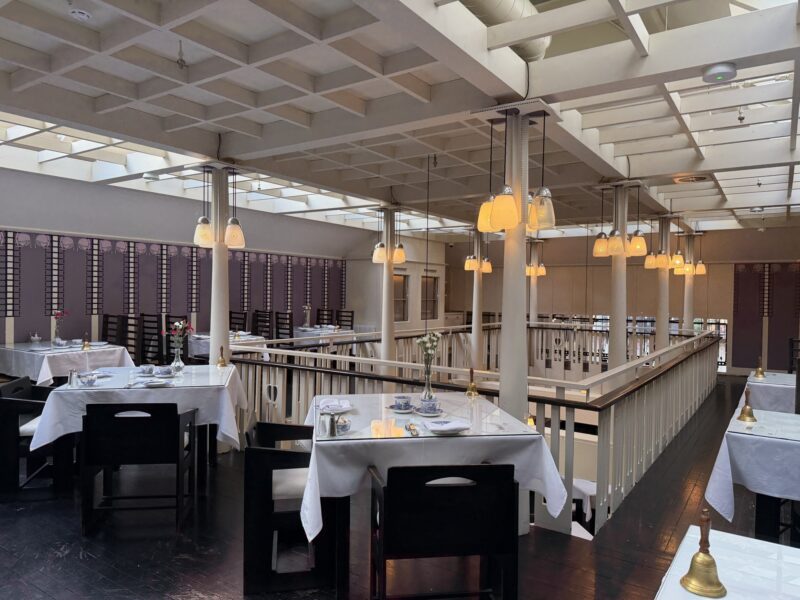
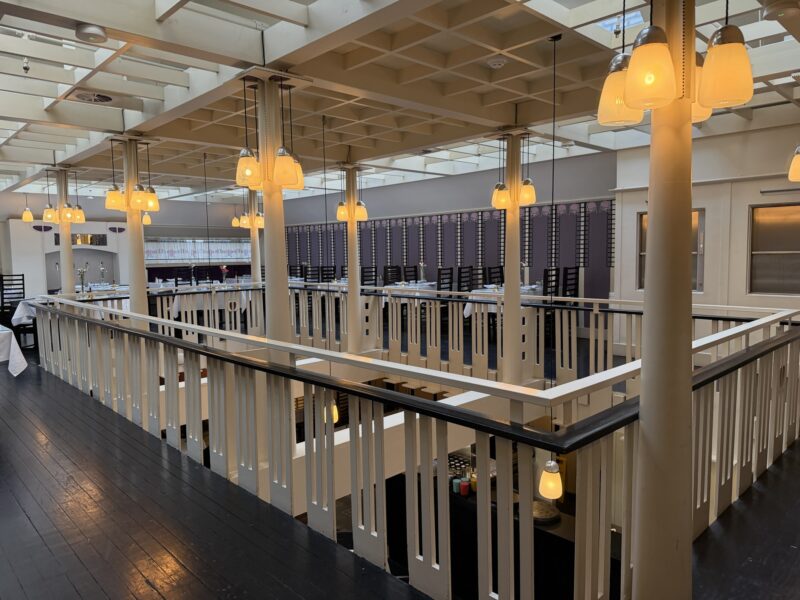
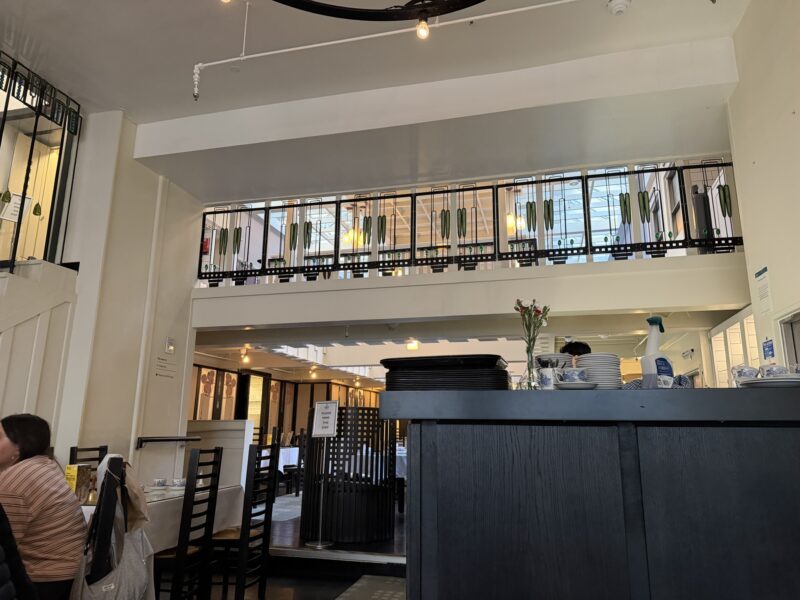
Looking up from the Back Room, the space opens up vertically into the dramatic, double-height Gallery Tea Room. Here, a timber balcony curves around the upper mezzanine like a ship’s deck, overlooking the gold-toned main hall below. Standing under the balcony, the atmosphere shifts completely:
- The Glazed Well: Sunlight pours down from a massive central light well in the ceiling, illuminating the tables in the center while leaving the side alcoves in cozy shadow.
- The Friezes and Railings: Slender balusters and vertical wood slats line the mezzanine balcony, creating rhythmic shadow patterns across the floor.
- The Palette: Rich dark wood timbers contrast against crisp white structural columns and delicate lavender-hued wall panels, making the entire space feel structured yet warm.
Sitting Down to Tea and Shortbread
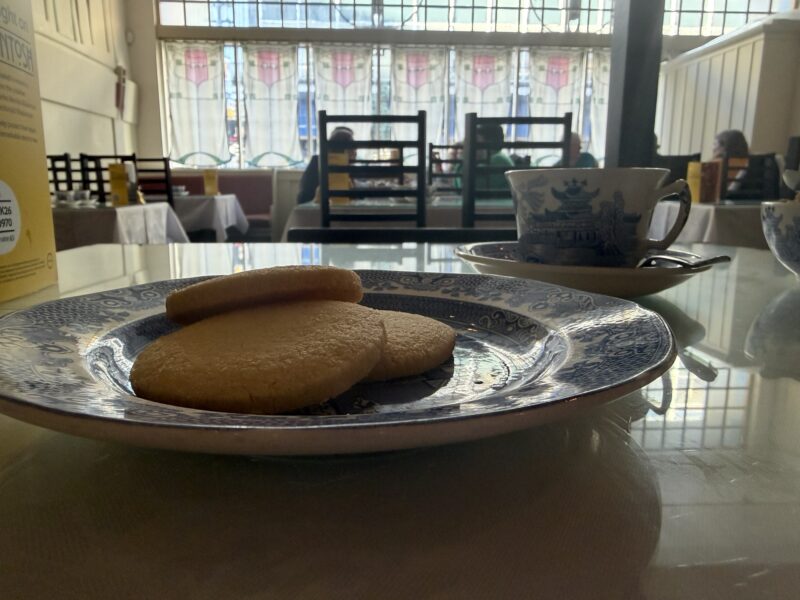
Once I settled in, I ordered some melt-in-your-mouth Scottish shortbread. Rich, buttery, and perfectly crumbly, it was the ultimate sweet treat to go with a nice cup of tea.
Glasgow is full of these wonderful surprises – a city known for its rugged industrial history, yet home to some of the most delicate, ground-breaking Art Nouveau architecture in the world.
If you ever find yourself wandering through Glasgow, do yourself a favor: skip the big commercial coffee chains. Walk into a Mackintosh tea room, order a pot of tea, and pretend for an hour that you’re a 1900s Glaswegian socialite helping revolutionize Scottish society one scone at a time.
*Disclaimer: This post is entirely based on my personal experience. I am not affiliated with, sponsored by, or endorsed by The Willow Tea Rooms, Mackintosh at the Willow, the Charles Rennie Mackintosh Society, or any organizations mentioned.*