When you first start exploring Glasgow, one thing becomes clear very quickly: the city’s history doesn’t sit neatly in a single preserved quarter. Instead, it exists in layered contrasts stacked directly on top of each other.
In a single afternoon walk through the city center, you can step from a 19th-century civic square lined with Italianate marble into quiet sandstone streets, then walk right into a medieval stone house built in 1460 and an 800-year-old Gothic cathedral crypt.
Stop 1: The Duke and His Cone
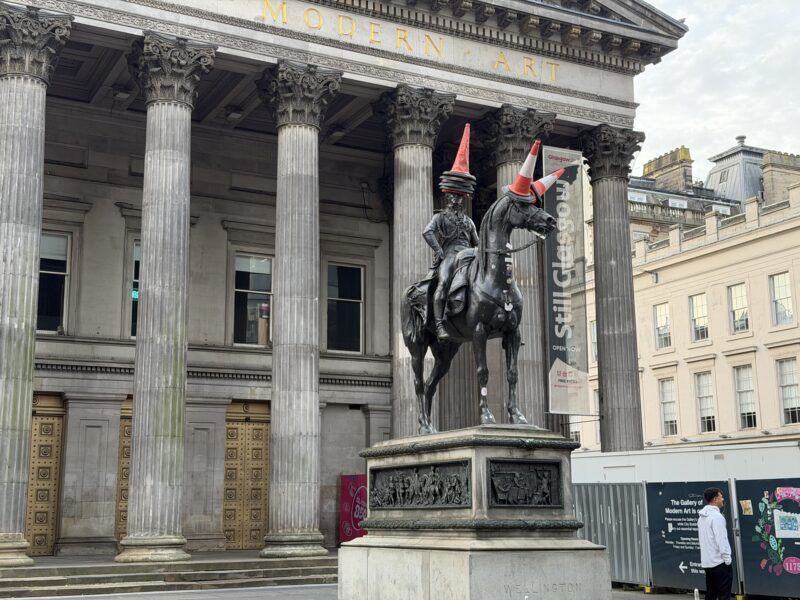
Our walk begins in Royal Exchange Square, a pedestrian-only plaza in the heart of downtown Glasgow. Right outside the Gallery of Modern Art stands an equestrian statue of Arthur Wellesley, the 1st Duke of Wellington.
For context, the Duke of Wellington was the famous British military general and Prime Minister of the UK who led the allied army that defeated Napoleon Bonaparte at the Battle of Waterloo in 1815. Erected in 1844, this serious bronze statue of the general atop his horse was meant to be a solemn monument to military victory.
Glasgow had other ideas.
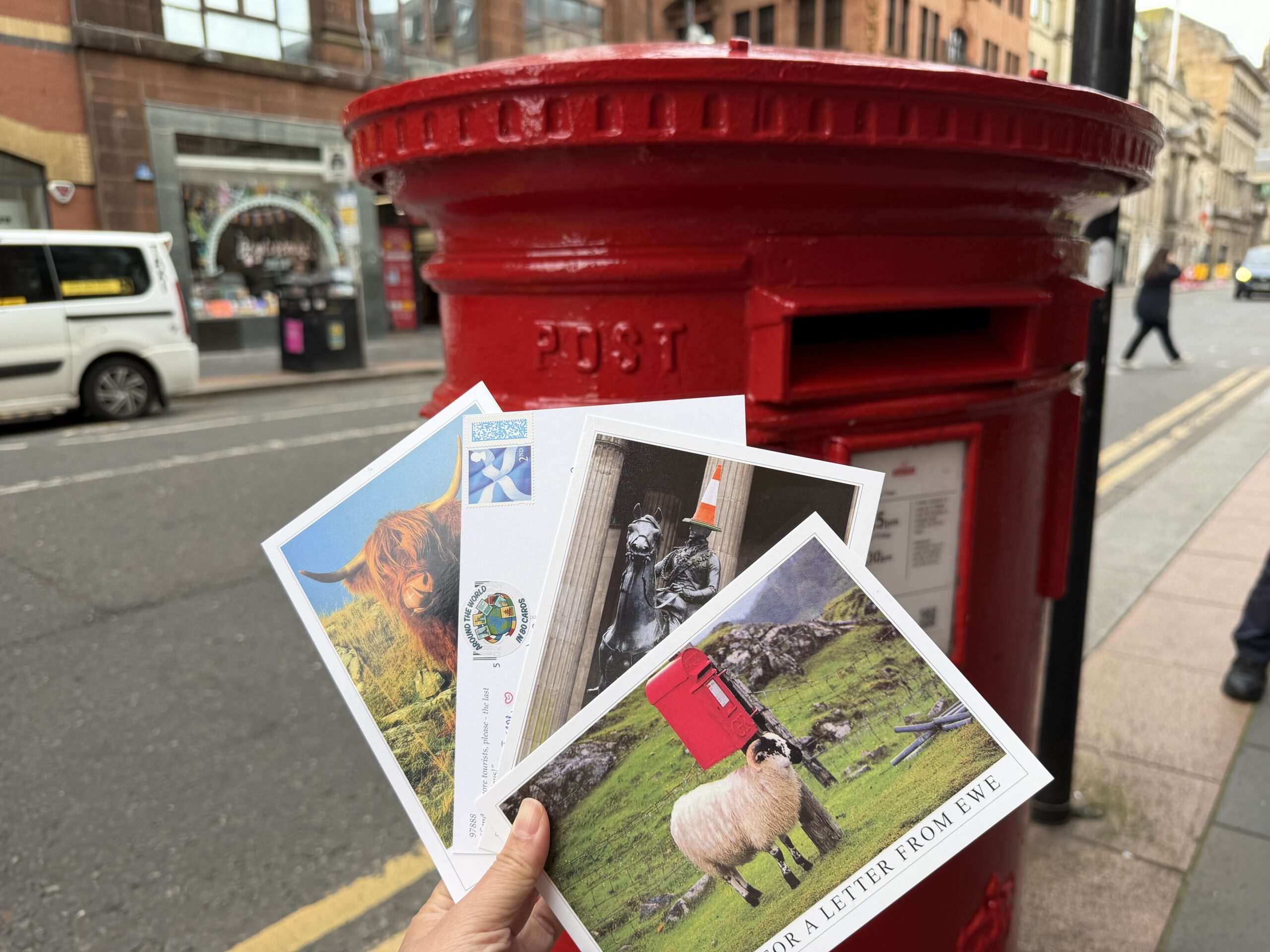
Since the late 1980s, local pranksters have routinely scaled the statue late at night to place a bright orange traffic cone firmly on the Duke’s bronze head (and occasionally on his horse, too). Decades of city council attempts to remove it – and even a proposed plan to double the pedestal’s height to deter climbers – were met with public outcry and humorous protests. Today, the cone is officially accepted as an iconic symbol of Glasgow’s dry wit and refusal to take authority too seriously. You will almost never see the Duke bare-headed!
Stop 2: The Civic Heart — City Chambers
Just a short two-minute walk east brings you to George Square, Glasgow’s principal civic plaza, anchored by the magnificent Glasgow City Chambers.
Opened by Queen Victoria in 1888, the City Chambers serves as the headquarters of the city government. During the 19th century, Glasgow was an industrial powerhouse – renowned globally for shipbuilding, locomotive construction, and heavy engineering – and earned the title “Second City of the British Empire.” This palace-like building was constructed to showcase the city’s immense wealth and confidence.
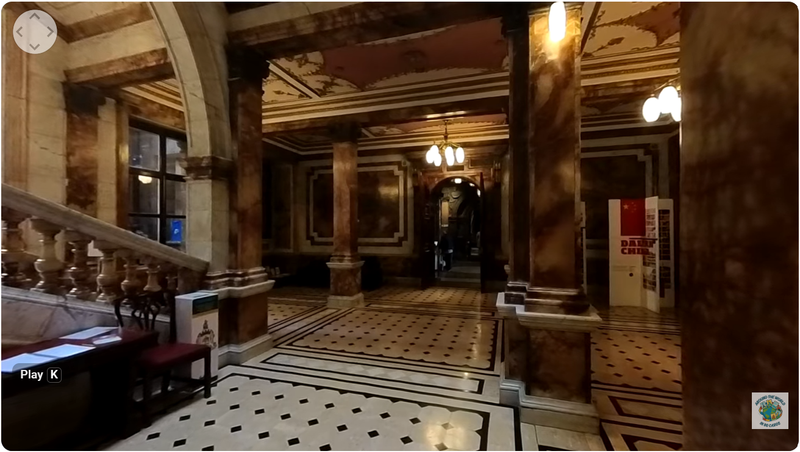
While the carved stone exterior overlooking George Square is impressive, stepping inside reveals its true showpiece: a grand entrance hall and sweeping staircase made entirely of imported Italian Carrara marble. It reputedly uses more marble than almost any other civic building in Western Europe outside of St. Peter’s Basilica in Rome.
🎥 Experience City Chambers in 360° VR
Why just read about Glasgow when you can stand in it?
Step right into the heart of the building and look up at the stunning interior architecture. Pan around to look up at the soaring vaulted ceilings, explore the intricate balustrades, and take in the sweeping views of the marble staircases connecting the upper floors.
🥽 VR headset: Pop it on and simply look around — up, down, anywhere.
🖱️ Computer: Click and drag with your mouse to look in any direction.
** Tip: Full Screen & Choose the highest resolution your internet connection can manage **
Go on, have a look around. 👇
Stop 3: Merchant City Stately Sandstone — John Street
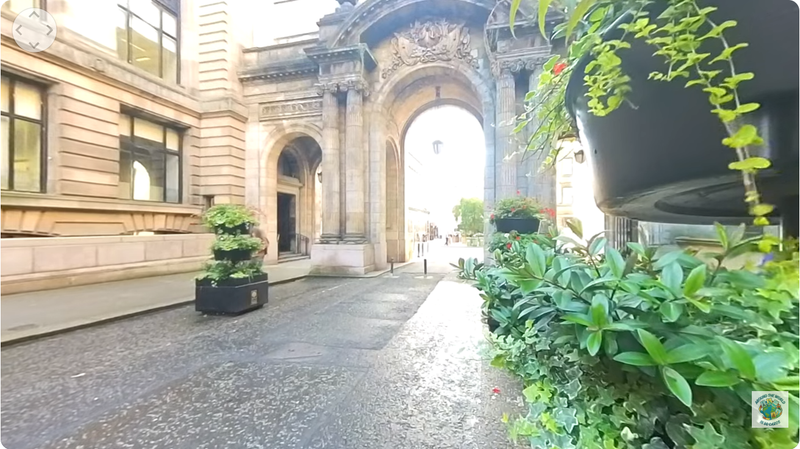
Directly behind the City Chambers lies John Street, running straight through the historic district known as the Merchant City. In the 18th and 19th centuries, this neighborhood was built by wealthy merchants who made vast fortunes trading textiles, tobacco, and sugar across the Atlantic.
Today, John Street is framed by grand municipal offices and stately buildings made from the signature warm-hued blond sandstone mined across western Scotland.
Stand on John Street in 360° VR
Immerse yourself in the classic Victorian streetscape
Pan around to take in the soaring sandstone columns and elegant architectural lines. 👇
Stop 4: Glasgow’s Oldest House — Provand’s Lordship
Head north from the Merchant City and walk about ten minutes uphill along Castle Street to reach Glasgow’s historic medieval area – the original nucleus where the city was founded centuries before the industrial revolution.
Tucked right into this corner is Provand’s Lordship, built in 1460. It is officially the oldest surviving house in Glasgow! Originally built as part of St. Nicholas’s Hospital (a charitable home for the poor run by the church), it is one of only a handful of medieval buildings left standing in the entire city.
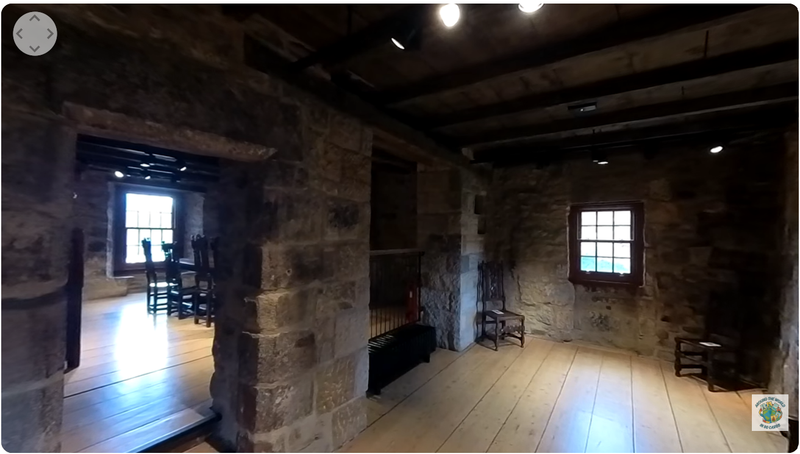
Inside, low timber-beamed ceilings, thick stone fireplaces, and 17th-century historic furniture recreate what domestic life looked like long before electricity or plumbing.
Step Inside Provand’s Lordship in 360° VR
Immerse yourself inside one of the historic rooms. Look around to examine the exposed stone, heavy oak doors, antique wooden furnishings, and low-ceilinged domestic chambers. 👇
Stop 5: Medieval Masterpiece — Glasgow Cathedral
Directly across the cobblestone lane from Provand’s Lordship stands the crown jewel of the city’s early history: Glasgow Cathedral (also known as St. Mungo’s Cathedral).
The story goes back to St. Mungo (also known as St. Kentigern), a Christian missionary who established a small church on this spot in the year 543 AD, effectively founding the settlement that became Glasgow. The current stone cathedral was constructed between the 13th and 15th centuries over St. Mungo’s tomb. Remarkably, it is one of the only medieval cathedrals on the Scottish mainland to survive the Protestant Reformation of 1560 almost entirely intact – most others were ruined or destroyed during religious conflicts.
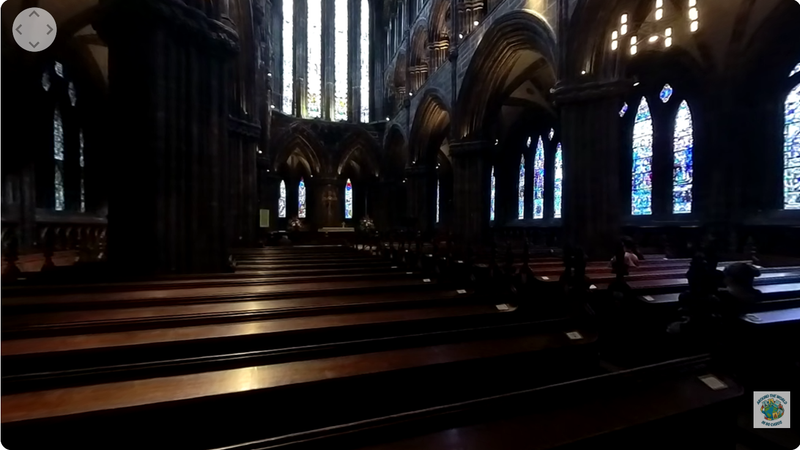
While the dark stone exterior is imposing, stepping through the timber doors into the sanctuary reveals the true scale of the space: soaring stone vaults, vibrant stained glass windows, rows of dark wooden pews stretching down the central nave, and the magnificent pipes of the 1879 Henry Willis pipe organ mounted high along the upper stonework.
Visit the Glasgow Cathedral in 360° VR
Immerse yourself in the majestic interior of the cathedral. Pan around to look down the central aisle past the pews, look up at the intricate vaulted ceiling and the organ pipes mounted above the stone screen, and admire the massive stained glass windows framing the altar. 👇
Glasgow doesn’t treat its past like a fragile museum piece behind glass. The ancient cathedral and medieval house sit right across the road from modern university buildings and bustling hospitals. Old merchant warehouses on John Street now house lively cafes, independent shops, and local design studios.
Glasgow is a living, working city where history isn’t just observed – it’s lived in every day.
*Disclaimer: This post is entirely based on my personal experience visiting Glasgow. I am not affiliated with, sponsored by, or endorsed by any organizations mentioned – just sharing my story!*