While visiting Glasgow, I met up with a friend who happens to be a Chemistry professor at the University of Glasgow. He offered to take me on a tour. Knowing the university was founded way back in 1451, I was expecting to be shuffling through dusty cobblestones, ancient cloisters, and centuries-old stone halls.
Instead, my friend took me on a tour of his favorite corners of the campus; he showed off the brand-new, cutting-edge side of the university.
He showed me the state-of-the-art Mazumdar-Shaw Advanced Research Centre (ARC), a massive facility designed specifically to tear down the traditional walls between academic departments. Instead of keeping chemists, engineers, computer scientists, and humanities researchers locked away in their own separate buildings, the space forces them to share open-plan labs and communal spaces. The whole idea is “cross-fertilization” – mixing brilliant minds from totally different fields to spark unexpected discoveries.
Right next to it stood the new Adam Smith Business School, another stunning modern structure packed with collaborative hubs, data visualization suites, and active-learning spaces.
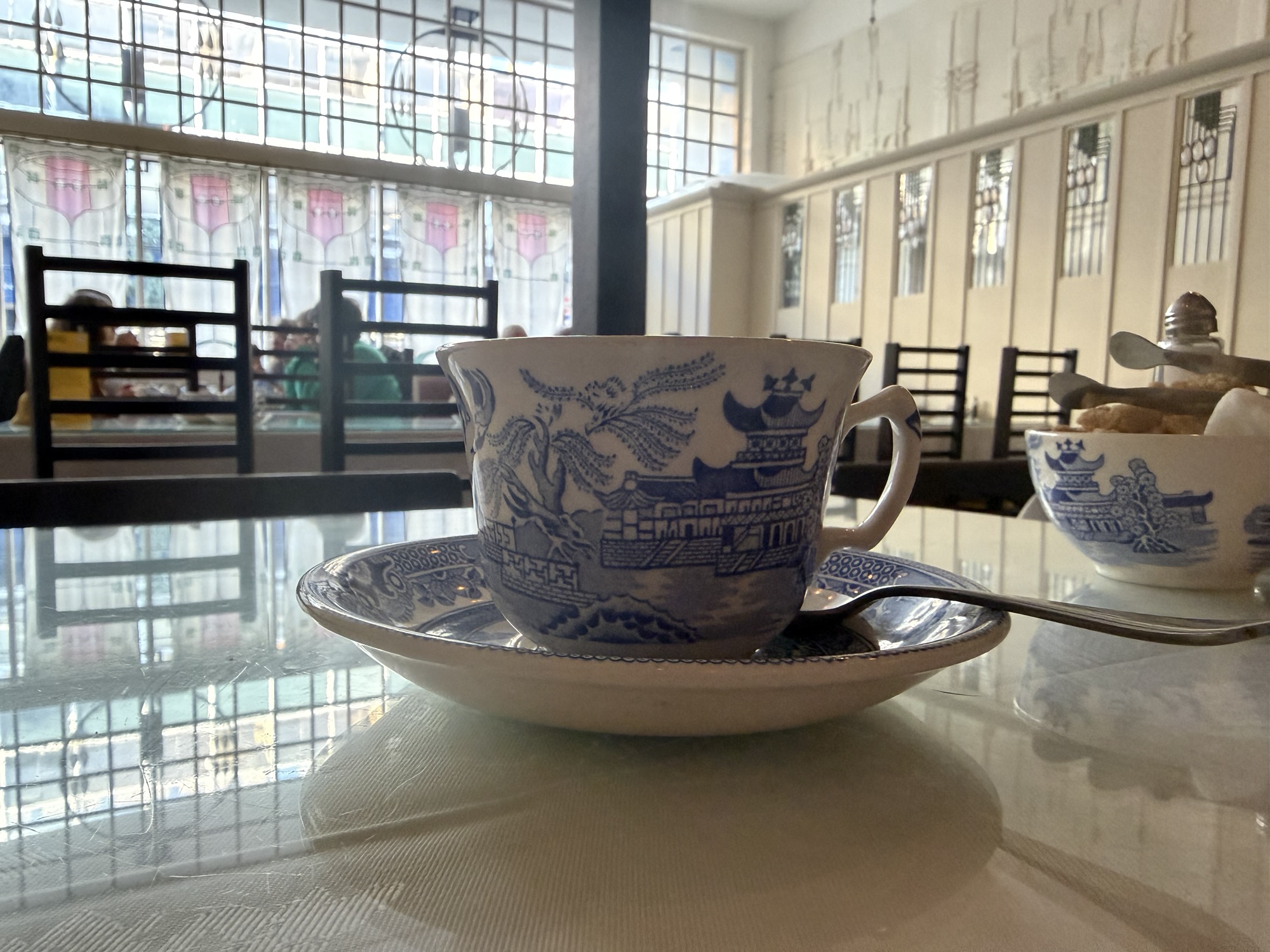
To catch our breath, we stopped in for coffee at the Graduate Club – a cozy spot on campus where academics and researchers gather to unwind, talk shop, and recharge between lectures.
The Name on Every Building
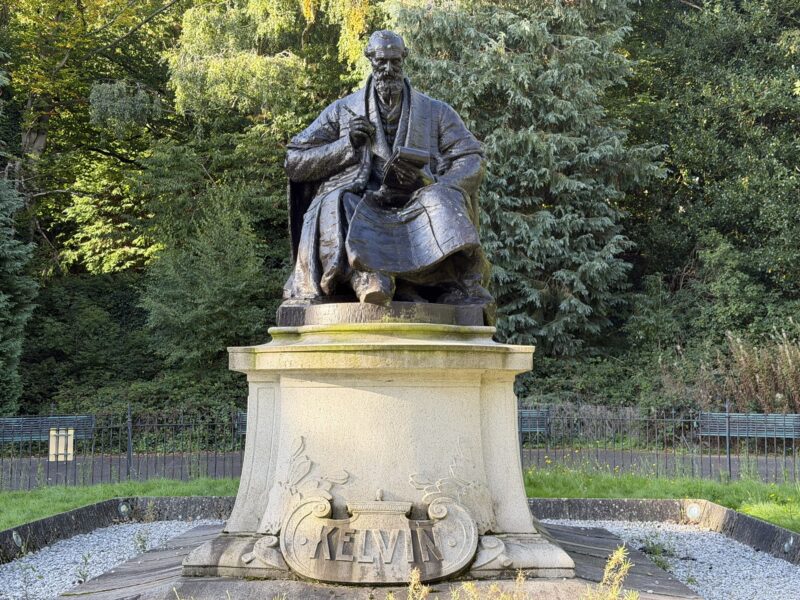
As we walked through the campus, I started noticing a recurring pattern. Even among these shiny new additions, there was Kelvin Building, Kelvin Gallery, Kelvin Hall, Kelvingrove Park, Kelvingrove House, Kelvingrove Museum…
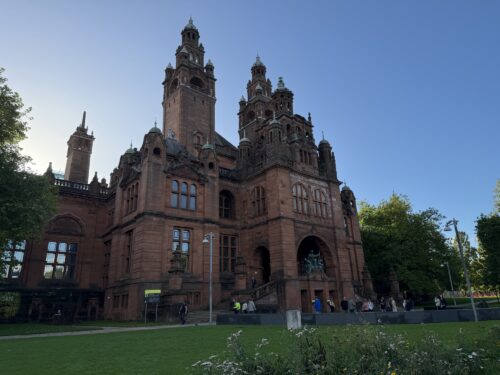
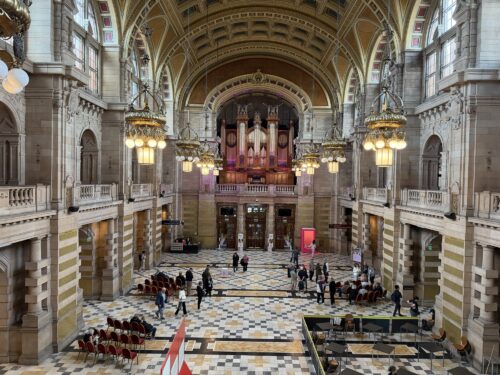
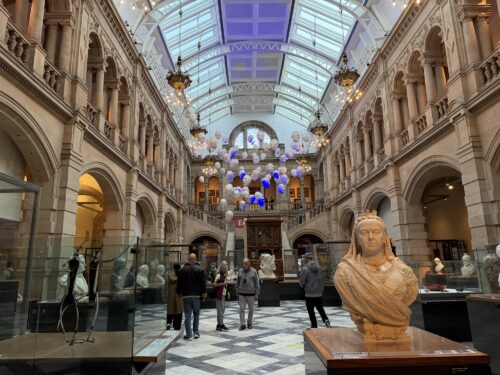
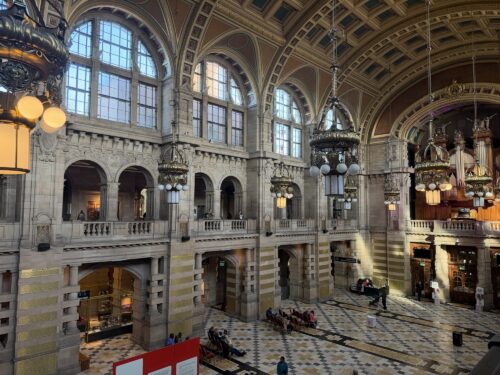

I had heard of the Kelvin scale and assumed it was named after Lord Kelvin.
“Is everyone here just obsessed with Lord Kelvin?” I asked.
My friend laughed and shook his head. “It’s actually the other way around. Lord Kelvin didn’t name the campus – the campus named him.”
The Boy Genius
The story begins with a man named William Thomson, born in 1824. To say Thomson was a prodigy is a bit of an understatement: he matriculated into the University of Glasgow at the age of ten. By 22, he was appointed as the Chair of Natural Philosophy (what we today call physics) – a position he held for over 50 years.
Thomson was a visionary tinkerer and physicist. He helped lay the transatlantic telegraph cable, invented maritime compasses that didn’t get scrambled by iron ships, and spent decades dissecting how heat, energy, and work interact.
Why Fahrenheit and Celsius Weren’t Enough
Back in the mid-19th century, scientists relied on Celsius and Fahrenheit. Both of those scales are fine for deciding whether you need a sweater, but for physics, they have a glaring flaw: their zero points are completely arbitrary.
- Fahrenheit’s zero was based on the freezing point of a specific salt-water brine mix.
- Celsius’s zero was based on the freezing point of pure water.
To Thomson, basing a fundamental law of physics on water freezing was as arbitrary as measuring the universe using the length of a specific king’s foot (which also happened).
Instead, Thomson realized that temperature should be tied directly to the available thermal energy. He reasoned that there must be a true, absolute bottom – a point where an object has zero heat energy left to extract.
Finding Absolute Zero
In 1848, when he was just 24 years old, Thomson published a paper proposing an “absolute” thermodynamic temperature scale. He calculated that the lowest possible temperature in the universe – where all thermal energy vanishes – lies at -273°C (or -459 °F).
So How Did Thomson Become “Lord Kelvin”?

Thomson’s discoveries revolutionized thermodynamics, electrical engineering, and navigation. In 1892, Queen Victoria rewarded his decades of scientific breakthroughs by raising him to the peerage as a baron.
When choosing his official title, Thomson looked out his laboratory window at the small, winding river flowing past the University of Glasgow grounds: The River Kelvin.
He officially took the title Baron Kelvin of Largs, becoming the very first British scientist to be elevated to the House of Lords. From that day on, he was known simply as Lord Kelvin and when international scientists formally adopted his absolute temperature scale, they named the unit the kelvin (K) in his honor.
But the other Kelvins? Well, the physics department’s Kelvin Building and the university’s Kelvin Gallery were named in honor of the famous professor, but the rest – the museums, the buildings, the parks — those aren’t named after Lord Kelvin. They were named after the river.
Standing on the Banks of the Kelvin
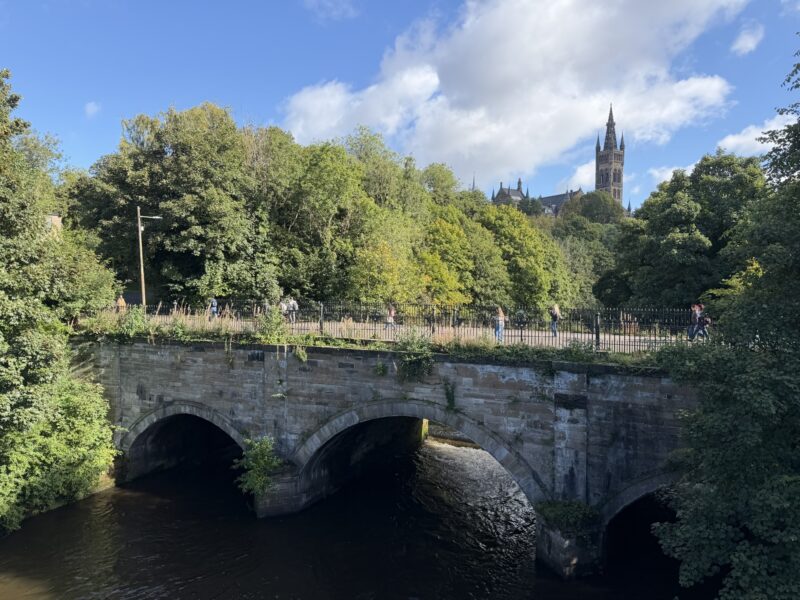
Walking along the riverbank after our tour, looking at the dark, quiet water flowing past the university, it was surreal to connect the dots. A quiet river running through a rainy Scottish city gave its name to a Victorian professor, who gave his title to the scientific unit used across the globe to measure everything from the the temperature of superconductors and quantum computers to the chilling void of deep space… and that I myself used many times in school in my scientific calculations.
*Disclaimer: This post is entirely based on my personal experience visiting Glasgow. I am not affiliated with, sponsored by, or endorsed by the University of Glasgow or any organizations mentioned- just a fan sharing a great story!*