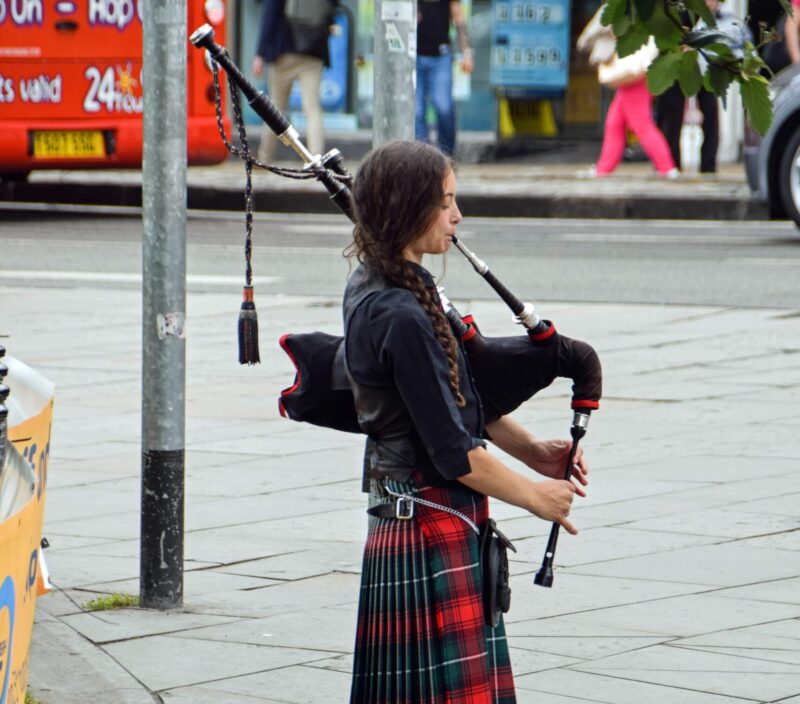
In both Edinburgh and Glasgow, the sounds of the Great Highland Bagpipe are everywhere – echoing down the streets thanks to local buskers, leading parade marches, and generally serving as Scotland’s unofficial, ear-splitting heartbeat. So, what better way of diving into Scottish culture than by booking a lesson at The National Piping Centre in Glasgow!
Ironically, bagpipes didn’t originate in the Highlands – early versions date back thousands of years to the Ancient Near East and Mediterranean, where Roman legions helped spread them across Europe. But no nation embraced them quite like Scotland.
During the Highland clan era, the piper held a revered role right beside the chief. The Great Highland Bagpipe became the voice of the nation: rallying men in battle, signaling clan gatherings, and mourning the fallen. Even when the British government suppressed Highland culture after the 1745 Jacobite Rising, the pipes endured as a symbol of Scottish identity and resilience. Today, that haunting, piercing sound carries an unmatched emotional weight – whether stirring national pride before a rugby match or bringing a room to tears with “Auld Lang Syne.”
No Bag, No Drones… yet
I hadn’t expected to be a virtuoso, but I did have the romantic image of me of strapping on a tartaned bagpipe, tossing the wooden pipes over my shoulder, and maybe even playing a short little tune (or blowing until my face turned blue).
Instead, my instructor knocked me down a peg with my first reality check.
As it turns out, nobody starts on a full set of bagpipes. If complete beginners were handed full pipes, the sheer volume and lung power required to keep the bag pressurized, the complexity of coordinating five reeds and the sheer loudness of the sound would would absolutely overwhelm a beginner.
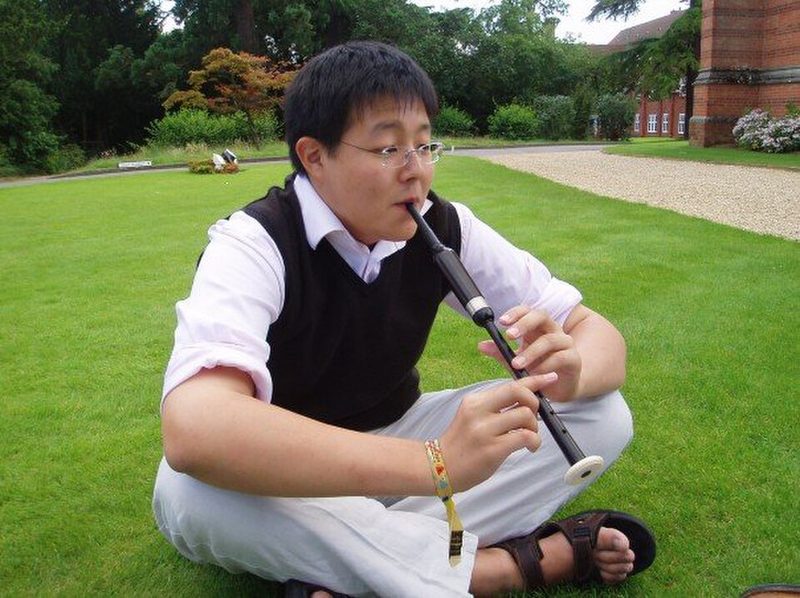
Instead, my instructor handed me a long, black wooden tube that looked like a cross between a recorder and a baton: the practice chanter.
The practice chanter is the quiet training instrument every piper uses to learn fingerings, grace notes, and tunes before ever touching a bag.
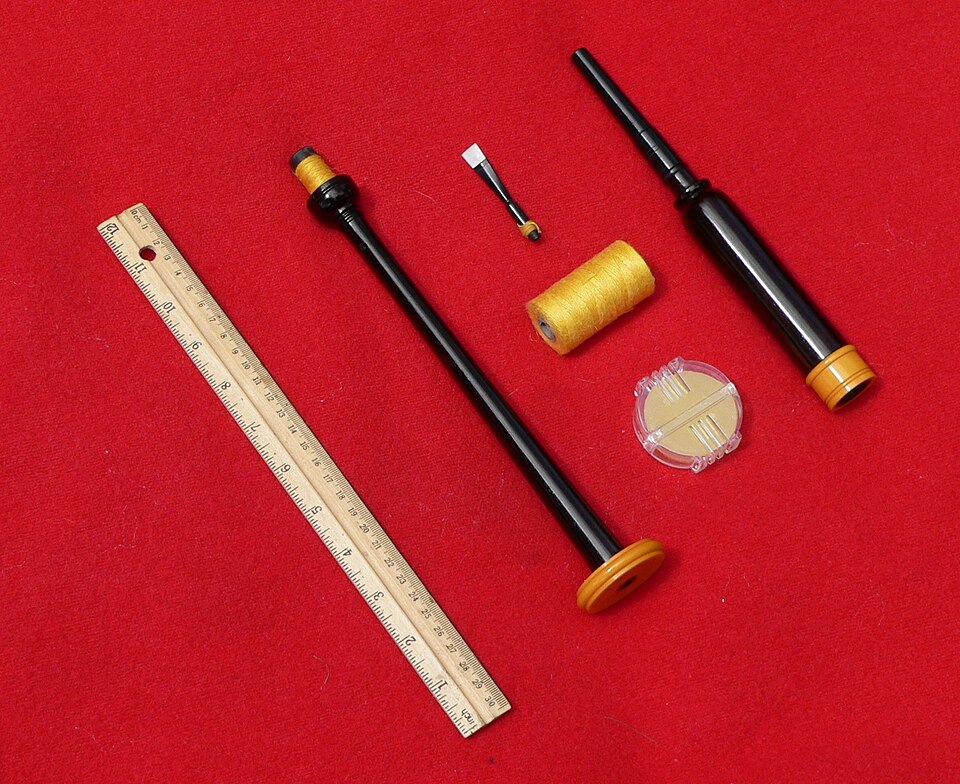
When you unscrew the top cap, you reveal a small, double reed tucked away inside a protected chamber. Unlike an oboe or bassoon, your lips never actually touch the reed. You blow through a mouthpiece at the top of the cap, pressurizing the chamber, which sets the hidden reed vibrating. This means you don’t have to worry about lip technique as you would with a flute or trumpet – you just supply steady air pressure.
Breathing 101: Squeaks, Honks, and High Gs
Even on a quiet chanter, making a pleasant sound takes work.
If you blow too softly, the reed lets out a tragic, dying-goose squeak. Blow too hard, and the pitch goes razor-sharp. My instructor had me practice holding a single, steady note – aiming for a solid, warm tone without wavering.
Once I got the hang of steady airflow, we moved on to finger placement. Bagpipe finger holes don’t use the tips of your fingers like a flute or recorder; you use the flats of your fingers to seal the holes. I actually found using the flats of my fingers extremely challenging. It didn’t feel to me like they put the holes in the right place and covering all eight holes at once without air leaking out of any tiny gaps required surprising finger flexibility!
My instructor, Wilson, had the patience of a saint. He was encouraging, but gave just the right level of feedback. He emphasized having crisp finger transitions. Unlike instruments where you blow for each individual note, bagpipes rely on constant air pressure – meaning if your fingers drag even a fraction of a second, you’ll accidentally play phantom notes during the transition.
By the end of the hour, I was very pleased that I managed a clean scale and a very basic melody line. More importantly, I walked out of the Piping Centre with a newly acquired respect for the incredible history and technique behind Scotland’s iconic instrument.
Note: This post is entirely based on my personal experience. I am not affiliated with, sponsored by, or endorsed by The National Piping Centre (or any other organizations mentioned). Just sharing my journey!