If you ask people to name a Canadian food, nine times out of ten they’ll say “maple syrup” or “poutine” – which is funny because both come from Québec. Poutine is as Québec as it gets — You’ll find it in small‑town casse‑croûtes (snack bars), busy Montréal diners, and late‑night spots all over the province.
🍟🧀🥣 What is it?
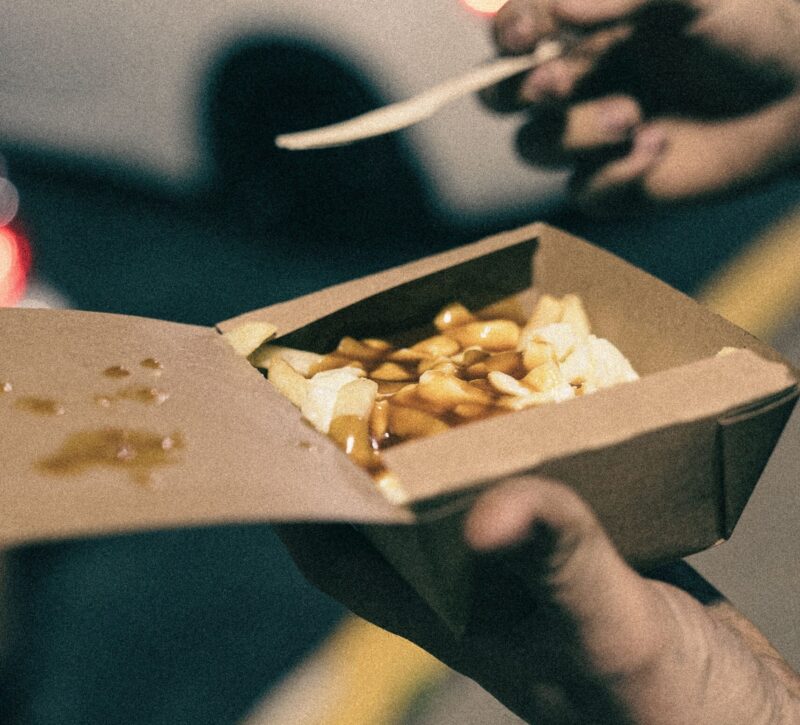
Fries: Poutine starts with thick‑cut fries (chips for our UK friends) that can actually survive the hot gravy. They’re fried until the outside is golden crisp, but the inside stays soft. If the fries are too thin, they collapse. If they’re too soft, they disappear under the gravy. Good poutine fries hold their shape all the way to the last bite.
Cheese Curds: Cheese curds are fresh, springy pieces of young cheddar that are firm, cool, a little rubbery and squeaky when you bite them (yes, you will sound like a mouse!). They’re delivered daily in Québec and eaten the same day. They absolutely must be fresh. Many a times, I’ve purchased cheese curds outside of Quebec, to sadly find that they’re day-old and have lost their squeak.
And why cheese curds are perfect for Poutine is that they don’t melt instantly — they soften slowly as the hot gravy hits them, giving the dish a cheese texture variation – some still squeaky, some warm but soft, some melted.
And the most important part: Not any cheese will do. It must be cheese curds. Call me a purist: If it doesn’t have cheese curds, it’s not poutine — it’s just fries with cheese and gravy!
Gravy: Then on top, it’s drenched in steaming gravy that coats everything in silky, salty richness. The gravy is usually a light brown, peppery sauce made from a stock base (often chicken or beef), thickened just enough to cling to the fries without turning into sludge. It should be hot enough to warm the curds but not so hot that it melts them into a cheese puddle.
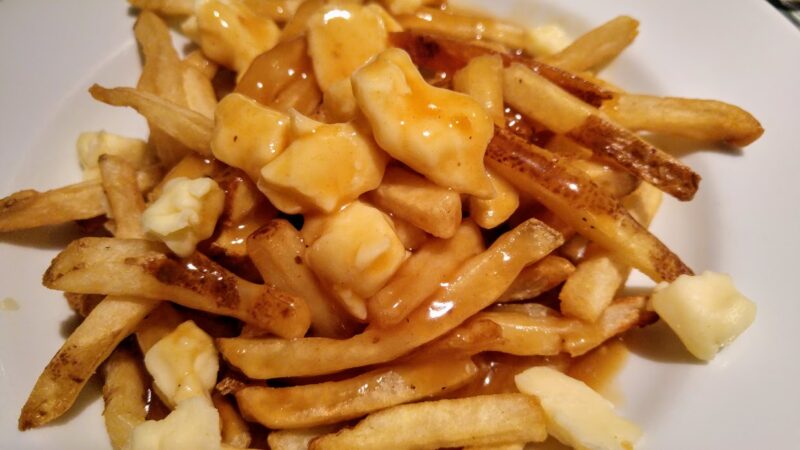
Put together, you get the classic poutine texture: crispy fries + squeaky curds + hot gravy.
It doesn’t always look appetizing, but that combination — fries + curds + gravy — is what makes poutine poutine.
📜 Why is it called “Poutine”?
Poutine started showing up in rural Québec snack bars (casse‑croûtes) in the late 1950s.
The most repeated origin story goes like this: a customer asked for cheese curds on their fries, and the cook replied:
“Ça va faire une maudite poutine.” That’s going to make a damn mess.
It spread quickly because it was cheap, filling, and exactly the kind of thing people wanted late at night.
These days, you’ll find every kind of poutine in Québec — Indian poutine, Mexican poutine, smoked‑meat poutine, breakfast poutine — but stick to the same foundation: crispy golden fries, hot silky gravy, and fresh squeeky cheese curds.
We are not paid, sponsored, or compensated in any way by any of the brands, businesses, or organizations mentioned in our articles. All opinions, experiences, and recommendations are entirely our own, based on personal visits and genuine impressions.