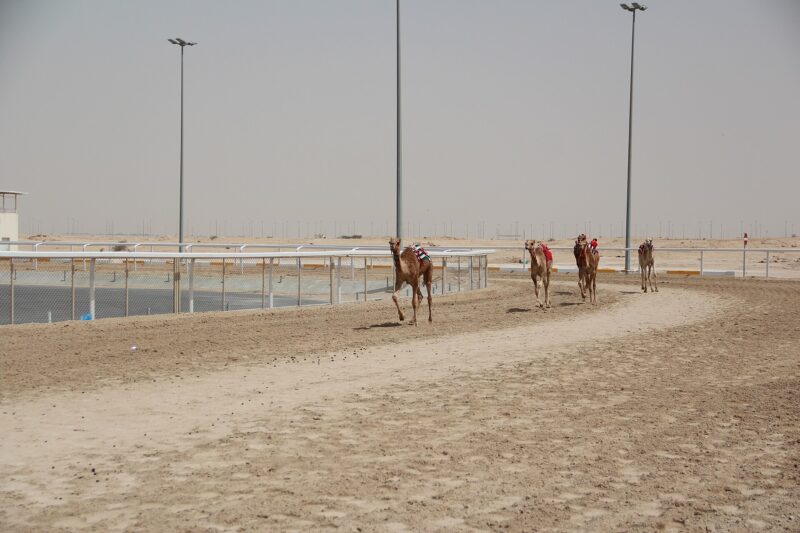
My friends took me to Al Shahaniya Camel Racecourse (about 45 minutes west of central Doha) this past weekend. I deal with technology every single day, but never in my life did I expect to see ancient Bedouin traditions combined with futuristic robotics in the middle of the desert!
A Sport Fit for Kings 👑🐪
In Qatar, camel racing (Al-Haggen) is a deeply cherished royal tradition. Historically, camels were essential for survival, carrying Bedouin families across harsh desert sands. Whenever tribes gathered for weddings or cultural celebrations, they would race their best camels for pride and honour.
Today, that tradition has turned into a high-stakes, elite sport! Racing camels here live like professional athletes.
- Specialized Training Programs: They go through strict fitness regimes, including endurance running, speed sprints on specialized tracks, swimming therapy in special camel pools, and proper recovery schedules.
- Dedicated Therapists & Massage: Trainers routinely perform physiotherapy, limb stretches, ice baths, and full muscle massages using specialized liniments to prevent soreness post-race.
- Special Diet: They are fed energy-rich foods like dates, milk, honey, barley, oats, high-protein alfalfa, and electrolyte supplements to keep them super lean and fast!
And winners don’t just take home trophies – they win luxury SUVs, golden swords, and cash prizes worth millions of Qatari Riyals!
The Tech Twist: Enter the Robot Jockeys! 🤖🏇
Now, this is where the story gets super interesting!
For decades across the Gulf, camel owners used young children (often small boys aged 4–10) as jockeys because their low weight allowed camels to run at peak speeds. But due to heavy child safety and human rights concerns, Qatar officially banned children under 18 from working as camel jockeys back in 2005.
So, what did Qatar do? They engineered a high-tech solution: Robotic Jockeys! 🛠️
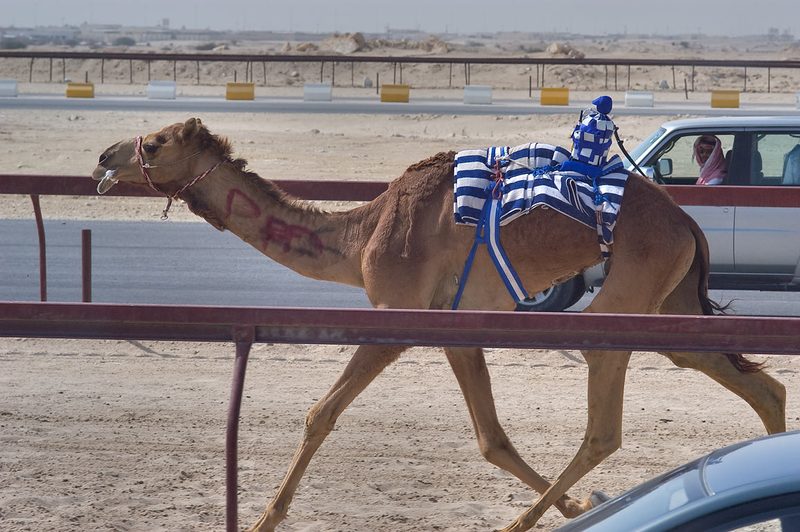
If you walk past the stables at Al Shahaniya, you will see camel handlers and engineers working side-by-side, mounting small, lightweight electronic devices onto the camels’ backs.
Each robot jockey weighs around 2 to 3 kilograms (so it doesn’t slow down the camel). It consists of a plastic torso dressed in colorful racing silks, a remote-controlled whip arm, a walkie-talkie speaker, and a GPS tracking chip.
When the starting gate is opened, a dozen magnificent camels explode down the track! These camels run at speeds up to 40 mph (65 km/h) – as fast as the horses at the Kentucky Derby! 🐎💨
But the wild part wasn’t just on the track – it was beside it! Dozens of white Land Cruisers and Nissan Patrols speed down the parallel asphalt road next to the running camels. The owners were honking their horns, steering with one hand, shouting words of encouragement to the camel through a radio walkie-talkie, and pressing buttons to trigger the robot whip!
High-Tech Meets Heart 💙
What touched my heart most about the whole experience is how deeply people here care for these animals. The moment the race is over, you see the handlers immediately taking off the robots, wrapping the camels in warm fleece blankets, showering them with water, and hand-feeding them dates.
Living in Doha, I constantly see how this country respects its past while embracing the future. Where else in the world can you see an ancient desert sport mixed with futuristic robot technology?