It’s impossible to walk through Porto (or anywhere else in Portugal) and not notice all the intricate ceramic tiles on the facades of the buildings. These blue‑and‑white tiles — the azulejos — that turn ordinary façades into vast story panels.
Azulejos arrived in Portugal through Moorish influence in the 13th century, but the style evolved over time into something distinctly Portuguese. By the 17th and 18th centuries, the familiar blue‑and‑white palette had become dominant, inspired by Chinese porcelain and Dutch Delftware. The palette allowed for clarity and contrast, especially in large narrative scenes. Over time, it became part of Portugal’s visual identity — a kind of national handwriting in ceramic form.
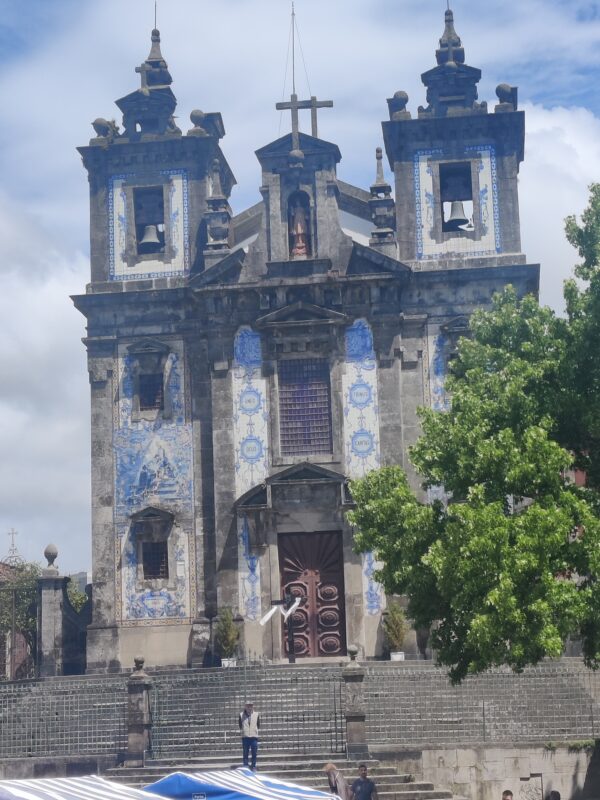
Igreja de Santo Ildefonso (Church of Saint Ildefonso)
One of the first façades that caught my attention was the Church of Saint Ildefonso, standing at the top of a sloping square near Batalha. Its front is covered in blue‑and‑white tiles added in the 1930s, arranged like a single woven tapestry. Up close, the baroque detail emerges: sscroll-like shapes, curving frames, ornamental borders, dramata shading, all rendered in cobalt blue. They catch the light differently throughout the day, shifting from soft grey‑blue in the morning to something brighter and more luminous by afternoon.
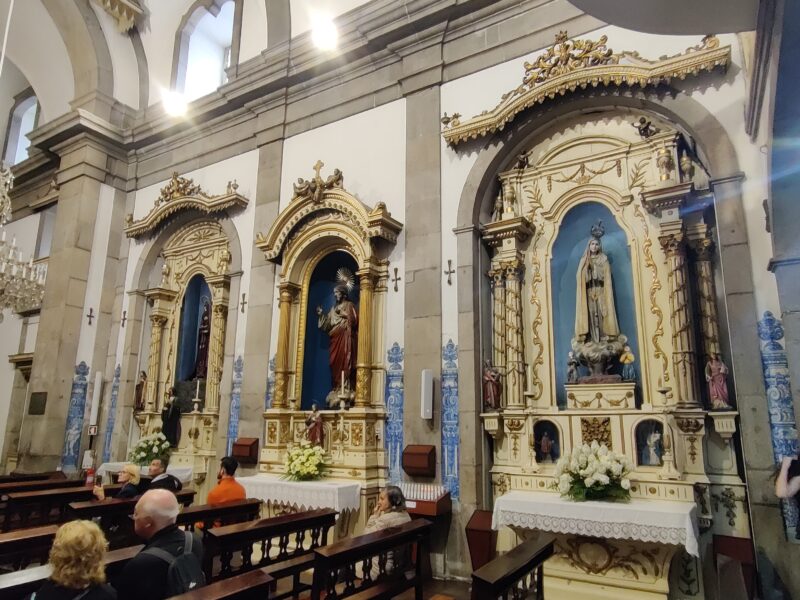
Capela das Almas in Porto (Chapel of Souls)
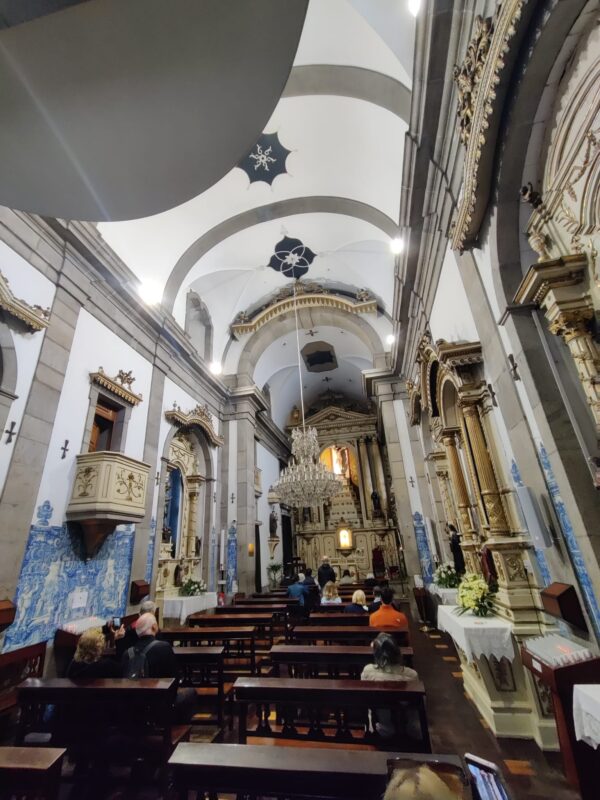
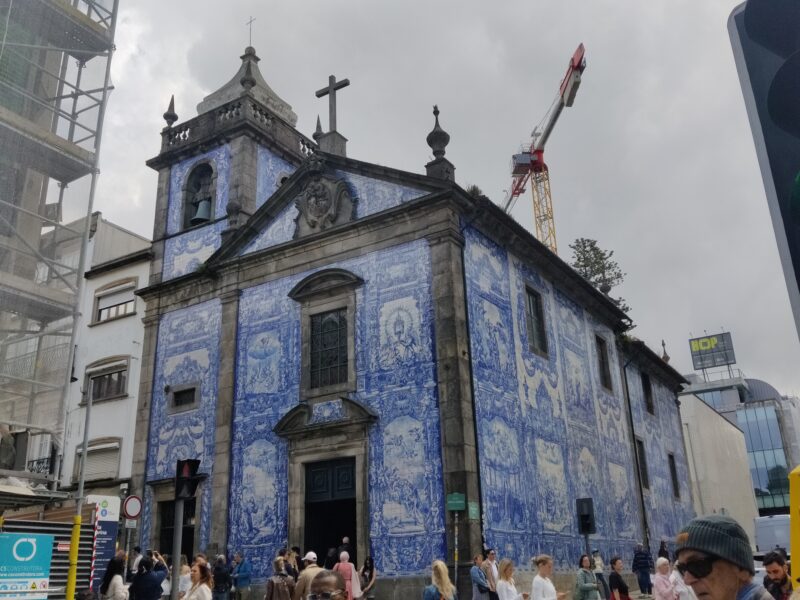
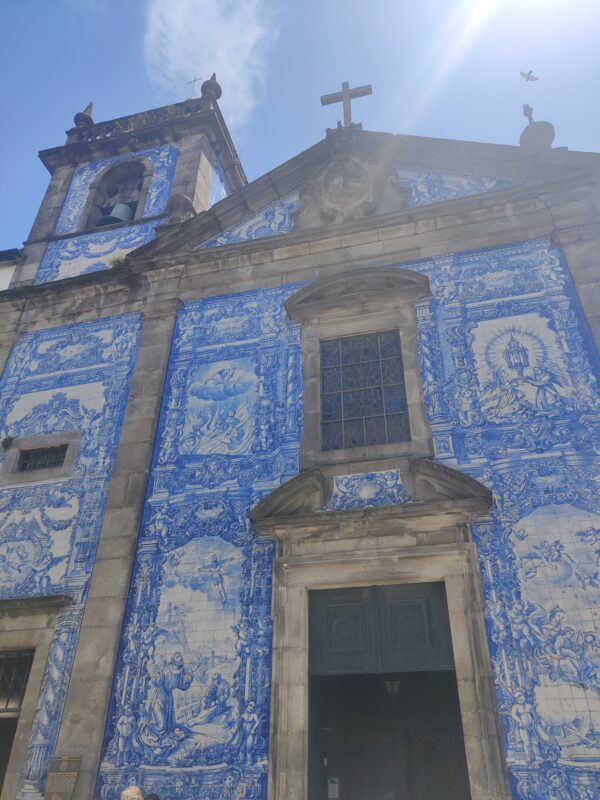
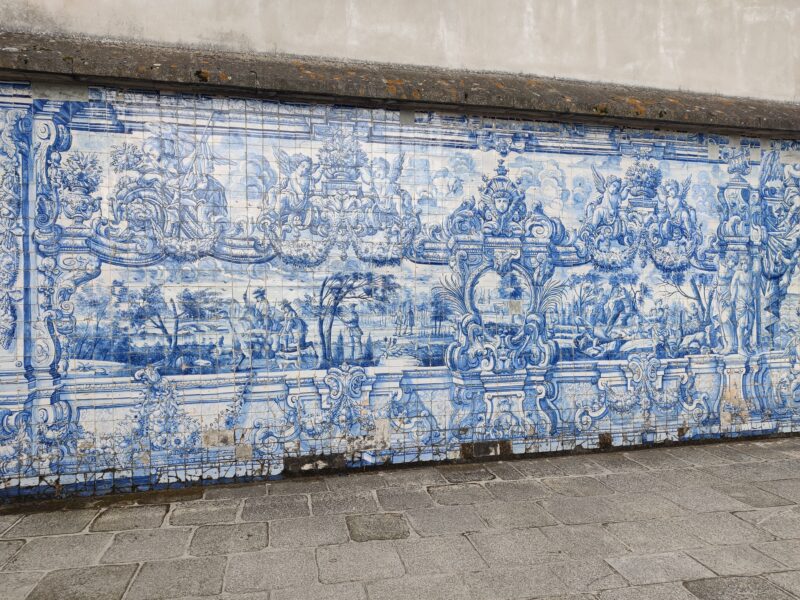
A short walk away, the Chapel of Souls is even more striking. Its entire exterior is wrapped in azulejos depicting scenes from the lives of saints. The scale is impressive. Even with traffic passing and people moving quickly around it, the chapel feels like a calm point in the middle of the city.
Porto Cathedral (Sé do Porto)
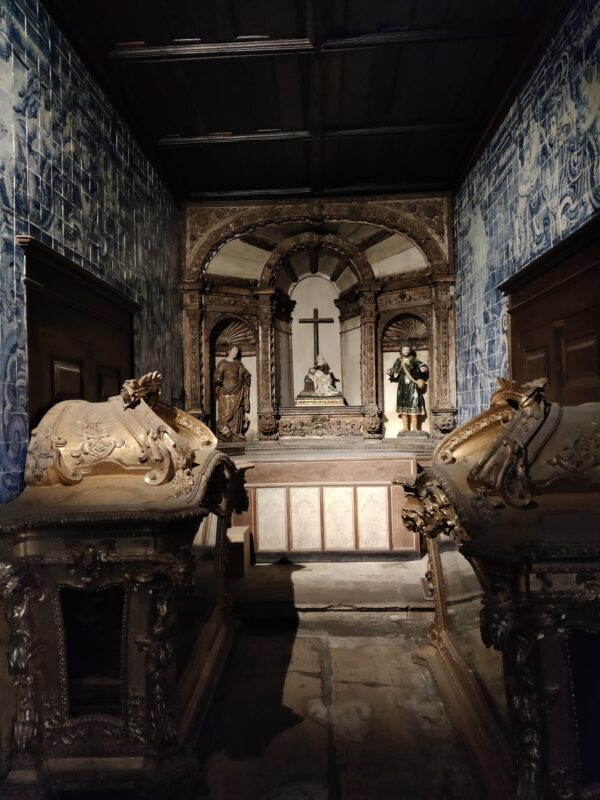
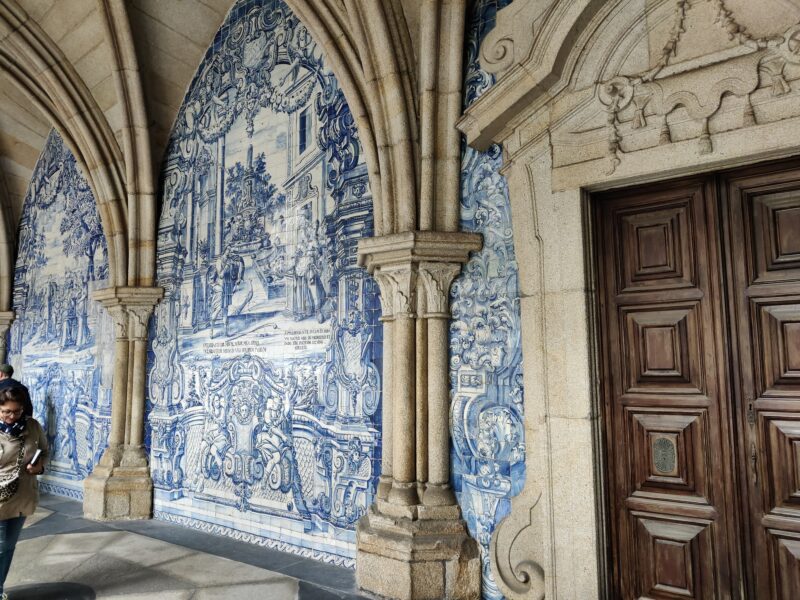
The Porto Cathedral offers a quieter, more contemplative version of the same tradition. Its azulejos aren’t on the exterior but inside the cloister, where the tiles line the walls in large narrative panels. The scenes are biblical, painted in deep blues that stand out against the pale stone. The cloister itself is peaceful – arches framing the sky, the sound of footsteps softened by centuries of wear.
The best part about Porto’s azulejos is how accessible they are. You don’t need a museum ticket or a guided tour. You simply turn a corner and find yourself in front of a façade with a valuable piece of history. The tiles weather and crack, but they remain deeply woven into the city’s identity.
All opinions expressed in this blog are our own. We are not affiliated with, sponsored by, or partnered with any of the places, recommendations, or links mentioned.