Sardines have been part of Portuguese life for centuries. By the 19th century, sardine fishing had become a major industry, especially along the western coast, where the cold Atlantic currents brought enormous shoals (large groups of fish) close to shore. Entire towns grew around the rhythm of the sardine season – boats heading out at dawn, factories cleaning and preserving the catch, families depending on the work.
Canning arrived in the late 1800s and changed everything. Suddenly sardines could travel far beyond the coast, and Portugal became one of the world’s leading producers. Many of the old canneries still operate today, using techniques that haven’t changed much in a hundred years. The tins themselves became small works of art, each label telling a story through colour and typography.
Sardines in the streets
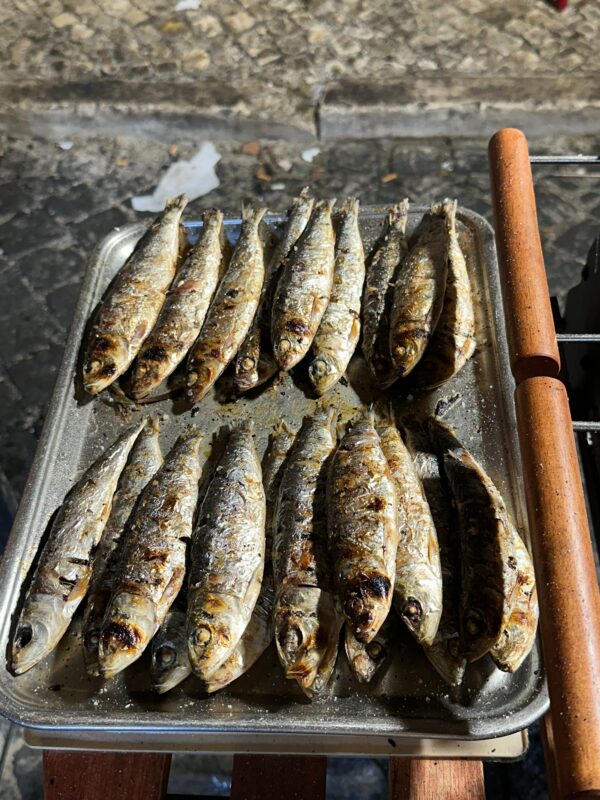
In June, the city transforms. Neighbourhoods in Lisbon and Porto set up open-air fire pits lining the sidewalks. The scent of sardines cooking over open flames drifts through the streets, and people gather around long tables to eat them simply – salted, grilled, and served on a slice of rustic bread, often paired with caldo verde (a hearty kale and potato soup) and local wines.
Festa de São João (St. John’s Festival) in Porto is often known as the “sardine festival”, held annually on the night of June 23rd to 24th. It is one of Portugal’s most famous street parties, where the entire city transforms into a massive block celebration featuring open-air grills, concerts, and fireworks.
The Fantastic World of Portuguese Sardines
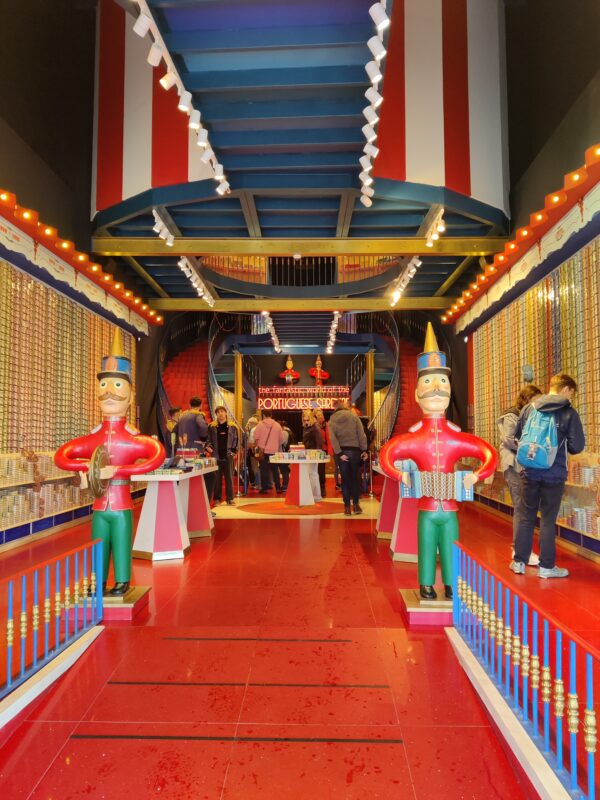

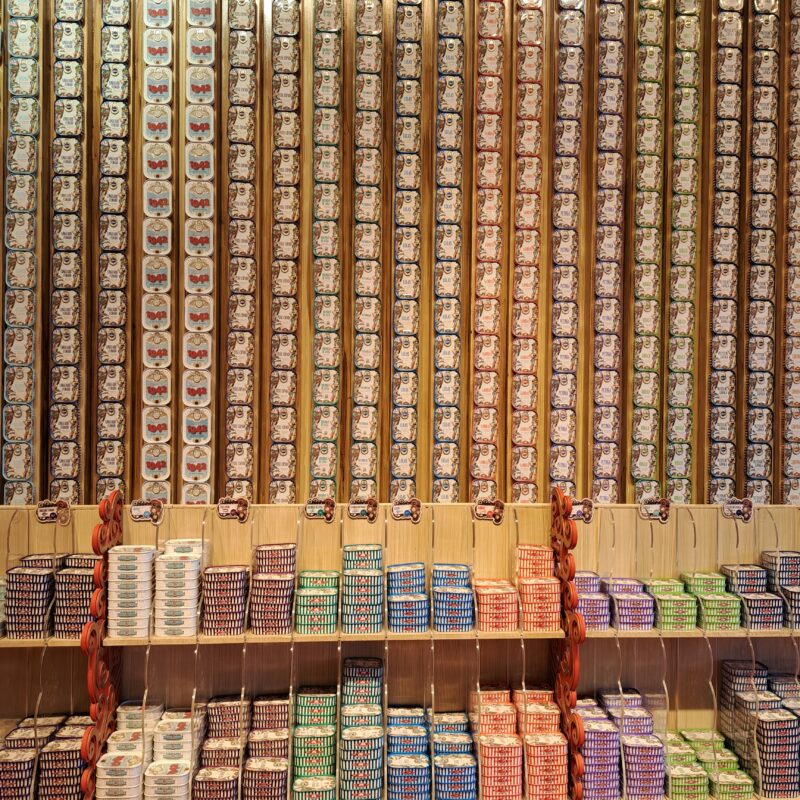
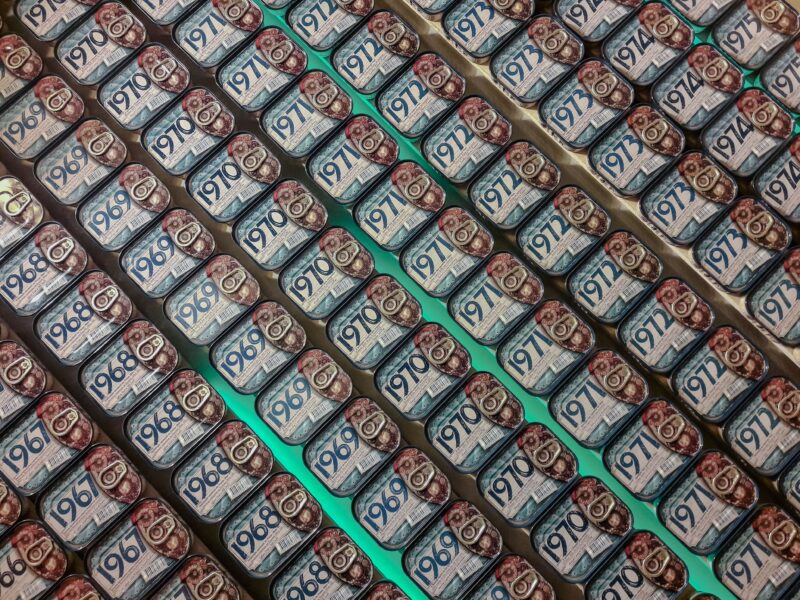
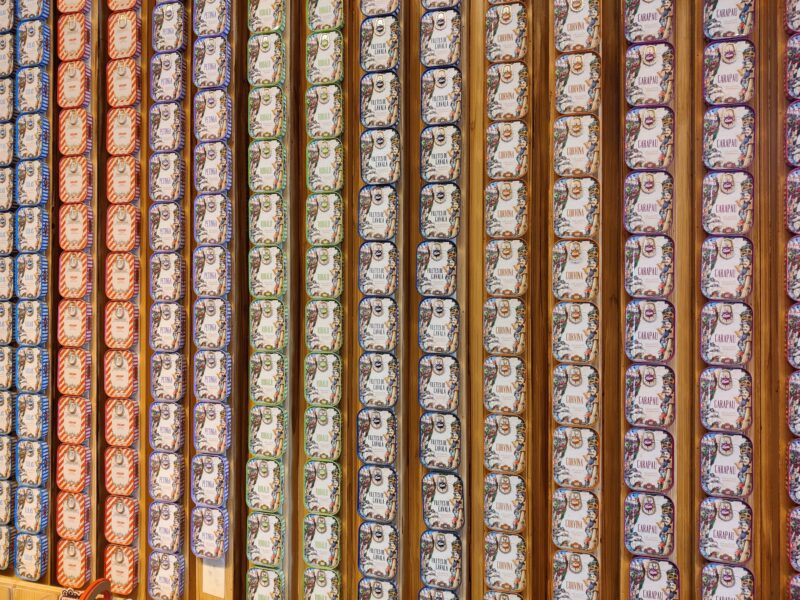
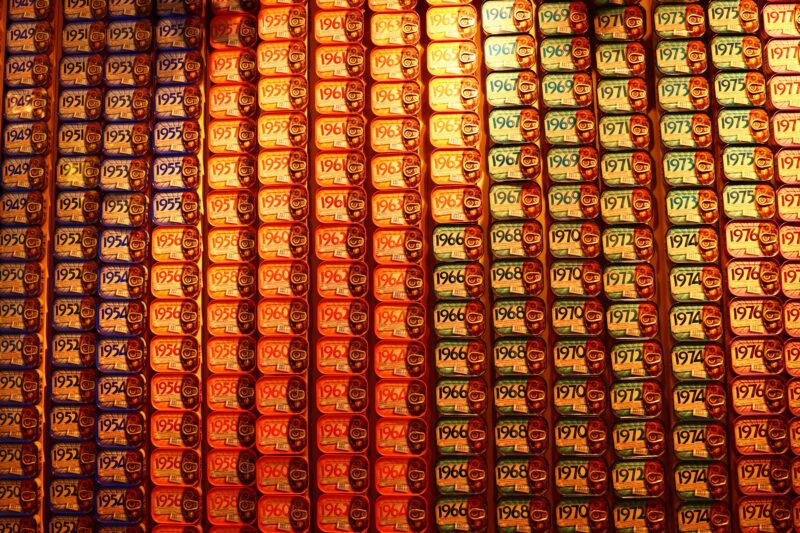
The Fantastic World of Portuguese Sardines feels unlike anything else connected to this tradition. Stepping inside is a small surprise — bright lights, music, and theatrical displays that immediately shift the mood. It reminded me, in a way, of the M&M’s Store in London: that same sense of colour and spectacle, and a playful approach to something familiar. But here, the focus isn’t on a global brand; it’s on a humble fish that has shaped Portuguese life for generations.
The walls are lined from floor to ceiling with tins, each one designed like a miniature poster. Some celebrate birth years, others mark historical events, and many simply revel in pattern and colour. The effect is almost cinematic. You don’t browse so much as wander, taking in the display as if it were an art installation.
The tins themselves are produced using traditional methods, and the designs are intentionally nostalgic. Some echo early 20th‑century typography, others reference maritime posters or vintage packaging. Standing in front of the shelves, it becomes clear that these aren’t just souvenirs — they’re small cultural artifacts, each carrying a fragment of Portugal’s visual history.
What the shop does so well is reframing that history. It turns the sardine tin — something ordinary, almost utilitarian — into an object worthy of attention. Visitors take photos, compare designs, and search for their birth year. It’s lighthearted, but it also reflects something deeper: Portugal’s ability to celebrate tradition without taking itself too seriously.
In the end, the Fantastic World of Portuguese Sardines is less about buying a tin and more about observing how a country chooses to present its heritage. It’s a place where history, design, and storytelling meet — not in a museum, but in a shop filled with colour and imagination. And in its own way, it captures the spirit of Portugal: warm, creative, and quietly proud of the stories it carries.
All opinions expressed in this blog are our own. We are not affiliated with, sponsored by, or partnered with any of the places, recommendations, or links mentioned.