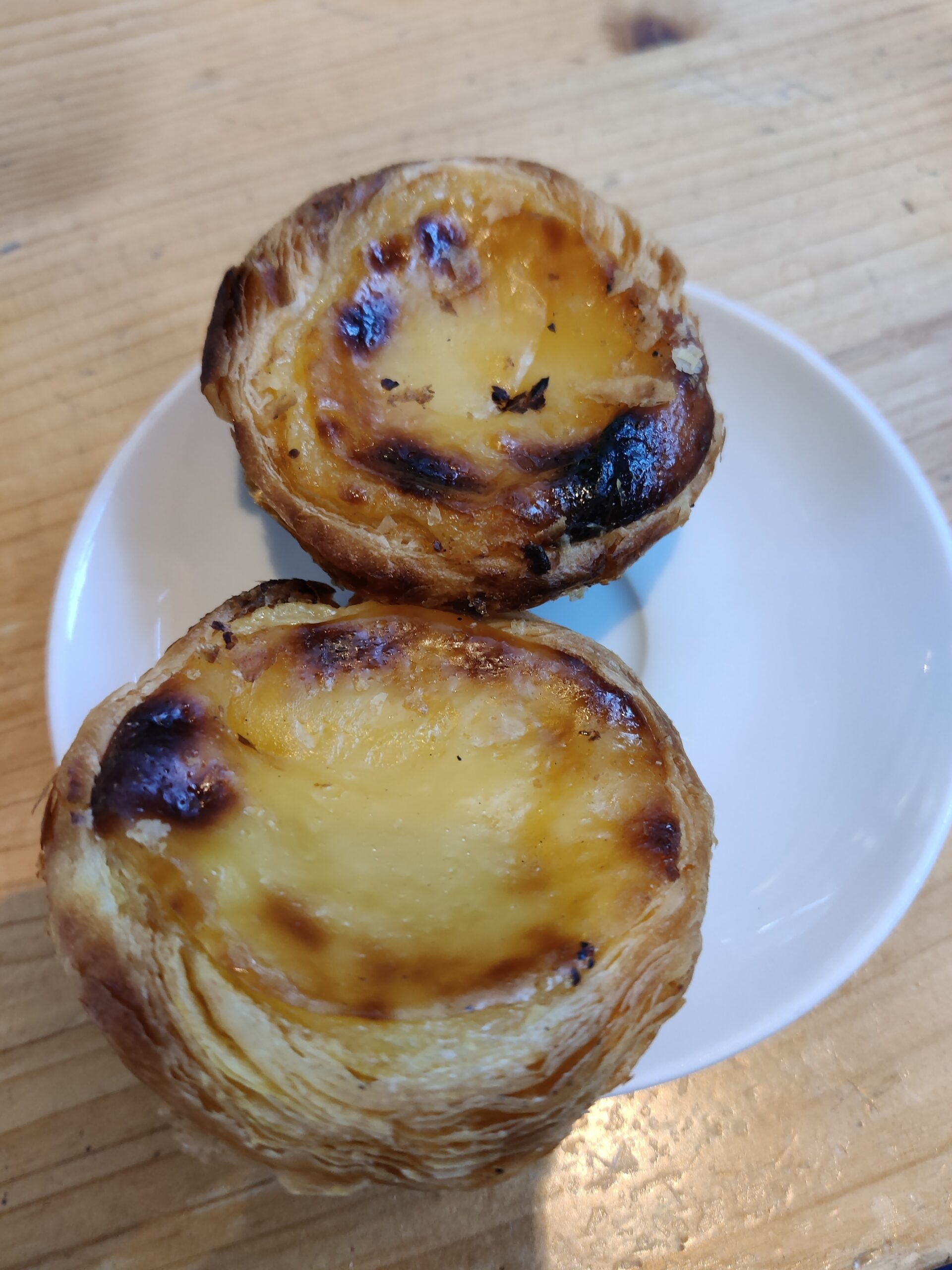
Fancy dinners in London always had their own quiet choreography. We always started with a glass of sherry, and ended with a glass of port. And always—always—the bottle is passed to the left.
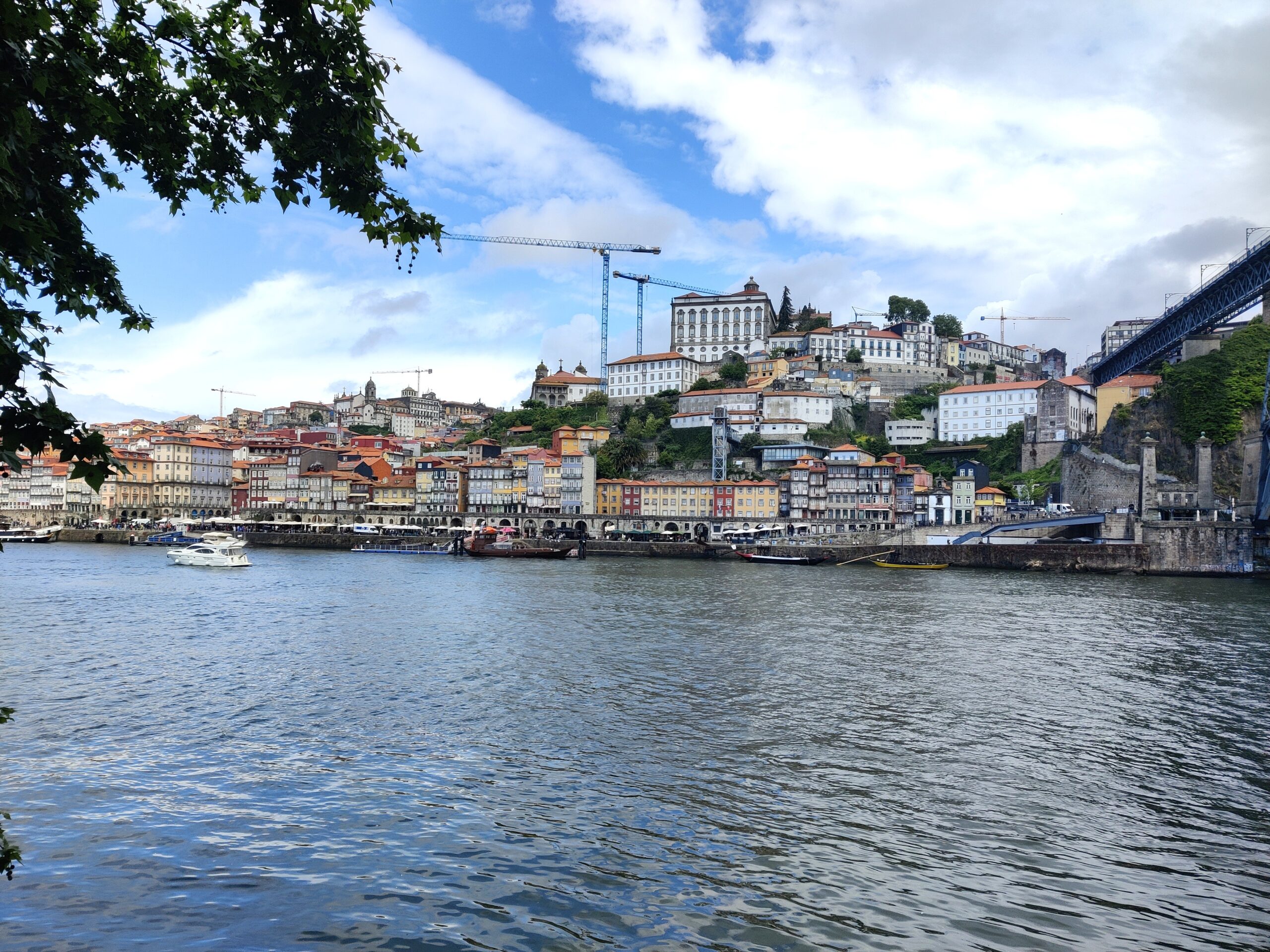
I never thought much of it, but it turns out, Port wine is named after the city of Porto! So obviously I had to go and get a tour of a port maker while I was here.
🍇 Cálem: A Port House With a Story
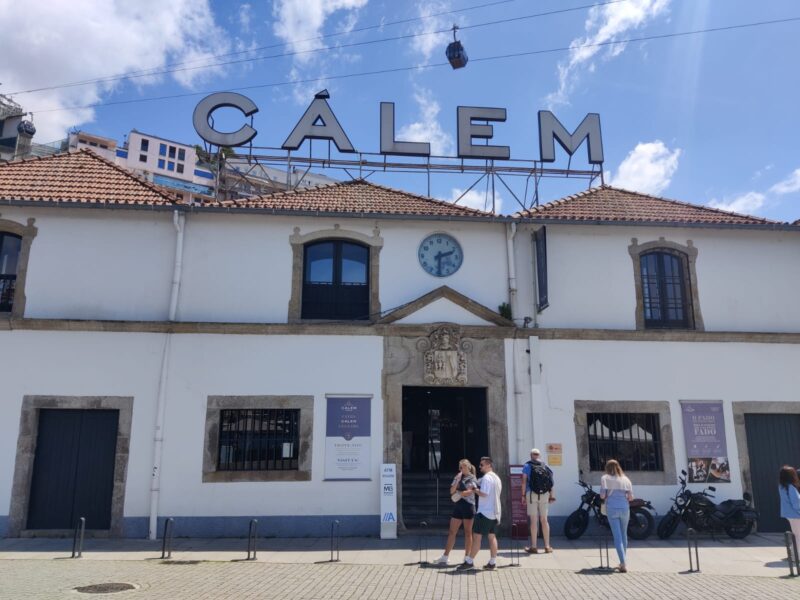
Founded in 1859, Cálem is one of the most recognisable Port houses in Vila Nova de Gaia. Its logo—a caravel ship—nods to the company’s early trade routes between Portugal and Brazil. Today, you can visit Cálem on a guided tour of their atmospheric cellars and enjoy a delightful tasting.
Walking into their cellars feels like stepping into a living archive—oak barrels, cool stone walls, and the quiet hum of centuries‑old craftsmanship.
How is Port made?
Port is a fortified wine made exclusively in Portugal’s Douro Valley, one of the world’s oldest demarcated wine regions (established in 1756).
- Grapes are harvested from steep terraced vineyards along the Douro.
- The grapes are fermented.
- When about half the natural sugars have converted to alcohol, grape spirit (aguardente) is added.
- This stops fermentation instantly, preserving the natural sweetness.
- The wine is then transported downriver to Gaia to age in barrels.
The result is a wine that is stronger, sweeter, and more stable—originally perfect for long sea voyages to England or to Brazil.
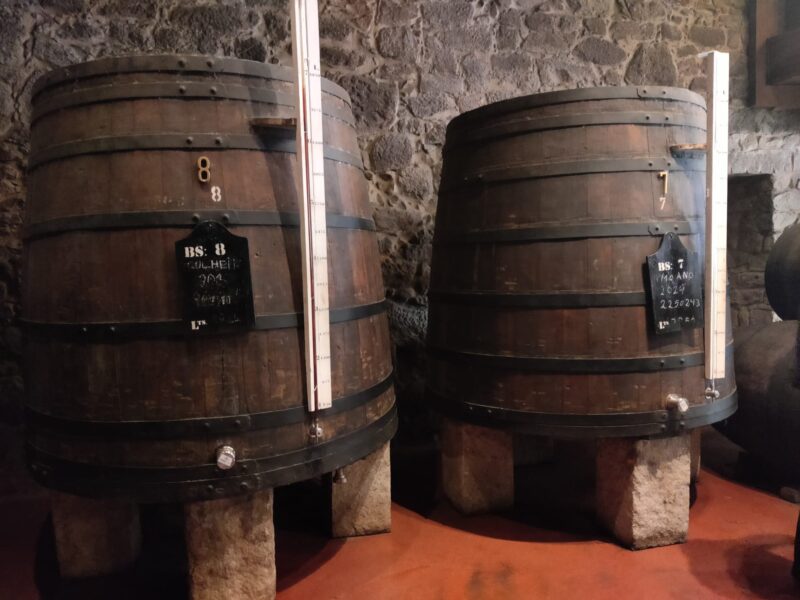
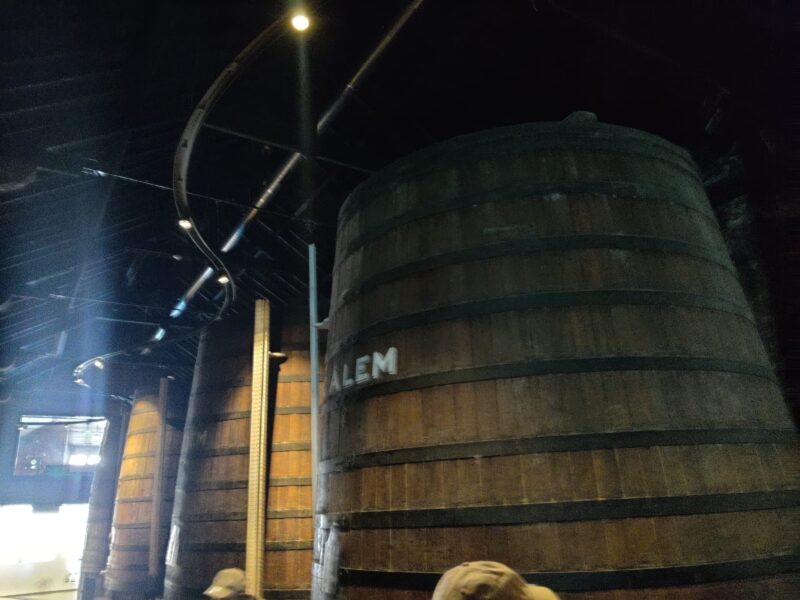
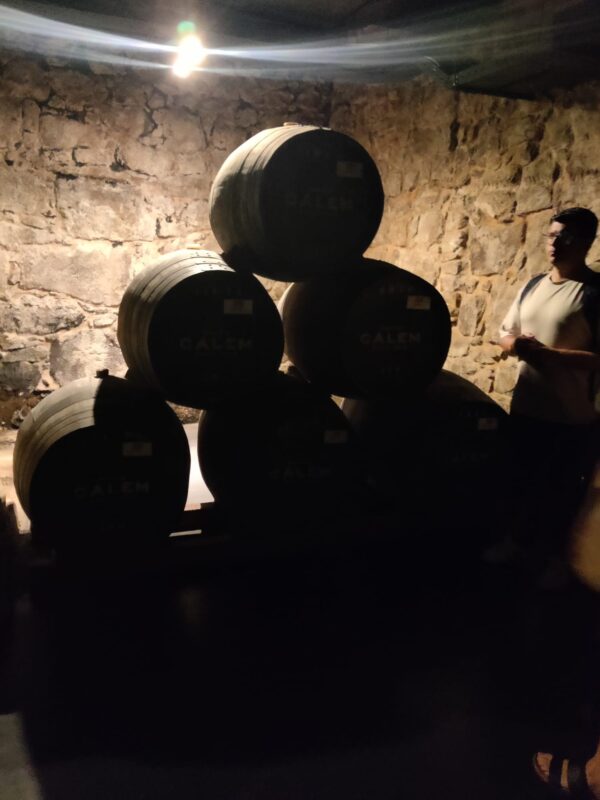
Port is aged in the barrel, not the bottle:
- Ruby Port — minimal oxidation, stays bright red
- Tawny Port — slow oxidation turns it amber, nutty, caramelised
- White Port — made from white grapes, often fresh and floral
Vintage Port is the exception: bottled young, it continues to mature for decades.
Interesting Fact: Barrels With Long Lives
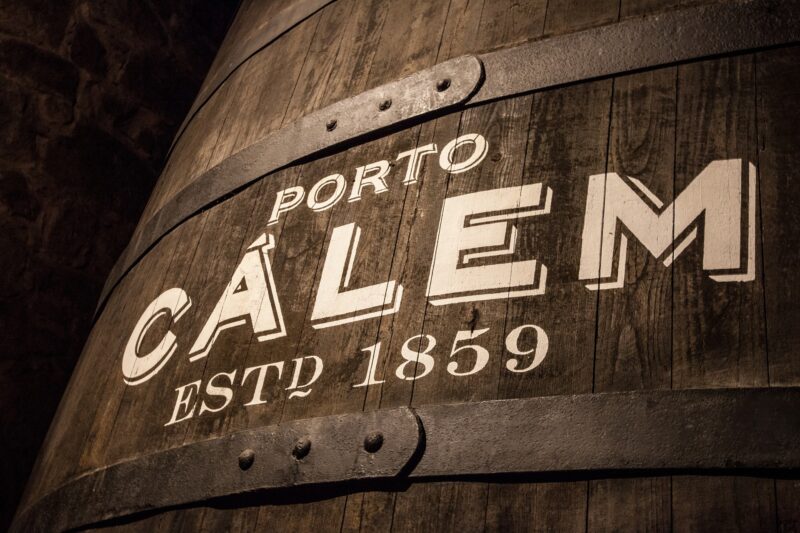
The barrels here were at least 90 years old. As barrels age, they become more desirable because they are more neutral and no longer impart strong wood flavours – ideal for aging Tawny Ports, which rely on slow oxidation rather than oak influences. When it reaches 150 years, it’s retired—not to a museum, but to the whisky distilleries of Scotland, where the seasoned wood is prized for finishing certain styles of whisky.
Wood barrels, it turns out, has a remarkable career span.
Interesting Fact: Declared Years
In exceptional harvests, Port producers may request a Vintage declaration, which must be approved by the regulatory authority. Only the best years receive this status, and these “declared” vintages often become legendary among collectors.
🍷 The Tasting: Three Ports, Three Personalities
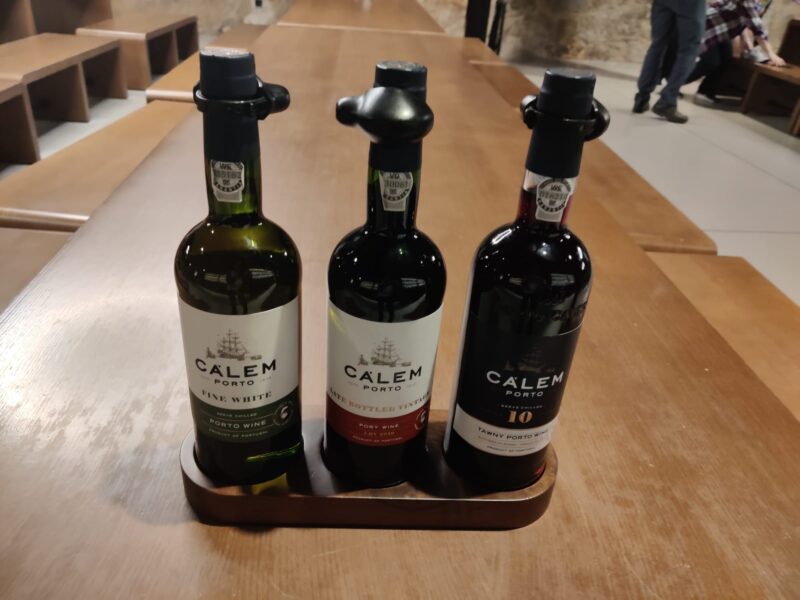
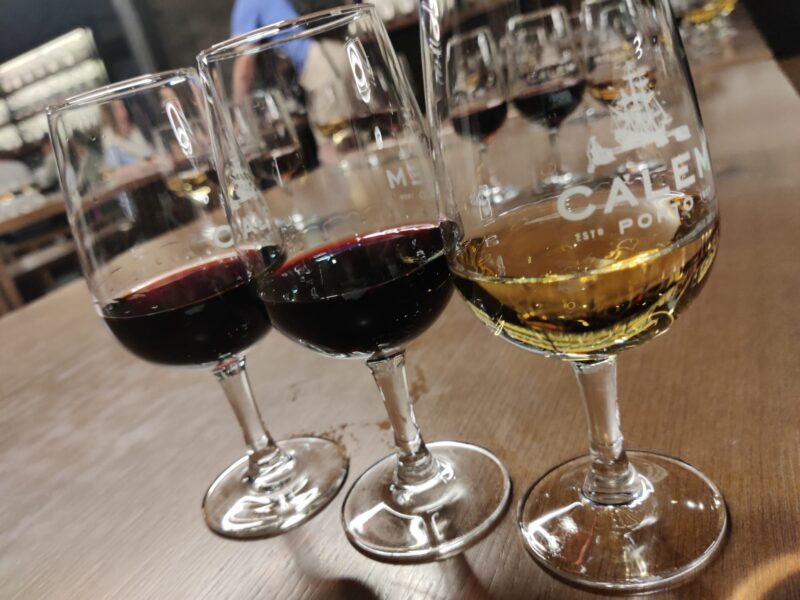
At Cálem, I tasted:
3‑year White Port — fruity, strong aftertaste
7‑year Ruby — smooth, dangerously easy to drink
10‑year Tawny — silky, balanced, no aftertaste
🌞 Why We Pass Port to the Left?
During the tasting, I finally asked the question that I had lingering: Why do we pass the Port to the left?
The guide answered with a smile: “It’s a naval tradition. The leftward motion mirrors the sun’s path and ensures fairness and continuity at the table. Everyone gets their share. No one is skipped. Order is maintained.”
A little ritual rooted in astronomy, navigation, and social harmony…
All opinions expressed in this blog are our own. We are not affiliated with, sponsored by, or partnered with any of the places, recommendations, or links mentioned.