
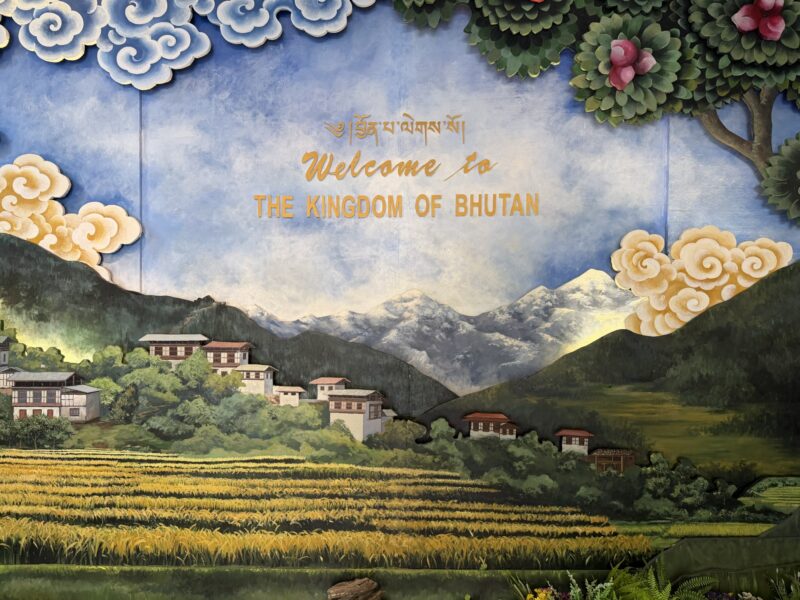
Welcome to the Land of the Thunder Dragon: Bhutan’s “Gross National Happiness”! 🏔️😊
Kuzuzangpola (Hello!) everyone! ✨
From India, my family and I hopped on a short flight straight into the Eastern Himalayas and landed in a tiny, magical mountain kingdom that has fascinated me for years: Bhutan!
For Indians, Bhutan is one of the most beloved neighbors to visit. Because of the close friendship between our two countries, Indians make up nearly two-thirds of all travelers who visit Bhutan!
Let me share one of the coolest things about the country: Did you know that instead of measuring success through GDP (Gross Domestic Product – i.e. how much money is made), Bhutan measures its success through “Gross National Happiness” (GNH)?! 🤯📋
Throughout my travels in Bhutan, I was able to experience it first-hand. I’m happy to report that GNH isn’t just a cute marketing slogan — it is an actual, practical policy-testing system that every single new law, highway, and development project in Bhutan has to pass! Let me break down how this fascinating system works! 👇

Where Did Gross National Happiness Come From? 👑💡
Back in the 1970s, Bhutan’s Fourth King, Jigme Singye Wangchuck, famously declared that “Gross National Happiness is more important than Gross Domestic Product.”
His logic was super clear yet revolutionary: if a country grows its economy by cutting down all its forests, polluting its rivers, overworking its people, and erasing its culture, is that really “progress”? Bhutan decided that true development has to balance material growth with emotional, cultural, and environmental well-being.
How Bhutan Actually Tests New Laws & Projects! 📋✅
Here is the part that impressed me the most! In Bhutan, whenever the government wants to pass a new regulation or approve a major project, like building a highway, opening a mine, or launching a new industry, it has to go through a GNH Policy Screening Tool!
Think of it like a real-world checklist built around Four Core Pillars:
- Sustainable & Equitable Socio-Economic Development (Does this help everyday people, not just a few?)
- Environmental Conservation (Does this protect nature?)
- Preservation & Promotion of Culture (Does this respect local traditions and community life?)
- Good Governance (Is this fair, transparent, and ethical?)
Every proposed policy is evaluated across dozens of specific indicators – from how it affects people’s stress levels, free time, bonds within the community to whether it protects wildlife habitats and clean water.
If a new project might bring in fast money, but it damages the environment, disrupts local communities, or harms people’s overall well-being, it gets rejected or sent back to be redesigned!

Seeing GNH in Real Life (It’s Everywhere!) 🌲🚦
You don’t have to read government reports to see this philosophy in action – you feel it the moment you land!
- Carbon-Negative Country: It is in their constitution that at least 60% of the country is to remain under forest cover forever (today, it’s over 70%!). Bhutan is one of the only carbon-negative countries on earth – meaning its forests absorb more carbon than the entire country produces!
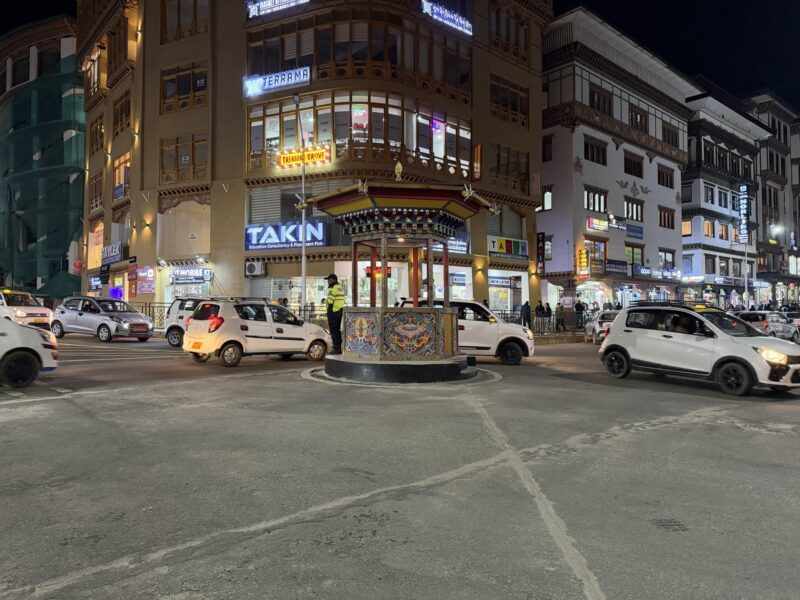
- No Traffic Lights in the Capital: When I arrived in Thimphu, the capital city, I laughed out loud when I realized there isn’t a single traffic light anywhere! They tried installing one years ago, and locals felt it was too cold and impersonal, so they brought back white-gloved traffic police officers who direct cars with graceful, dance-like hand movements! 🕺🚗
- Mindful Tourism: Even the way Bhutan welcomes visitors reflects GNH – instead of letting mass tourism overwhelm their fragile mountain valleys, they control the number of tourists allowed each year and charge a daily Sustainable Development Fee that goes straight into free healthcare, free education, and environmental protection for Bhutanese citizens.
Why Bhutan Stole My Heart Right Away 💛🏔️
Coming from bustling, fast-paced cities like Delhi and Doha, stepping into a country that consciously asks “Will this make people’s lives genuinely better?” before chasing faster growth feels like taking a deep, fresh breath of pine-scented mountain air.
And trust me – this is just the beginning of my Bhutan adventures! Over the next few posts, I’ll introduce you to Bhutan’s bizarre national animal (the Takin!), take you inside a traditional wood-fired hot stone bath, and share what happened when I visited a very unusual fertility temple! 😉🙈

A Handwritten Adventure Delivered to Your Door
Every month, a beautifully handwritten postcard sent from a different corner of the globe — penned by real people, in real places, with real stories to share.