
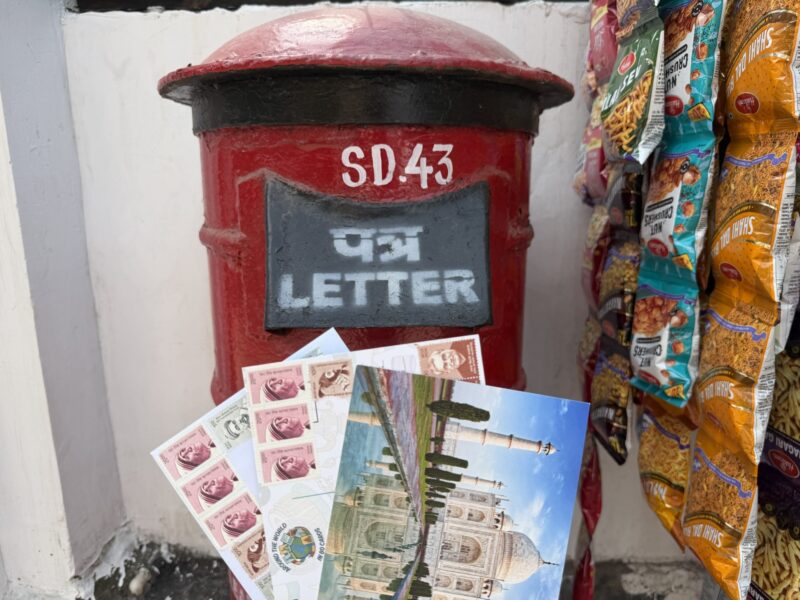
Hello everyone! Greetings from home in India! 🇮🇳✨
I finally took my annual leave and flew back home to Delhi to see my parents! Honestly speaking, nothing in the world beats that feeling of landing back on home soil after working abroad all year, yaa!
After spending a few days in Delhi catching up with family (and eating all of my mom’s home-cooked food!), we planned a special trip for us to Varanasi (Kashi) – one of the oldest cities in the world! 🚂✨ My parents had been wanting to visit Kashi Vishwanath temple and attend the evening prayers by the river for a long time now, so taking them on this pilgrimage while I am home on leave felt like the most meaningful thing I could do for them.
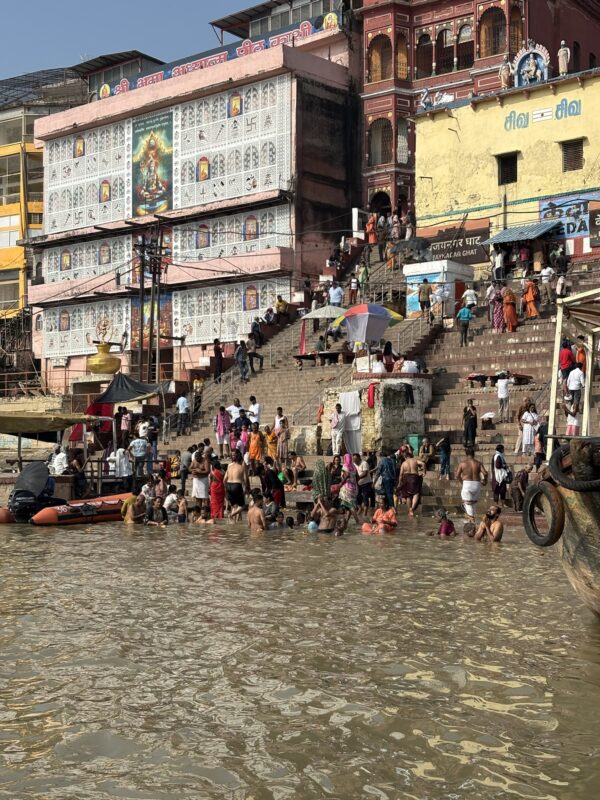
Last evening, we stood right on the crowded stone steps of Dashashwamedh Ghat (the main riverfront steps of the Ganges River) during the famous Ganga Aarti ceremony. Watching those massive fire lamps reflect on the dark river water with my own eyes gave me pure goosebumps!
More Than Just Water: Why Maa Ganga is Sacred 🌊🕉️
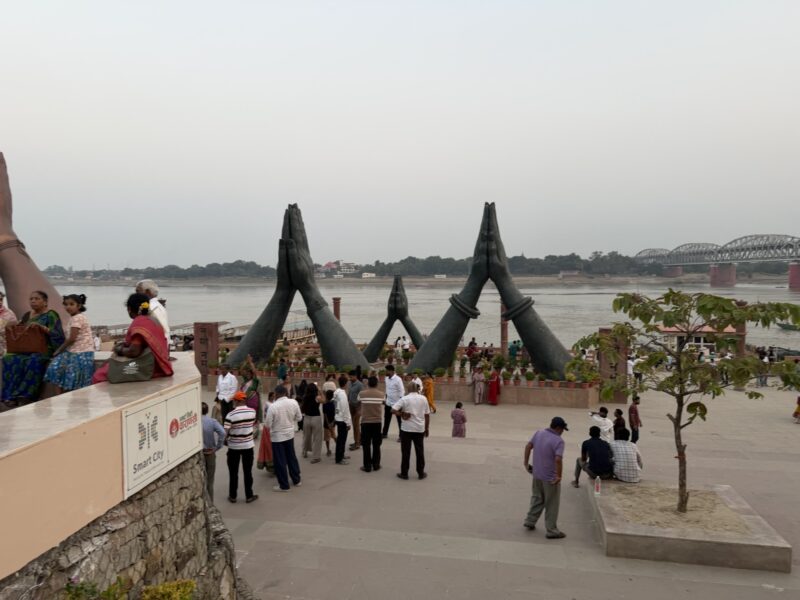
In the West, people usually look at a river on a map and see geography, trade routes, or water supply. But in India, we don’t call her the Ganges—we call her Maa Ganga (Mother Ganga).
For millions of Indians, she is a living goddess and the spiritual lifeline of our entire country, woven into every stage of life:
- The Source of Life: Flowing over 2,500 kilometers from the icy glaciers of the Himalayas all the way down to the Bay of Bengal, the Ganga basin feeds and sustains hundreds of millions of people! From agriculture to daily drinking water, civilization in Northern India literally grew around her banks.
- From Our Very First Breath to Our Last: In traditional Indian families, the very first drop of water touched to a newborn baby’s lips is sacred Gangajal (Ganga water), blessing them as they enter the world. And at the end of life, a few drops of Gangajal are placed on a person’s lips before they pass, and their ashes are immersed in her waters so their soul can attain moksha (liberation from the cycle of rebirth).
- Purification & Moksha: In Hindu tradition, taking a dip in the sacred waters of the Ganga washes away lifetimes of sins (paap).
- Fit for Kings (Even Across the Ocean!): Historically, Indian rulers believed Ganga water was so pure and auspicious that they refused to drink anything else! Even Mughal emperors like Akbar had Gangajal transported wherever they traveled. And in 1902, when the Maharaja of Jaipur sailed to the UK for King Edward VII’s coronation, he literally had two massive, 5-foot-tall solid silver urns custom-made just to carry thousands of liters of Ganga water across the ocean with him! 👑🚢
- Always With Us: Ask any Indian family – including ours back in Delhi! – and you will definitely find a small sealed copper pot or bottle of Gangajal (holy Ganga water) kept safely in their prayer room! Whether it is a wedding, a housewarming, or a festival, a few drops of Gangajal are sprinkled to bless the occasion.
Navigating the Famous Varanasi Galis to Reach the River 🐄🛵🔔
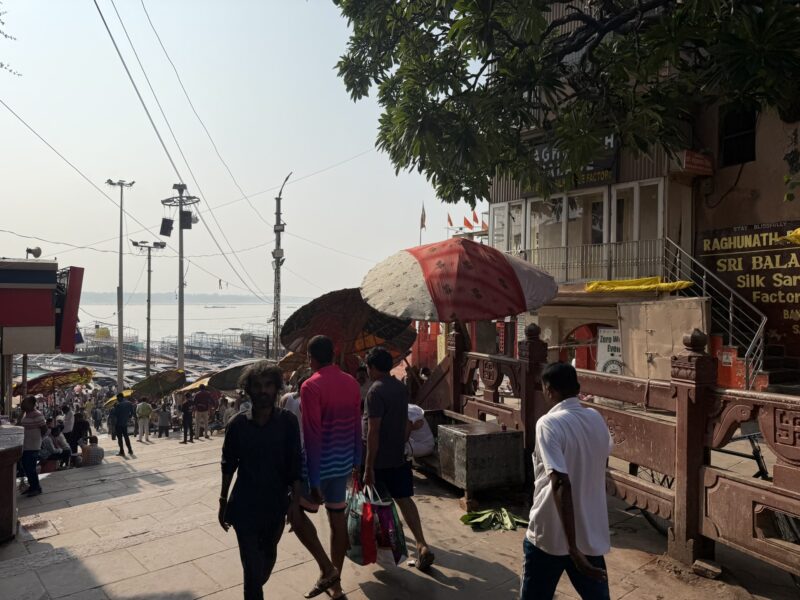
Before you even see the river, getting to Dashashwamedh Ghat is an adventure in itself!
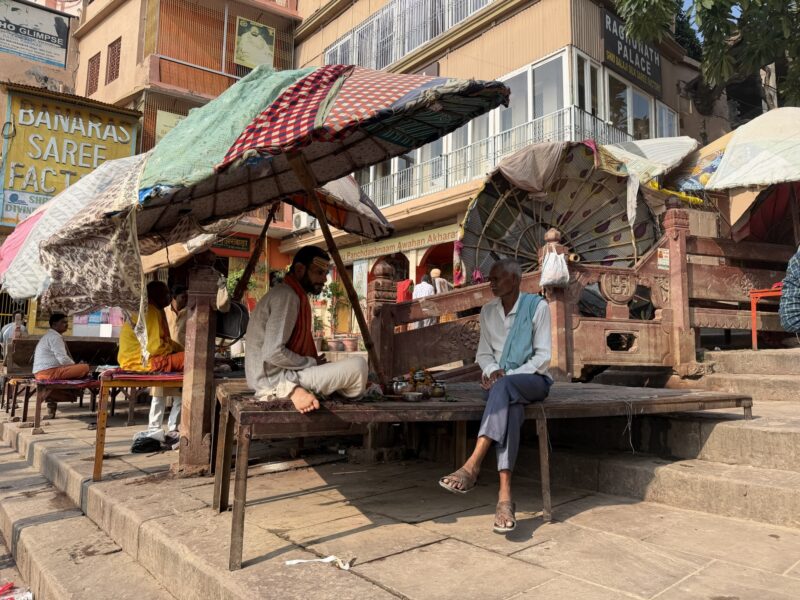
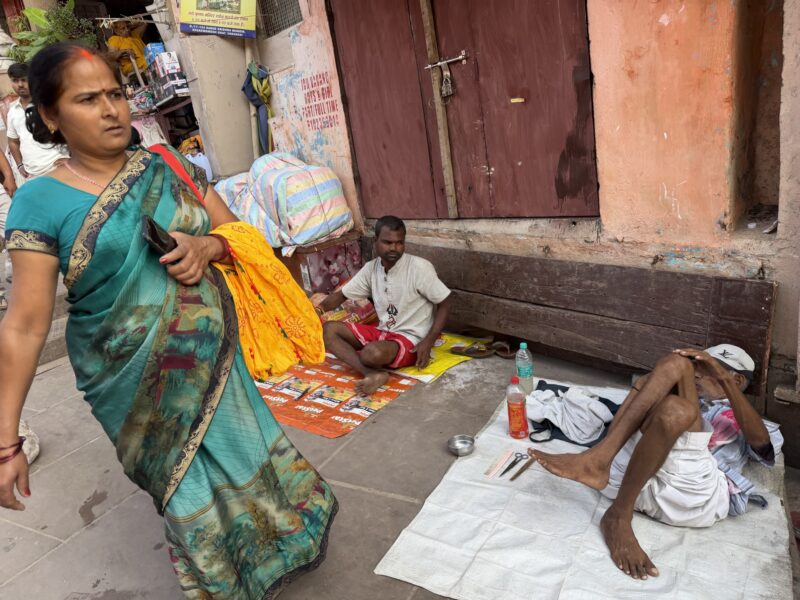
Anyone from Delhi knows old city crowds, right? Well, Varanasi takes it to a whole new level! To reach the riverbanks, you have to walk through centuries-old, super narrow winding lanes – what we call galis. You are literally squeezing past slow-moving cows, honking scooters somehow fitting through gaps you wouldn’t believe, tiny shops selling fresh marigold garlands and brass lamps, and the constant, joyful ringing of temple bells!
It feels chaotic, colorful, and completely alive – and then suddenly, those tight lanes open up, and there she is: the vast, serene Maa Ganga stretching out before you as the sun begins to set.
The Evening Spectacle: What is the Ganga Aarti? 🔥🎶
Every single evening, just as the sun sets and twilight falls, something extraordinary happens along the riverbanks (called ghats).
The Ganga Aarti is a grand, synchronized prayer ceremony offered to Maa Ganga in gratitude for sustaining life.
Standing at Dashashwamedh Ghat around dusk, the energy is completely electric! Thousands of devotees, sadhus (holy men), and travelers from every corner of the globe gather on the steps and sit in wooden rowboats floating on the river to watch.
Suddenly, the ceremony begins. A group of young priests dressed in matching silk dhotis (male skirt) stand on wooden platforms facing the river. Moving in exact, hypnotic unison, they lift heavy, multi-tiered brass lamps (deepams) blazing with camphor and ghee flames! The air fills with the deep, vibrating sound of conch shells (shankh), rhythmic temple bells, clashing cymbals, and resonant Sanskrit chants (mantras). Thick clouds of sweet sandalwood and marigold incense drift across the water.
Each part of the ceremony honors Maa Ganga using the five elements of nature:
1. The Conch Blowing (Shankhnaad) 🐚: Right at the start, you will hear a deep, powerful sound echoing across the water as the priests blow into large white conch shells (shankh) facing all four directions. This announces the start of the sacred prayer, purifies the atmosphere, and invites the divine energy to descend upon the ghat.
2. Offering Incense (Dhoop) 💨: Next, the priests pick up tall brass incense holders billowing thick, fragrant smoke and wave them in slow, rhythmic circles. Representing the element of air, the sweet sandalwood and loban smoke carries our prayers upward and cleanses the space.
3. The Flower & Water Offering (Pushpa & Jal) 🌸: You will see them gently sprinkling rose and marigold petals along with holy water from small brass vessels (kalash) toward the river. This symbolizes earth and water, offering gratitude back to the river for nourishing the land.
4. The Grand Fire Lamps (Agni / Deepam) 🔥✨: This is the most dramatic part! The priests lift massive, multi-tiered brass lamps (often holding dozens of burning wicks soaked in ghee) and swing them in synchronized, hypnotic figures-of-eight while temple bells and drums reach a crescendo. Representing fire – the ultimate symbol of light, knowledge, and the dispelling of darkness—the glowing flames illuminate the priests’ faces and reflect off the dark river.
5. The Yak-Tail Whisk & Peacock Fan (Chamar & Mor Pankh) 🦚: Toward the end, the fire lamps are set down, and the priests gently fan the river using fluffy white yak-tail whisks (chamar) and vibrant peacock-feather fans. In ancient Indian tradition, fanning is a royal gesture of respect and hospitality – treating Maa Ganga like a beloved Queen and Mother after her grand prayer!
6. The Final Karpoor (Camphor) Aarti & Pushpanjali 🙏: Finally, a bright, pure camphor flame is offered, followed by everyone joining their hands, chanting “Har Har Gange!”.
Recharging My Soul
Traveling from Delhi to Varanasi with my parents and experiencing this ritual in person is exactly the spiritual recharge I needed! Standing by Maa Ganga, listening to the evening temple bells, and lighting a diya with my family reminds me of where I come from and what truly matters.
I am not affiliated with or sponsored by any places, brands, or organizations mentioned in my posts. All views expressed here are purely my own! 💛

A Handwritten Adventure Delivered to Your Door
Every month, a beautifully handwritten postcard sent from a different corner of the globe — penned by real people, in real places, with real stories to share.