
Every country has a dish that tastes of home. In Norway, it’s a bowl of rømmegrøt – Rømme means sour cream, and grøt means porridge. A warm, pale porridge and it is one of the most quietly beloved things a Norwegian can put in front of you.
Here’s how it’s made. You cook full-fat sour cream in a pot until the butterfat separates out and rises to the surface. You skim that golden butter off, whisk in flour and warm milk to make a smooth, thick porridge, and then — this is the lovely touch — pour the reserved butter back over the top before serving. The dish essentially crowns itself with its own butter.
To finish, you dust it generously with cinnamon and sugar and watch it melt into the warm surface. The result is rich, tangy, sweet, and thoroughly indulgent – “a hug in a bowl,” as one Norwegian food writer put it.
It is traditionally served alongside salty cured meats, such as, salami, prosciutto, or Norway’s own air-dried fenalår (cured leg of lamb), and with a piece of thin, crisp flatbread on the side. It’s often served with a glass of black current juice.
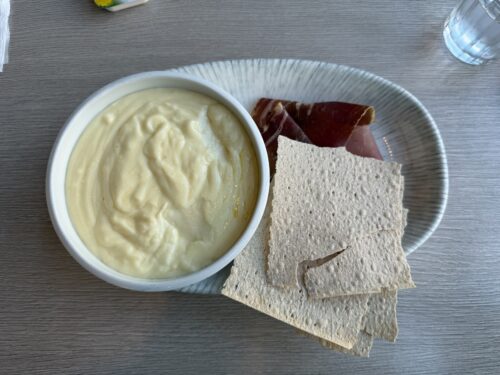
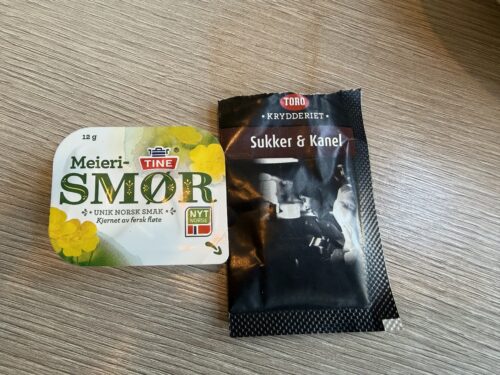
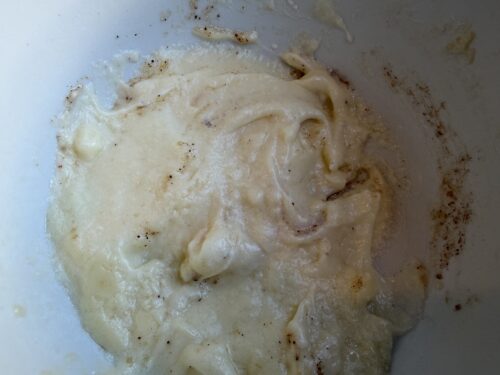
So you end up with something quite contradictory on the plate: a sweet, buttery, cinnamon-dusted tangy porridge sitting cheerfully next to slices of salty cured meat. Sweet and savoury, side by side.
The Norwegians eat rømmegrøt at the moments that matter – Midsummer nights, weddings, christenings, harvest gatherings, and long summer days up in the mountain cabins. It is comfort food in the truest sense: the dish you reach for to mark a celebration or simply to feel at home and Norwegians have been eating it for a very, very long time.
But it wasn’t until an afternoon at the Norwegian Museum of Cultural History – sitting inside an årestue (a single-room wooden farmhouse built around an open hearth set in the middle of the floor, with no chimney; the smoke simply rose and drifted out through a hole in the turf roof called a ljore) – that I understood just how old this comfort really runs.
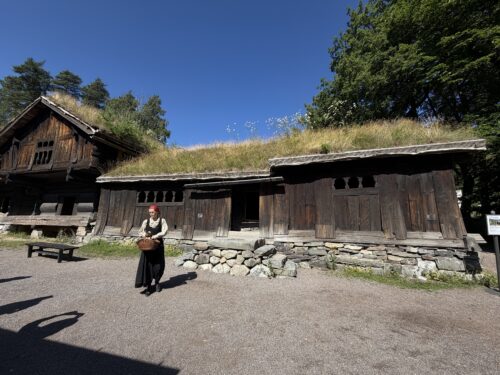
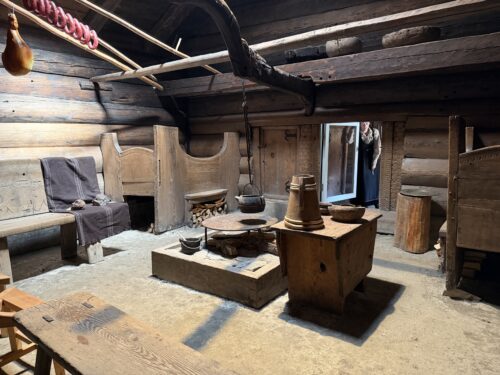
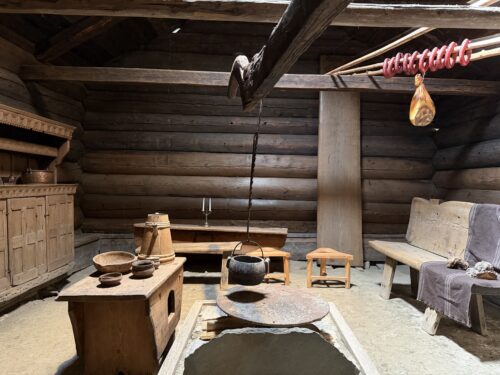

And sitting there, in that dim, smoke-darkened room where generations of a farming family had once gathered, it struck me: the rich, buttery bowl of rømmegrøt I’d been enjoying was the fancy descendant of the porridge these people would have cooked over that very hearth.
Porridge in Norway is ancient. Norwegians have been eating boiled grain porridge since prehistoric times, right through the Viking age – plain, filling, everyday food. Ordinary families ate porridge two or three times a day well into the 1800s.
But rømmegrøt was the special one. Cream was a luxury. To make a proper sour cream porridge, you needed a household with cream to spare – which meant a farm that had done well that year. So rømmegrøt was never everyday fare; it was a quiet, delicious way of showing that all was well. There was even an old custom of carrying a bowl to new mothers, in the belief it would help them nurse.
So if you’re ever offered a bowl of rømmegrøt in Norway, don’t hesitate. Spoon into the buttery centre, take a slice of salami on the side, and remember you’re tasting something Norwegians have cherished for centuries. 🥄