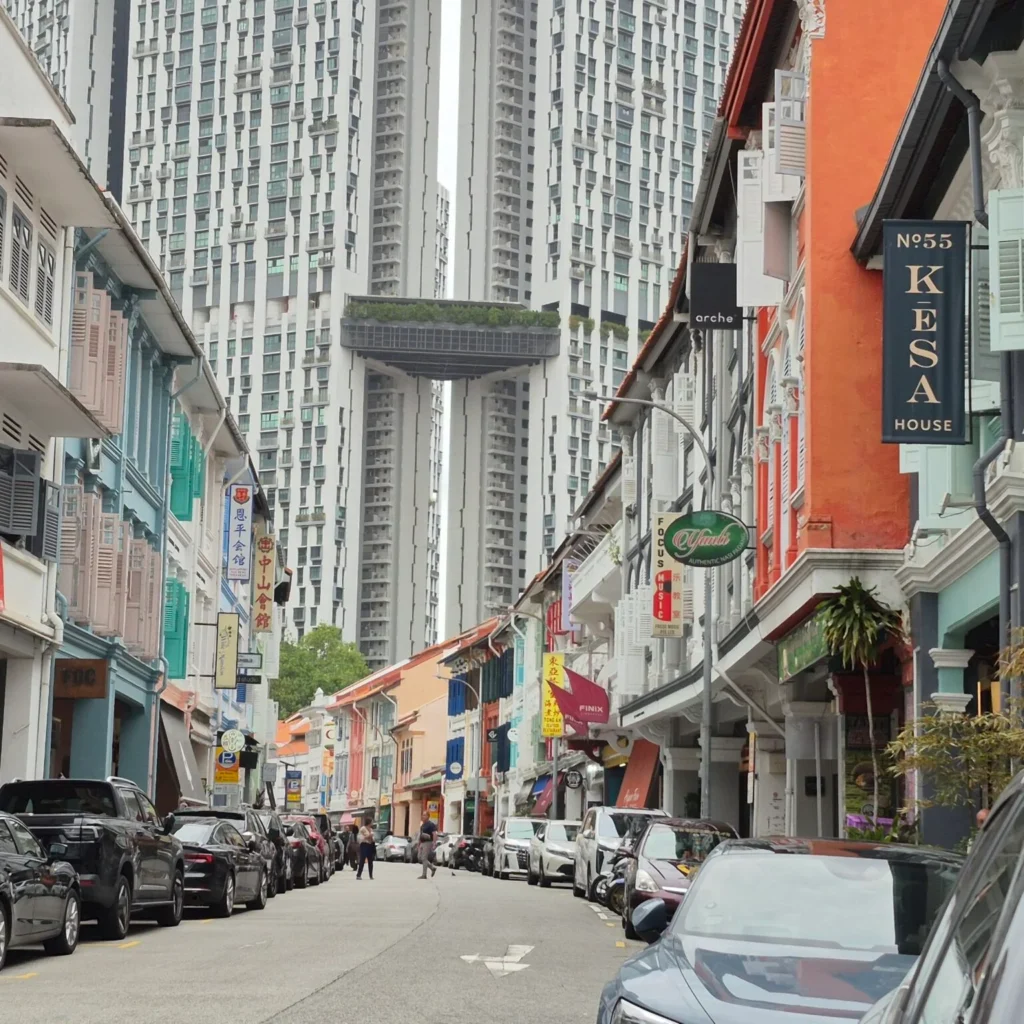
There are some streets in Singapore that feel like they’ve been dipped in a box of pastel crayons — and if you’ve ever found yourself suddenly surrounded by mint greens, bubblegum pinks, and buttery yellows, you’ve probably stumbled into a Peranakan neighborhood. These gorgeous shophouses are more than just pretty façades; they’re living pieces of history that tell the story of a unique community and its rich cultural blend.
Peranakan architecture flourished between the 1840s and 1950s, during Singapore’s colonial era. As the community grew wealthier, they expressed their identity through increasingly elaborate homes — each one a statement of taste, status, and cultural pride.
Many of these houses are now protected under Singapore’s conservation efforts, ensuring that future generations can enjoy their beauty.
Let’s take a fun walk through what makes these homes so special.
🌈 Who Are the Peranakans?
The Peranakans, also known as Straits Chinese, are descendants of early Chinese migrants who settled in Southeast Asia and married into local Malay communities. The result? A culture that’s beautifully blended: Chinese traditions, Malay influences, and a surprising sprinkle of European flair. You see this fusion everywhere — in their food, fashion, and especially their homes.
🏠 What Makes Peranakan Houses So Unique?
🎨 1. A Riot of Color
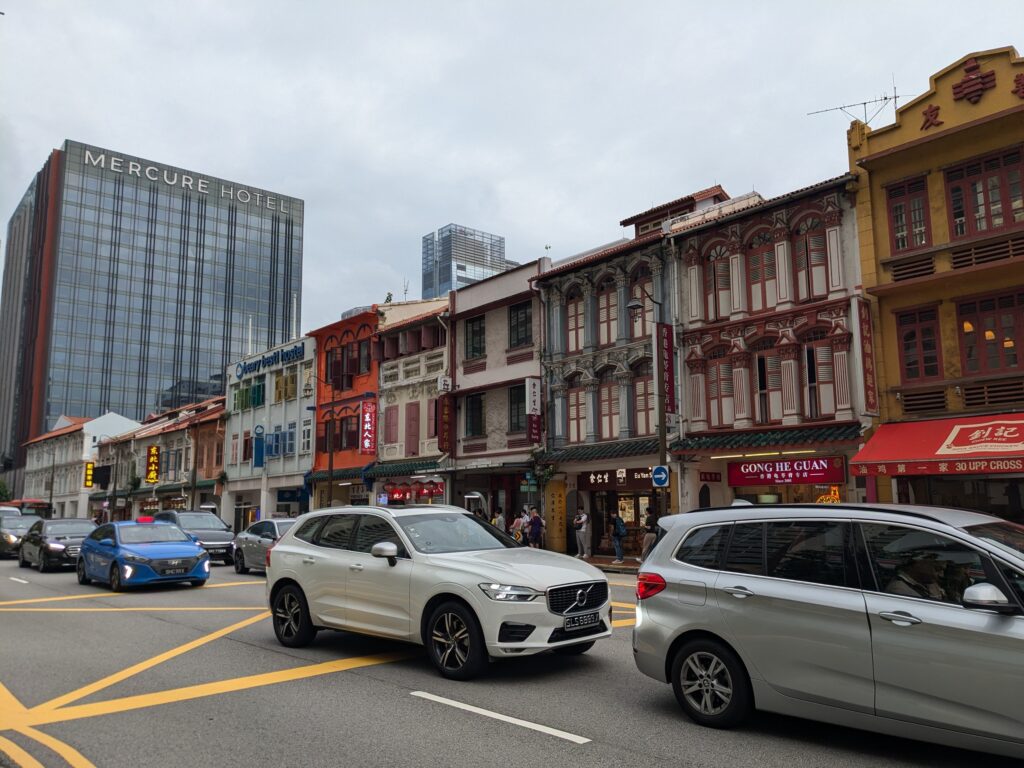
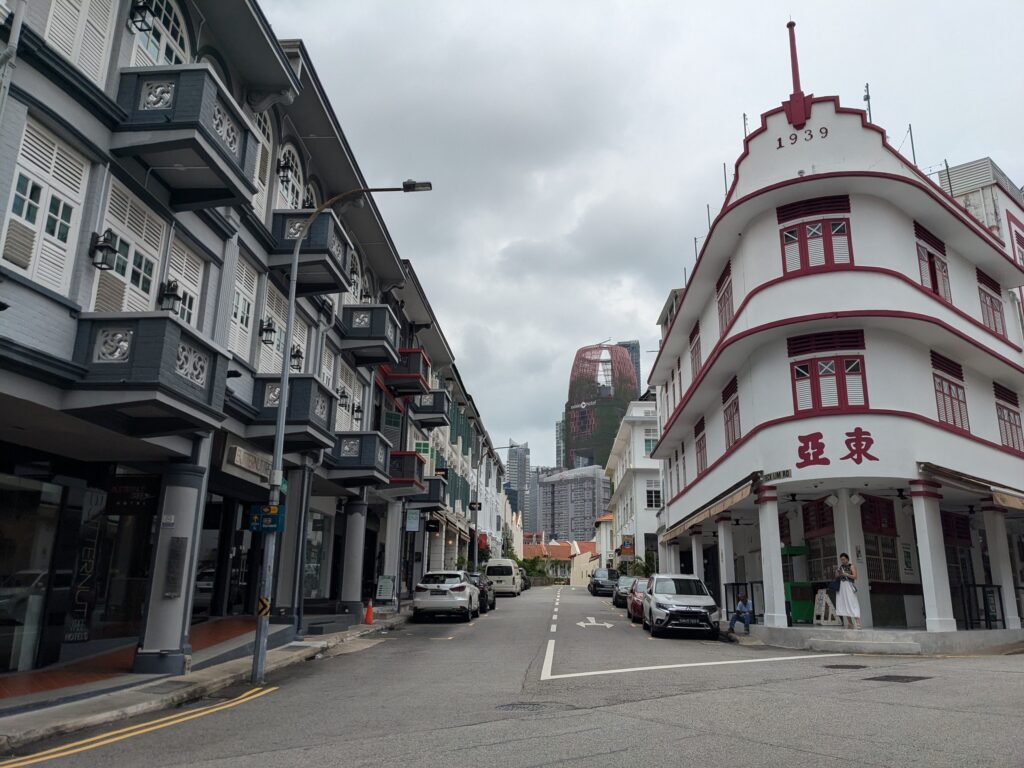
Peranakan homes are famous for their pastel façades. These houses don’t shy away from a bold palette. Think sorbet shades — lilac, mint, peach, lemon — lined up like a cheerful row of macarons. These colors weren’t just decorative — they reflected prosperity, individuality, and a love for beauty.
🟦 2. Majolica Tiles
Look closely and you’ll spot decorative majolica tiles imported from Europe and Japan. These tiles often feature flowers, birds, fruits, and geometric patterns. They were a status symbol from the late 1800s to the 1950s and remain one of the most recognizable Peranakan design elements.
🚪 3. Pintu Pagar (Half Doors)
These wooden half-doors are one of my favorite features. They let the breeze in while keeping curious chickens (and curious neighbors) out. Many are carved with delicate floral motifs and painted to match the house’s color scheme.
🪞 4. Eclectic Architecture
Peranakan houses blend Chinese, Malay, and European styles, sometimes called Straits Eclectic or Chinese Baroque. Expect to see:
- Chinese-style courtyards
- Malay ventilation features
- European columns, plasterwork, and decorative tiles
It’s a gorgeous architectural mash-up that reflects the Peranakan identity itself.
🧱 Inside: Long, Narrow, and Full of Surprises
One of the most fascinating things about Peranakan houses is their format — the way these homes are laid out from front to back. They may look petite from the street, but step inside and you’ll discover they’re surprisingly long, airy, and cleverly designed.
🌤️ 1. The Five-Foot Way
Right at the entrance, you’ll find the five‑foot way — a covered walkway that runs along the front of the house. It’s part shelter, part social space, and part neighborhood runway. This feature was mandated in early Singapore town planning and became a signature of shophouse architecture. Back in the day, this was where neighbors chatted, kids played, and shopkeepers displayed their goods. Today, it’s still one of the most charming features of any Peranakan street.
🏛️ 2. The Narrow-but-Deep Structure
Peranakan houses were built when property taxes were based on street frontage, so families kept the front slim and elegant, and then built way back. That’s why the houses look petite from the outside but feel like they go on forever once you’re inside. This creates a “tunnel house” effect — long, elegant, but full of hidden pockets of light.
🌿 3. The Airwell (Courtyard)
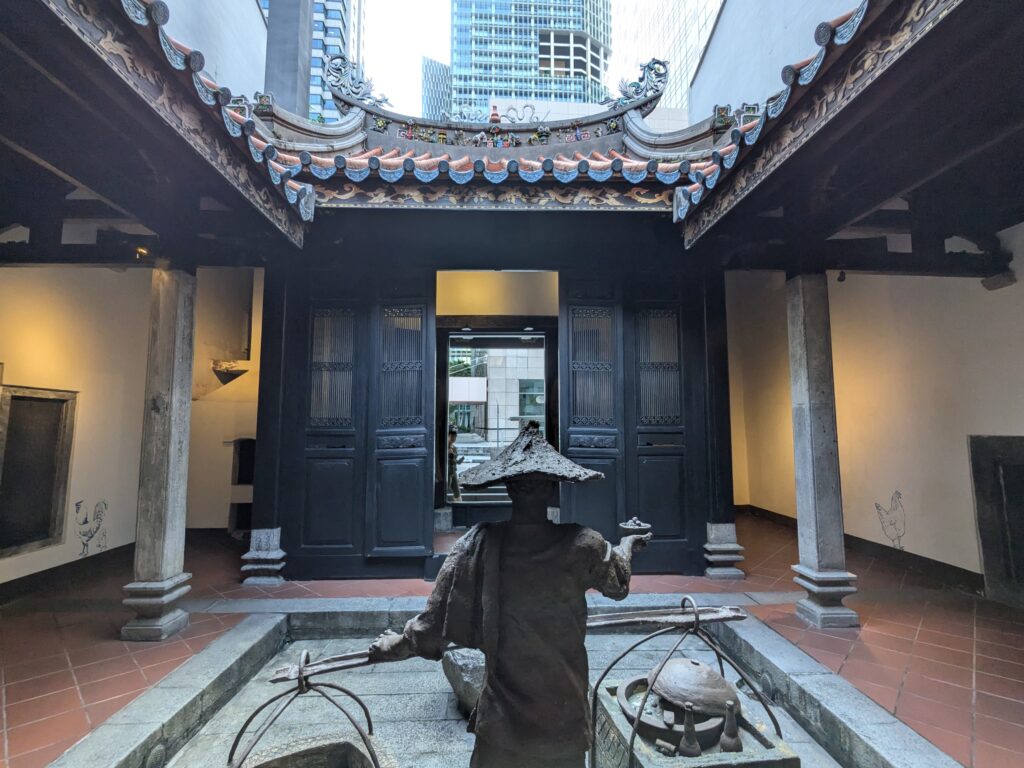
Because the homes are so long, architects added airwells — open‑to‑sky courtyards tucked inside the house. These are honestly magical. They let in sunlight, cool the home naturally, and create little pockets of greenery. Some houses even have two or three airwells, dividing the home into distinct “zones.”
🪟 4. The Front Hall (Reception Area)
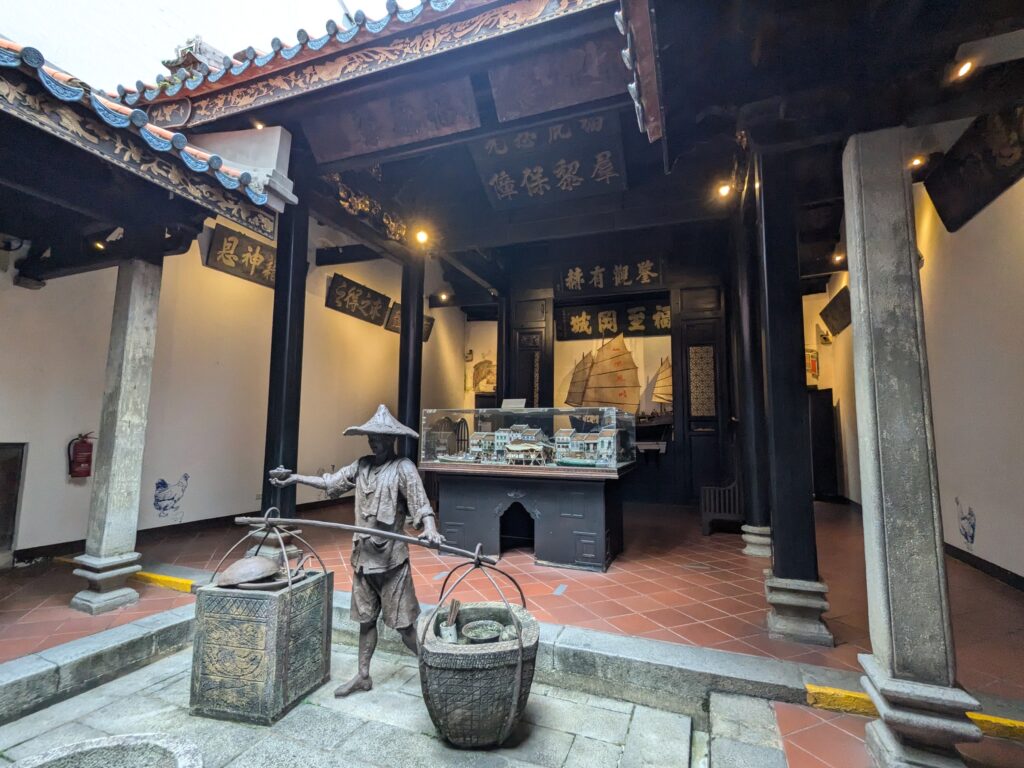
The first interior space is usually a reception hall, where families greeted guests and hosted ceremonies. This is where you’ll see the most decorative touches: patterned tiles, carved wooden screens, and sometimes even a family altar.
🍽️ 5. The Middle Hall
Walk past the first airwell and you’ll reach the **middle hall**, often used for dining or family gatherings. It’s cooler, quieter, and feels like the heart of the home. This is where daily life happened — meals, conversations, celebrations.
🍳 6. The Kitchen and Rear Courtyard
At the very back is the kitchen, traditionally separated from the main living areas to keep heat and smoke away. Many homes also have a rear courtyard, which was used for washing, cooking, or simply letting the breeze flow through.
🛏️ 7. The Upper Floor
Most Peranakan houses are two storeys, with bedrooms upstairs. The upper façade is where you’ll spot the most ornate plasterwork, colorful shutters, and decorative tiles. Some homes even have a front balcony — perfect for catching the evening breeze and watching the world go by.
These homes aren’t just pretty façades. They’re a reminder of Singapore’s multicultural roots and the creativity that emerges when cultures blend. Whenever I wander through a Peranakan neighborhood, I picture the street the way it might have been on a bright morning decades ago. A nyonya woman in a beautifully embroidered kebaya steps out onto the five‑foot way, her sarong swishing softly as she sweeps the front of her home. The scent of pandan and coconut wafts from a kitchen somewhere down the row, where someone is stirring a pot of kaya over a charcoal stove. A pair of children race past me in my mind’s eye, their bare feet slapping against the tiles as they chase each other between the pintu pagar doors.
I imagine an elderly man sitting by the window, polishing his beaded slippers while humming a tune he learned from his grandfather. Maybe a vendor pushes a cart slowly down the lane, calling out in a mix of Malay and Hokkien, offering fresh fruit or sweet kueh wrapped in banana leaves. The whole street feels like a tapestry woven from languages, smells, colors, and textures.
And as I walk, I can’t help imagining the stories behind each doorway. Who lived here? What celebrations filled these halls? How many family recipes were perfected in these kitchens?
It’s the kind of place where the past doesn’t feel gone. Just take the time to notice the little details — the carved motifs, the worn tiles, the way the light hits the shutters just right. Walking through these neighborhoods feels like stepping into a living museum — one filled with color, craftsmanship, and stories.