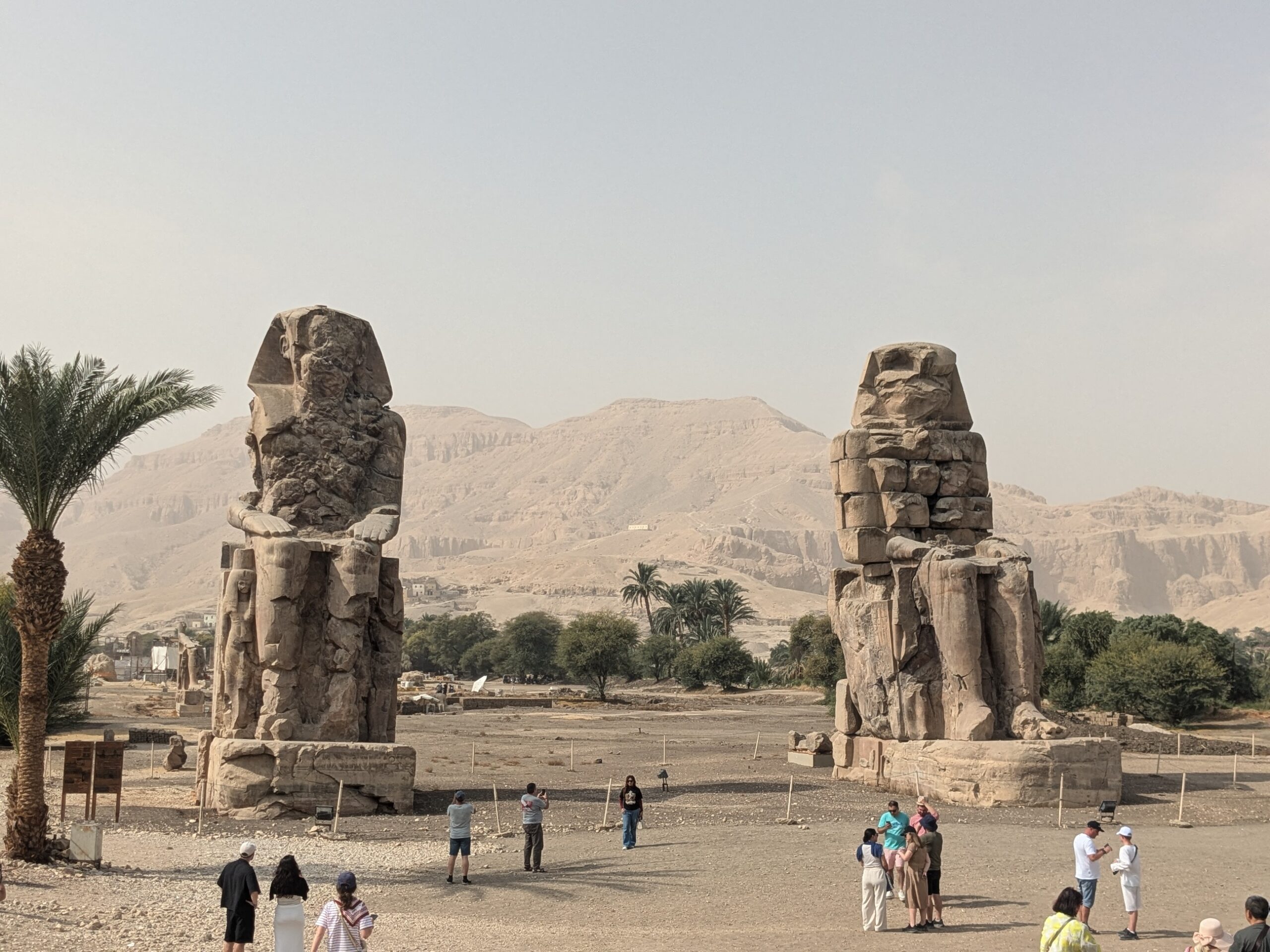
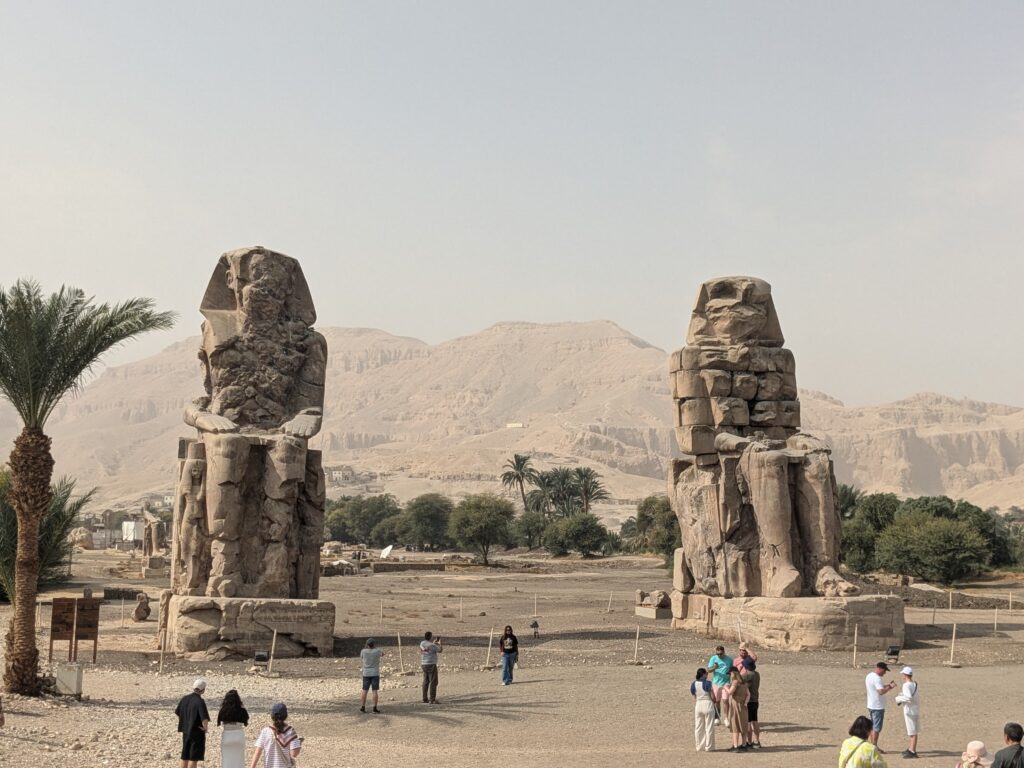
The Colossi of Memnon are the kind of monuments that catch you off guard. You’re driving across the West Bank of Luxor, the desert stretching out in pale gold, and suddenly two enormous stone figures rise from the plain — silent, immovable, watching the landscape the way they have for more than 3,400 years.
They look like sentinels. And that’s exactly what they were.
These twin statues once stood at the entrance of the mortuary temple of Amenhotep III, one of the largest and most magnificent temples ever built in ancient Egypt. Today, the temple itself has almost completely vanished — swallowed by floods, earthquakes, and time — but the colossi remain, like two survivors who refused to fall.
👑 Amenhotep III: The King Behind the Stone
Amenhotep III ruled during the height of the 18th Dynasty, a golden age of peace, wealth, and artistic brilliance. His reign was so prosperous that he built more monuments than almost any other pharaoh — temples, palaces, statues, and sacred complexes that stretched from Nubia to the Delta.
His mortuary temple on the West Bank was the crown jewel of his building program. It was enormous — larger even than Karnak in its footprint — and filled with statues, courtyards, and ceremonial halls.
Almost none of it survives. But the colossi do.
The Statues Themselves
Each statue is about 18 meters tall and carved from single blocks of quartzite sandstone transported all the way from quarries near Cairo — a staggering feat of engineering.
They depict Amenhotep III seated on his throne:
- hands resting on his knees
- the royal nemes headdress framing his face
- the cobra of kingship poised on his brow
- smaller figures of his mother and wife carved beside his legs
Even in their damaged state, the statues radiate authority. Their faces are worn, their crowns broken, their bodies cracked by earthquakes — but the sense of presence is unmistakable.
They were meant to guard the entrance to the king’s mortuary temple, watching over the rituals that would sustain his spirit in the afterlife.
Of course, considering the entire temple behind them collapsed into ruins, you could argue they weren’t exactly excellent at their job. 😝
🌅 The “Singing” Colossus
In the Greek and Roman periods, the northern statue became famous for a strange phenomenon. At dawn, it emitted a faint, musical hum — a sound caused by the stone warming and expanding after nighttime cooling.
Travelers believed it was the voice of Memnon, a hero of the Trojan War, calling out to his mother, the goddess Eos. Poets wrote about it. Emperors visited it. The statue became a celebrity of the ancient world.
When the Romans repaired the statue in the 3rd century CE, the sound stopped — and the legend faded.
But the name “Colossi of Memnon” remained.
🌄 A Gateway Between Worlds
Like all funerary monuments, the colossi stand on the west bank of the Nile — the land of the setting sun, the land of the dead. Behind them, the Theban mountains rise in jagged waves, leading to the Valley of the Kings. In front of them, the green fields of the Nile stretch toward the east — the land of life.
The statues sit exactly on that threshold, between life and death, sunrise and sunset, memory and oblivion.
Amenhotep III’s temple may be gone, but the colossi still hold their ground, watching over the desert with the same calm, eternal gaze they’ve had since the day they were raised.

🖋️Writer Spotlight: Mimi
🇪🇬 Egypt (Oct 2025 Postcard)
ℹ️ Important Notice for Our U.S. Members: Postcards from Egypt
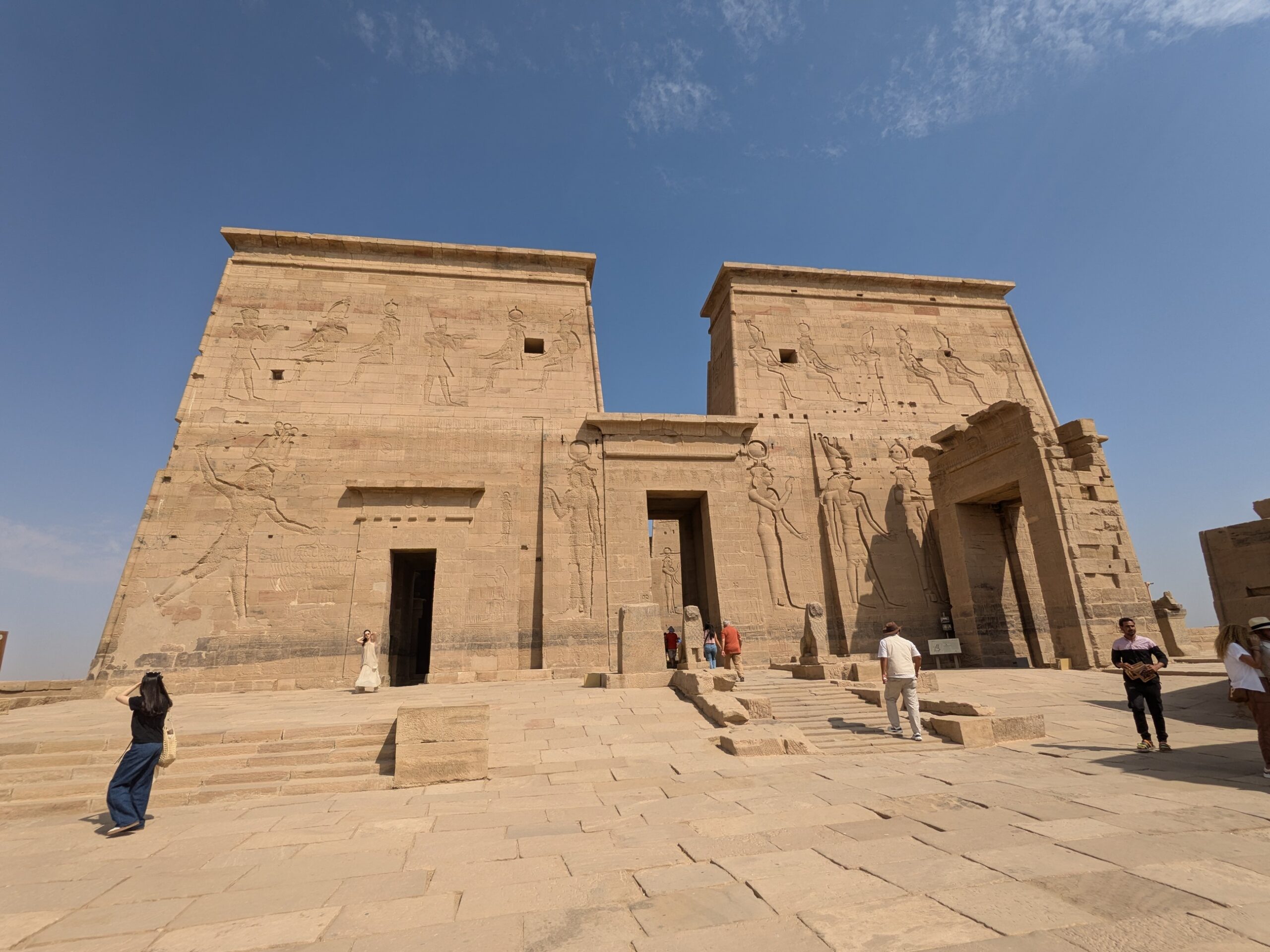
🇪🇬🏺 Philae Temple: Where Ancient Myth Meets the Nile
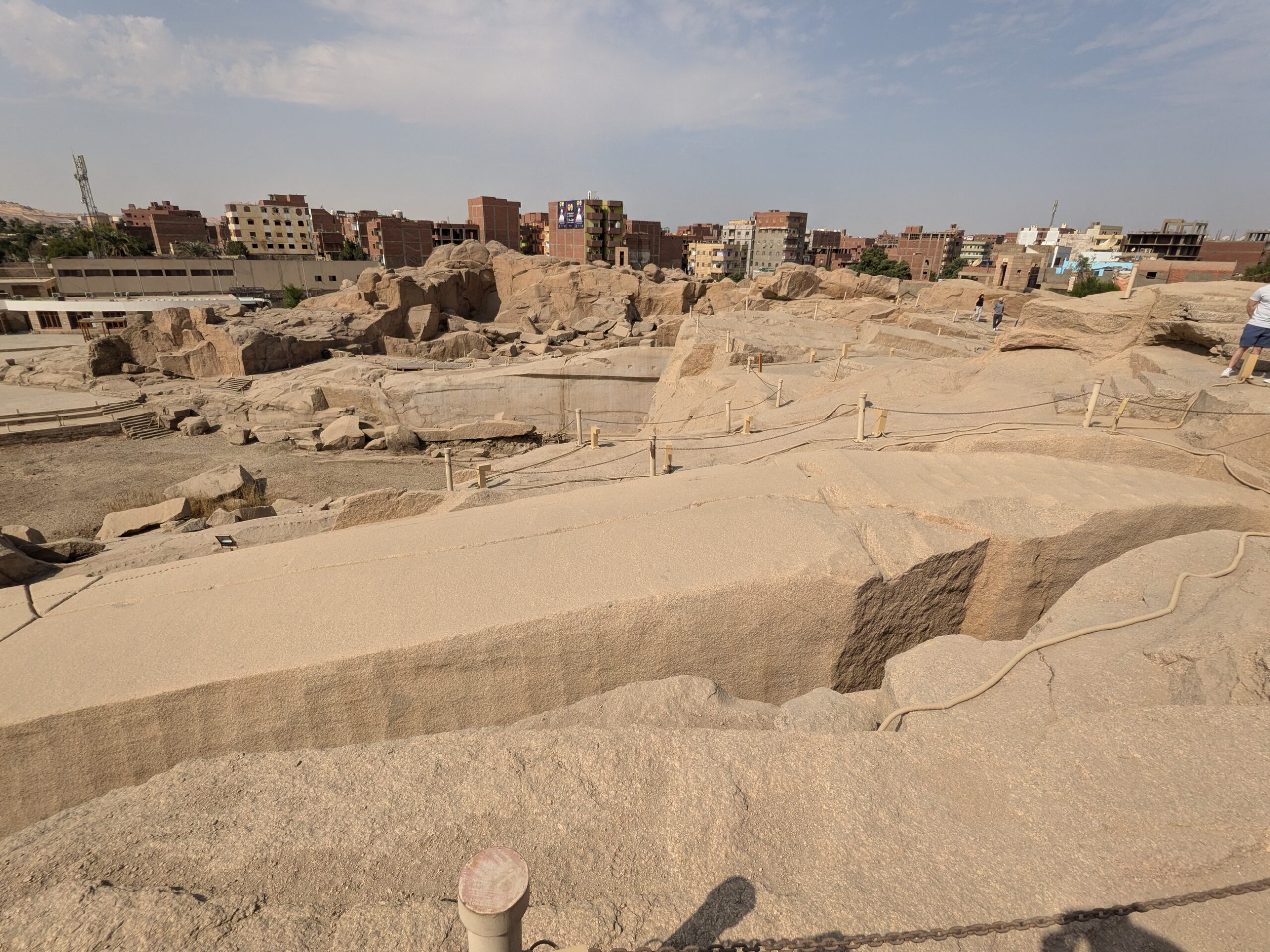
🇪🇬🪨 The Unfinished Obelisk: Egypt’s Monument That Reveals Everything
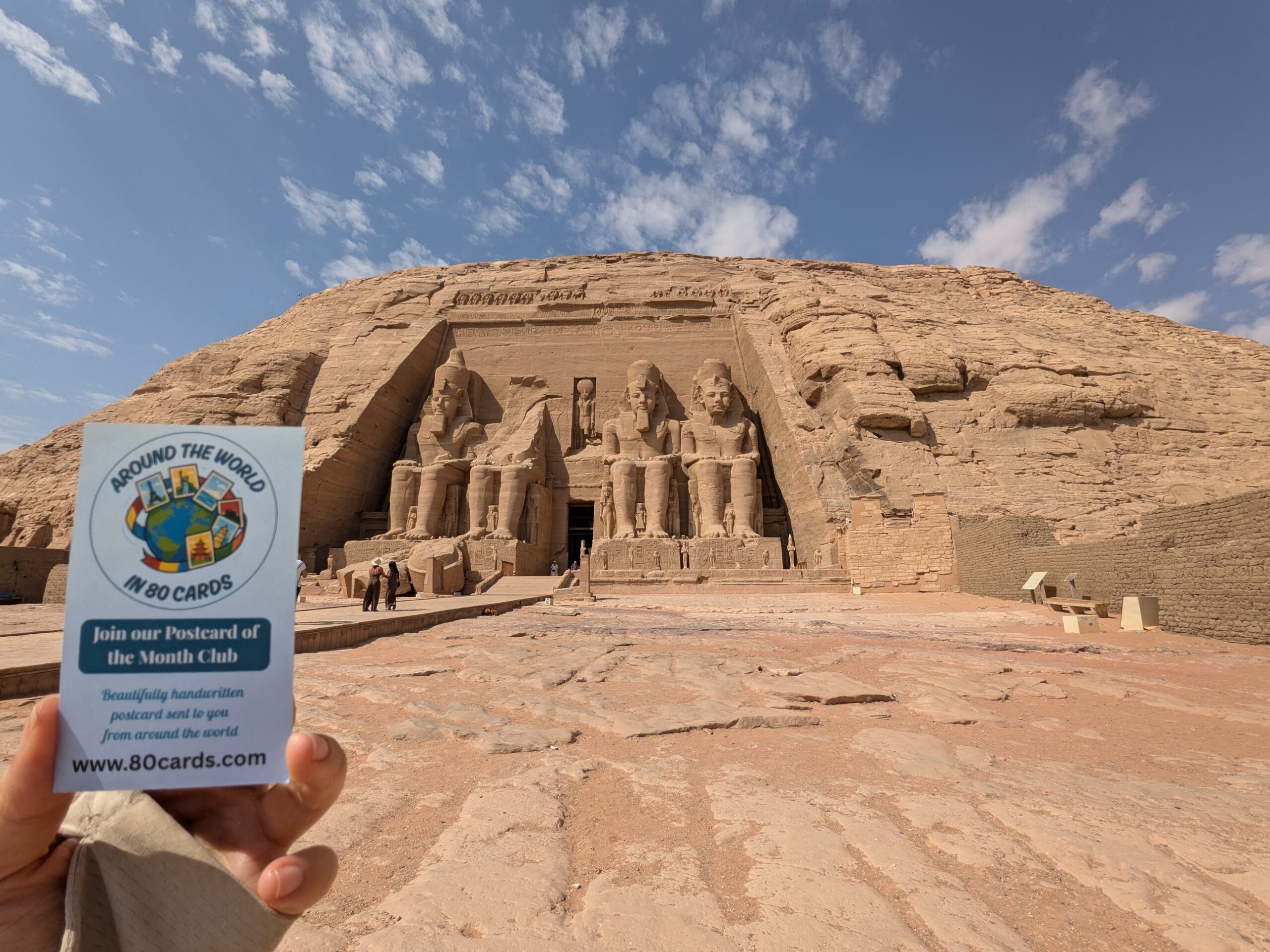
🇪🇬 Abu Simbel: From Pharaoh’s Vision to UNESCO’s Greatest Rescue
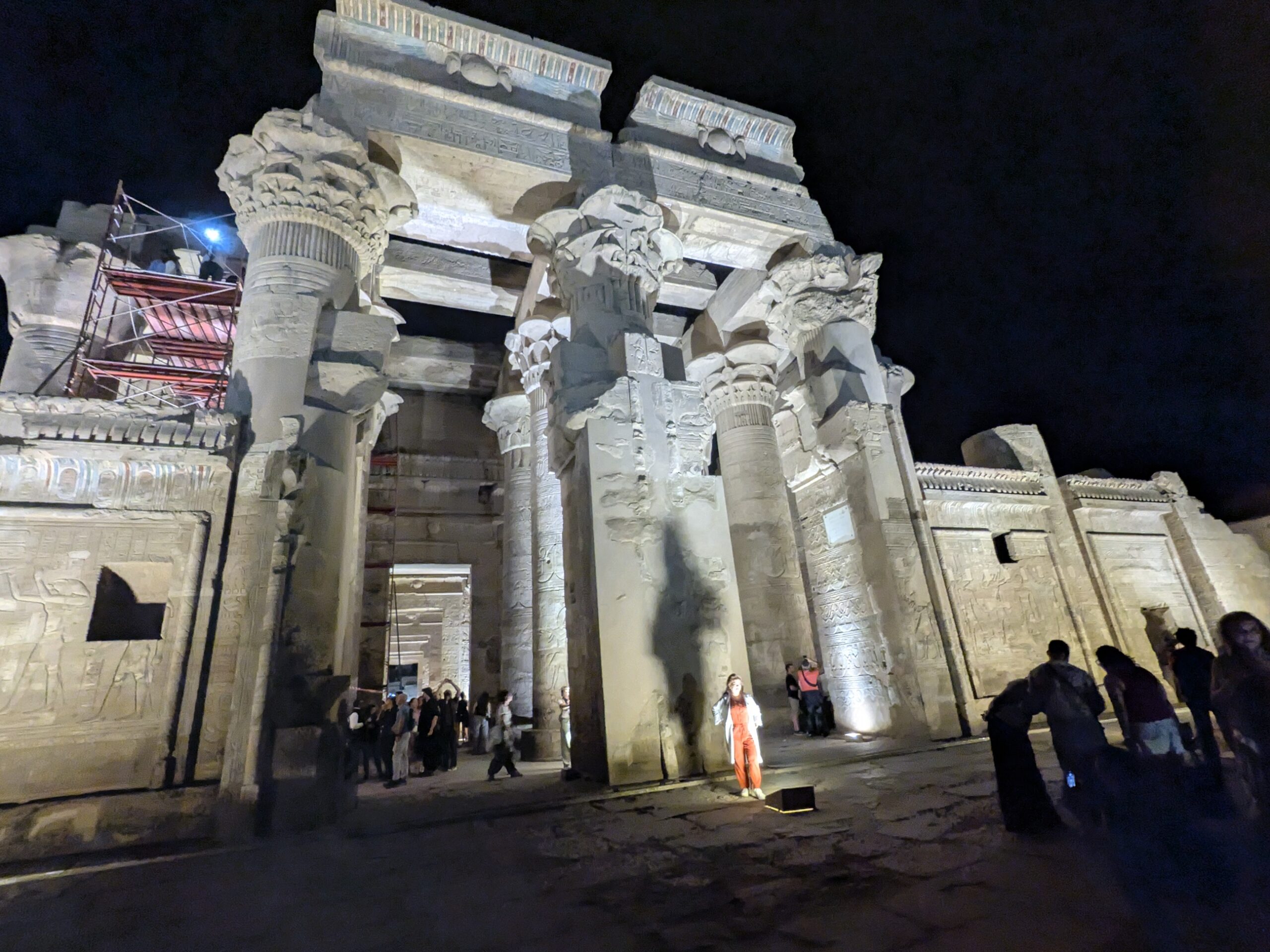
🇪🇬🐊 Kom Ombo: My Favorite Temple on the Nile
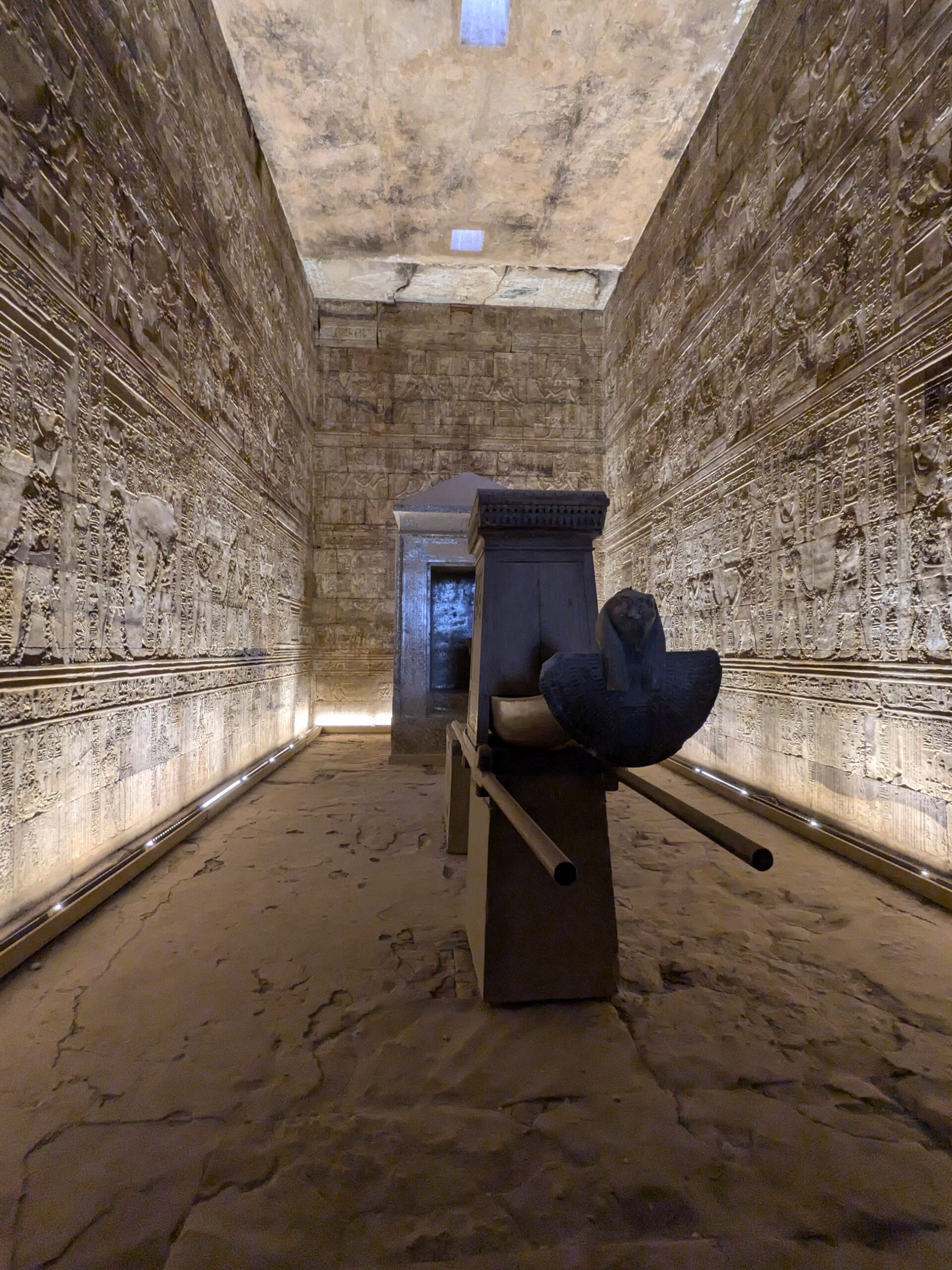
🇪🇬🦅 Edfu: Where a God Awaits for his Beloved
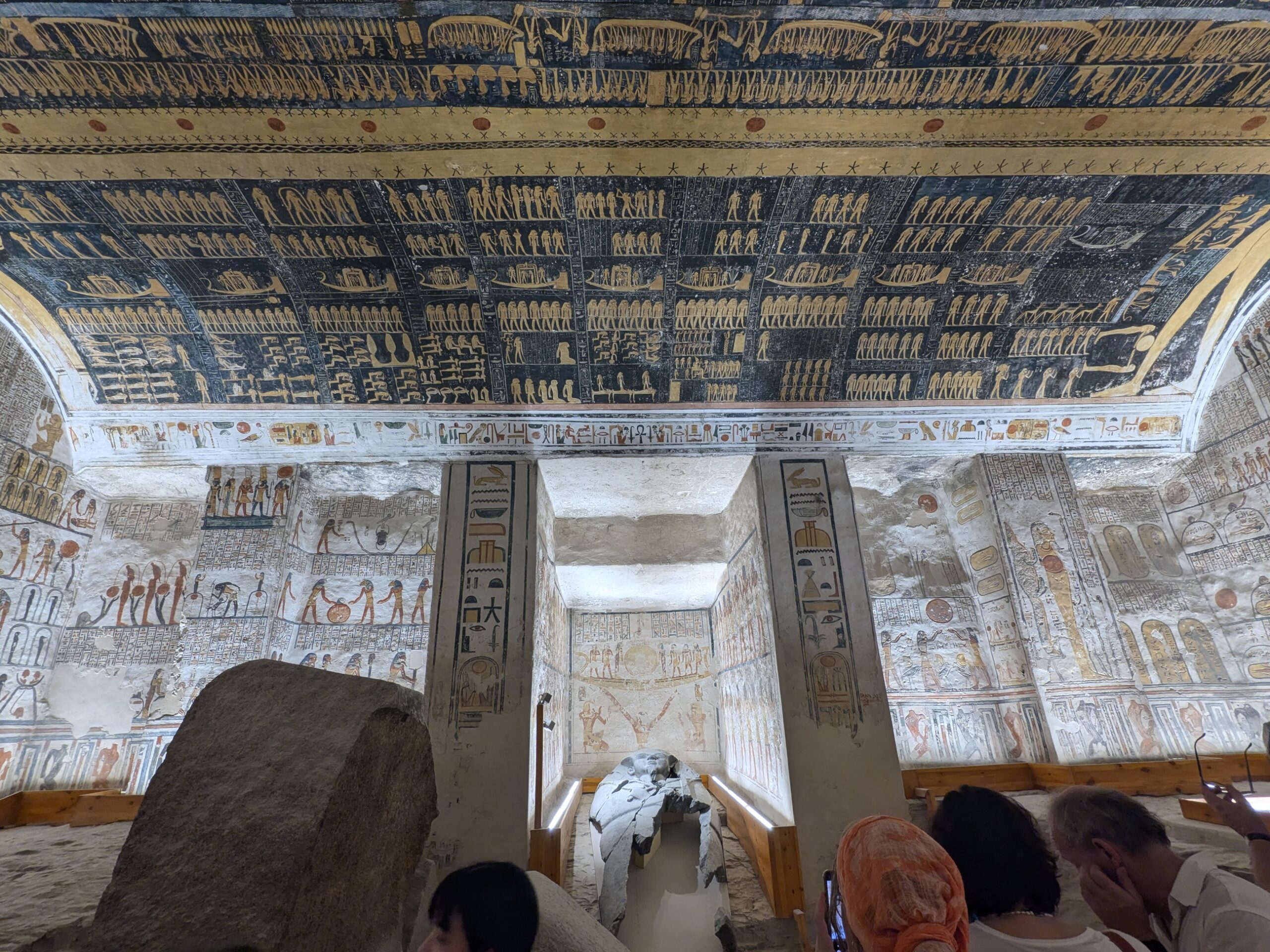
🇪🇬 Valley of the Kings: Where the Pharaohs Sleep
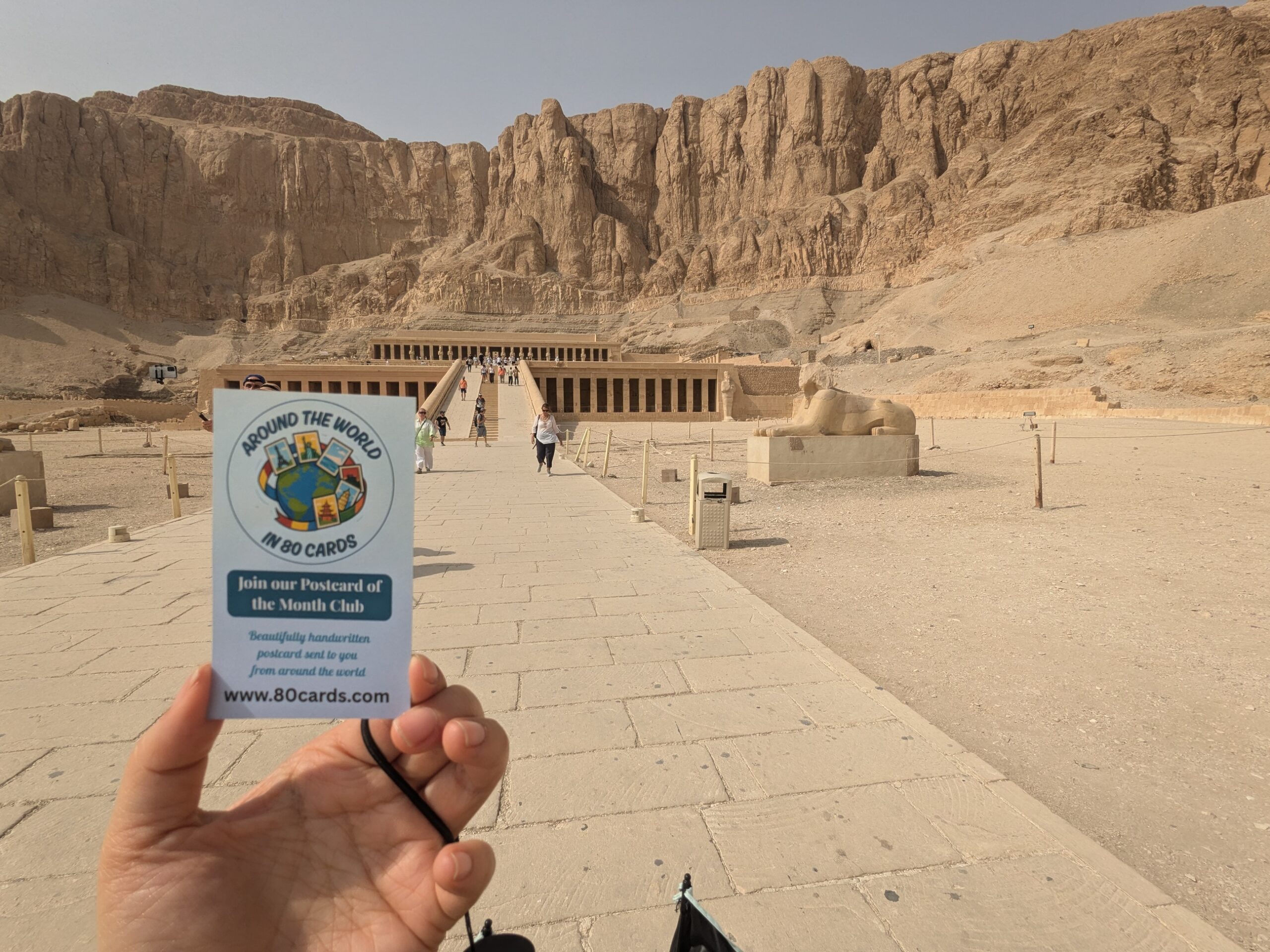
🇪🇬 The Temple of Hatshepsut: The Woman who Became King