When I think about Thailand, I always think about our markets. Not the big shopping mall with air‑con, but the old markets that grow from real life – the floating market on the water, and the railway market where the train pass so close you can smell the metal. These places show how Thai people live, how we adapt, and how we keep our heart soft even when the world change fast.
Floating Market: Life That Move With the Water
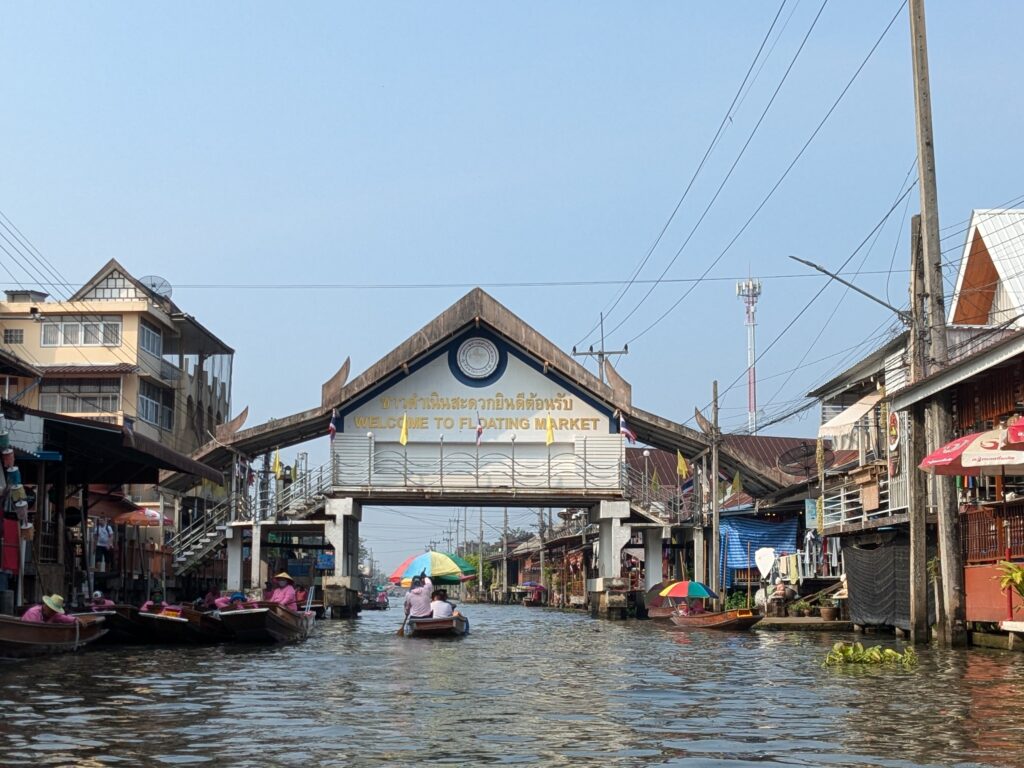
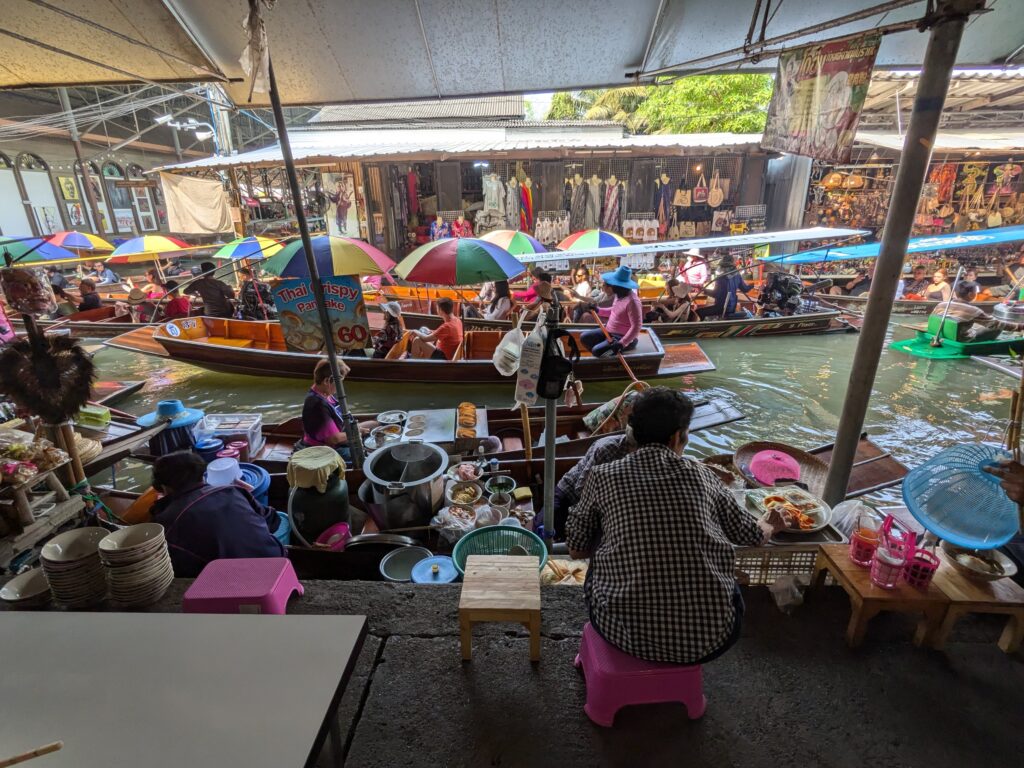
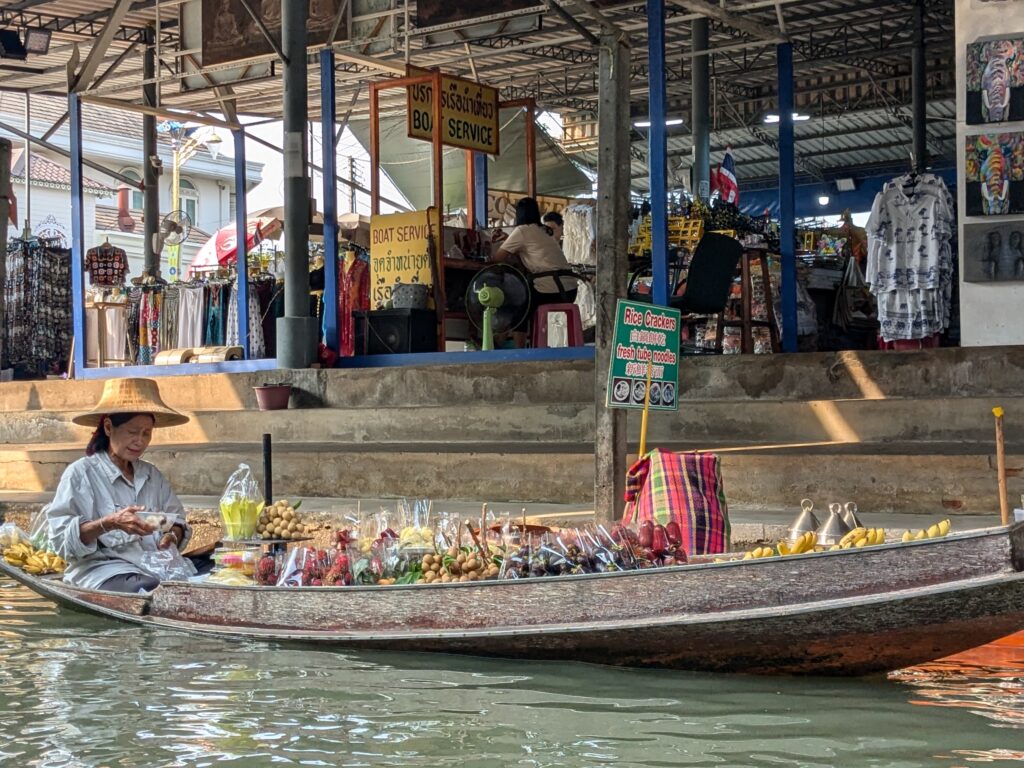
When you arrive at a floating market, the first thing you feel is the calm. The water move slow, the boat move slow, even the people talk slow. It is like the canal tell everyone, “No need to hurry today.” You smell grilled coconut, fresh mango, noodle soup cooking right on the boat, the steam rising into the warm morning air. The sellers sit low in their wooden boats, surrounded by piles of fruit – banana, pomelo, rambutan, mango so yellow it look like sunshine. Some boats sell hot noodle soup, some sell coffee, some sell grilled pork on stick. You can even find boat full of flower, or boat full of toy for children. It is like supermarket on water, but with more smile.
The format of the market is simple but beautiful. The boats line up along the canal, some moving slowly, some tied to the side. People on the walkway lean down to buy, and other people come in boats paddle close to each other to buy. Everything happen at water level. When you want something, you call softly to the seller, and they paddle closer. They pass the food to you with long bamboo stick, or sometimes with small net basket. You give money the same way – put it in the basket, and they pull it back. No rush, no pushing, no stress. Just gentle exchange, like old friend sharing food.
Floating markets exist because long time ago, water was our main road. Before car, before highway, Thai people travel by boat. They go to temple by boat, visit friend by boat, bring fruit from farm by boat. So of course the market also happen on the water. It was not tourist attraction – it was daily life. If you want banana, you paddle. If you want fish, you paddle. Simple like that.
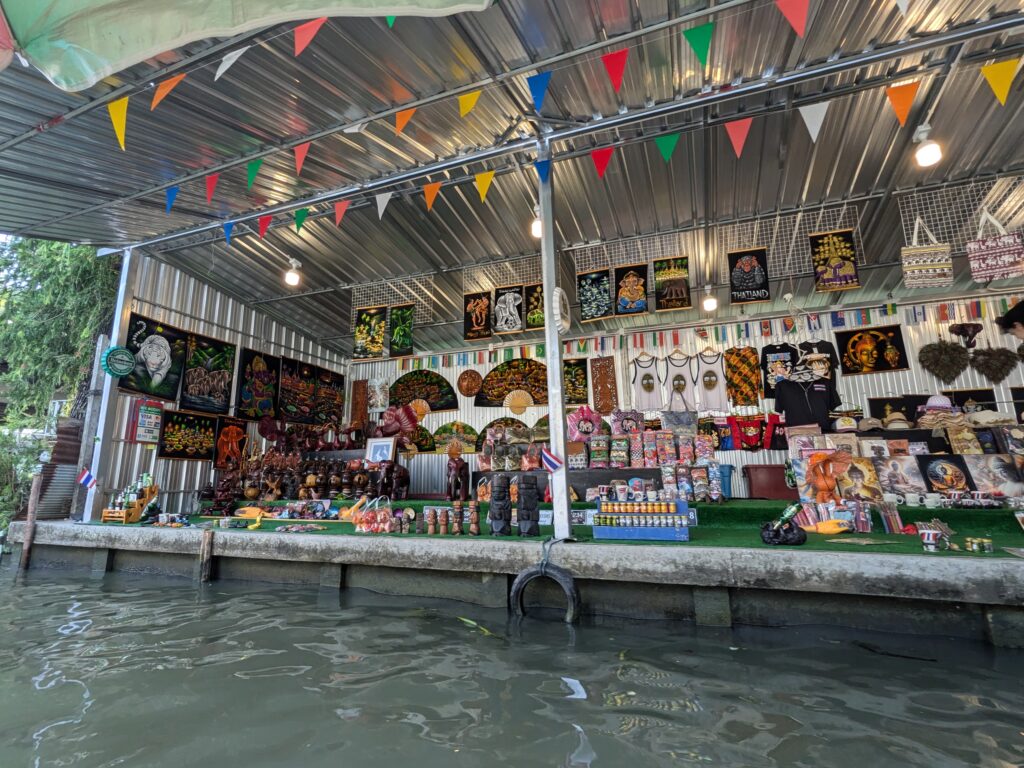
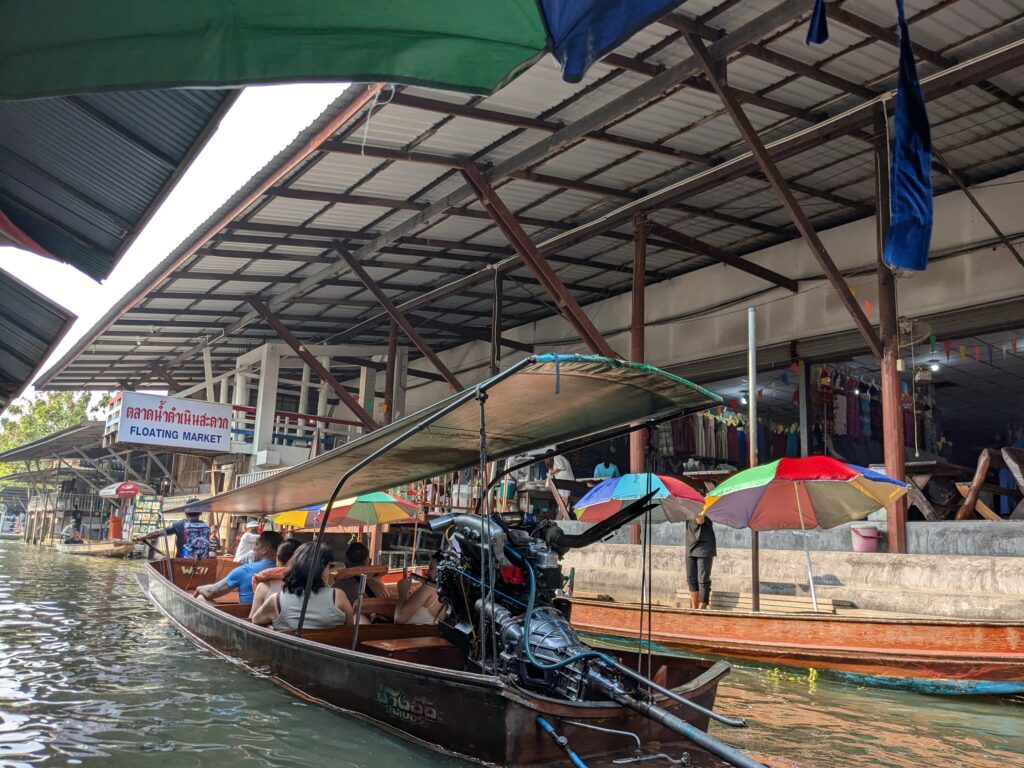
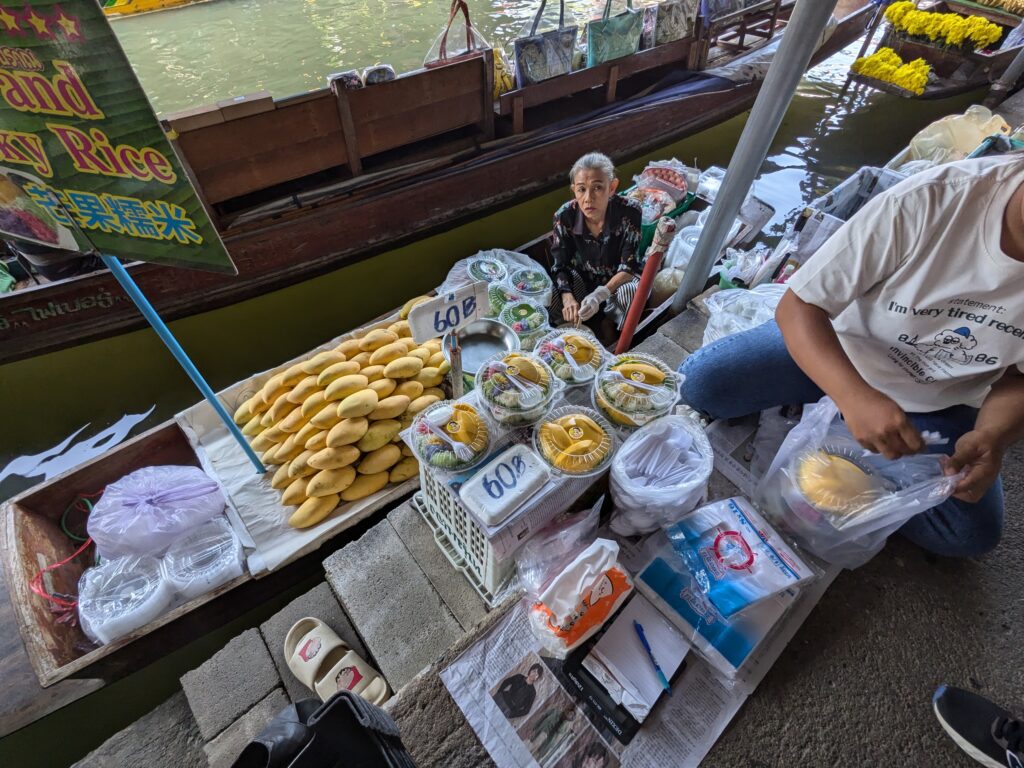
But now, when I visit some floating markets, I feel a little bit sad also. Many boats use motor now, not paddle. The sound is loud, the smoke make the air heavy, and the water not so clean like before. I understand why – motor is faster, easier, can carry more things. But sometimes I miss the quiet sound of paddle touching the water. It was peaceful in a way that machine cannot make. Still, even with the noise, the floating market keep its charm. When you sit in a boat and eat noodle, you still feel the old spirit hiding under the modern life, like memory that refuse to disappear.

Railway Market: Life That Refuse to Move Away
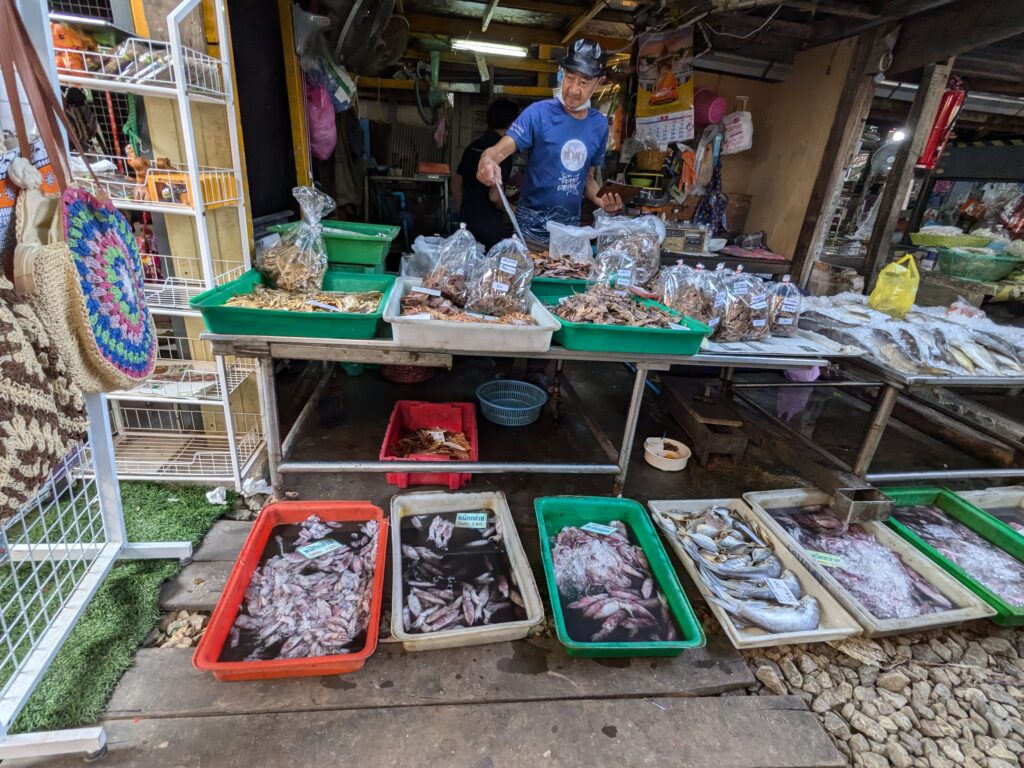
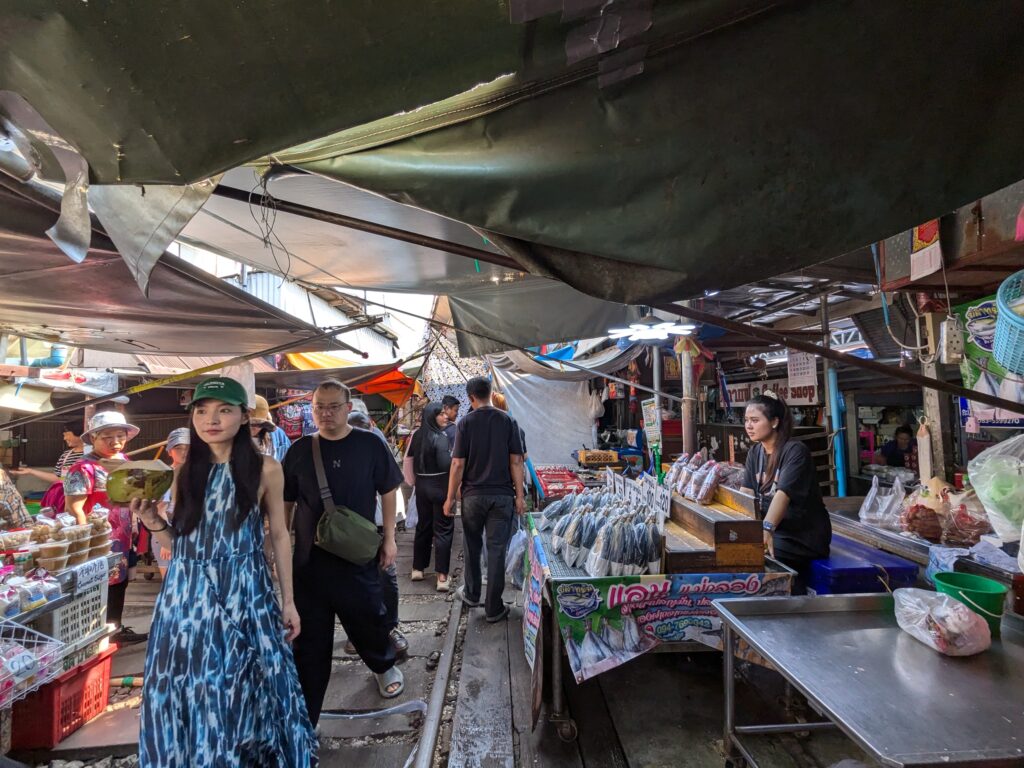
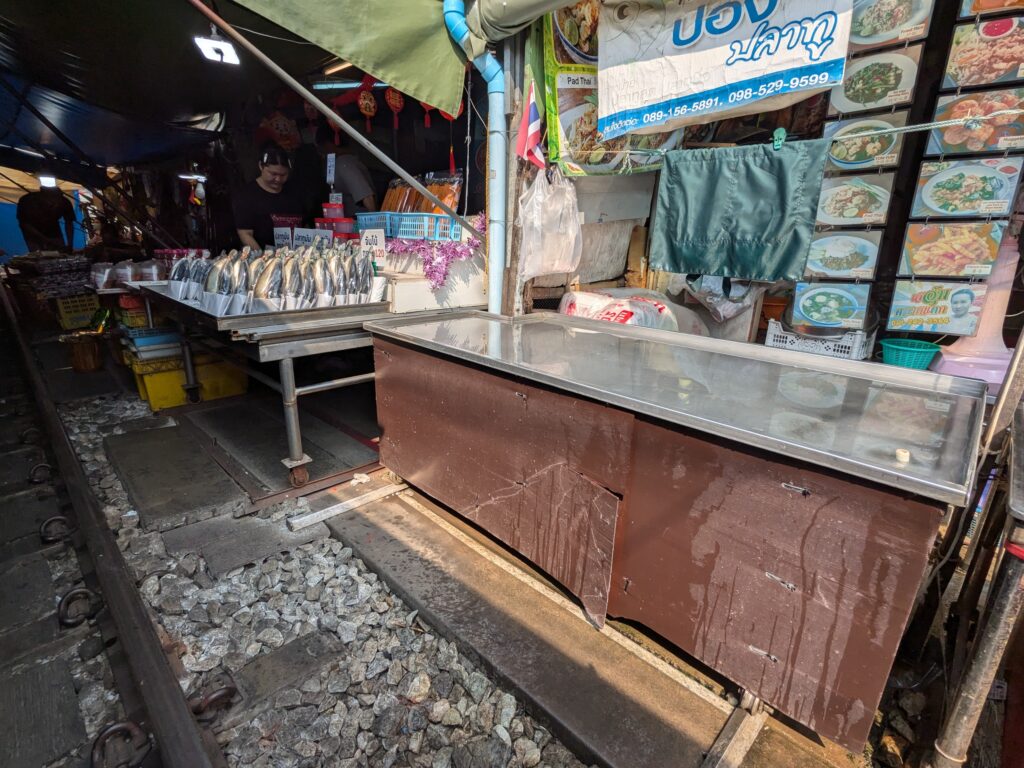
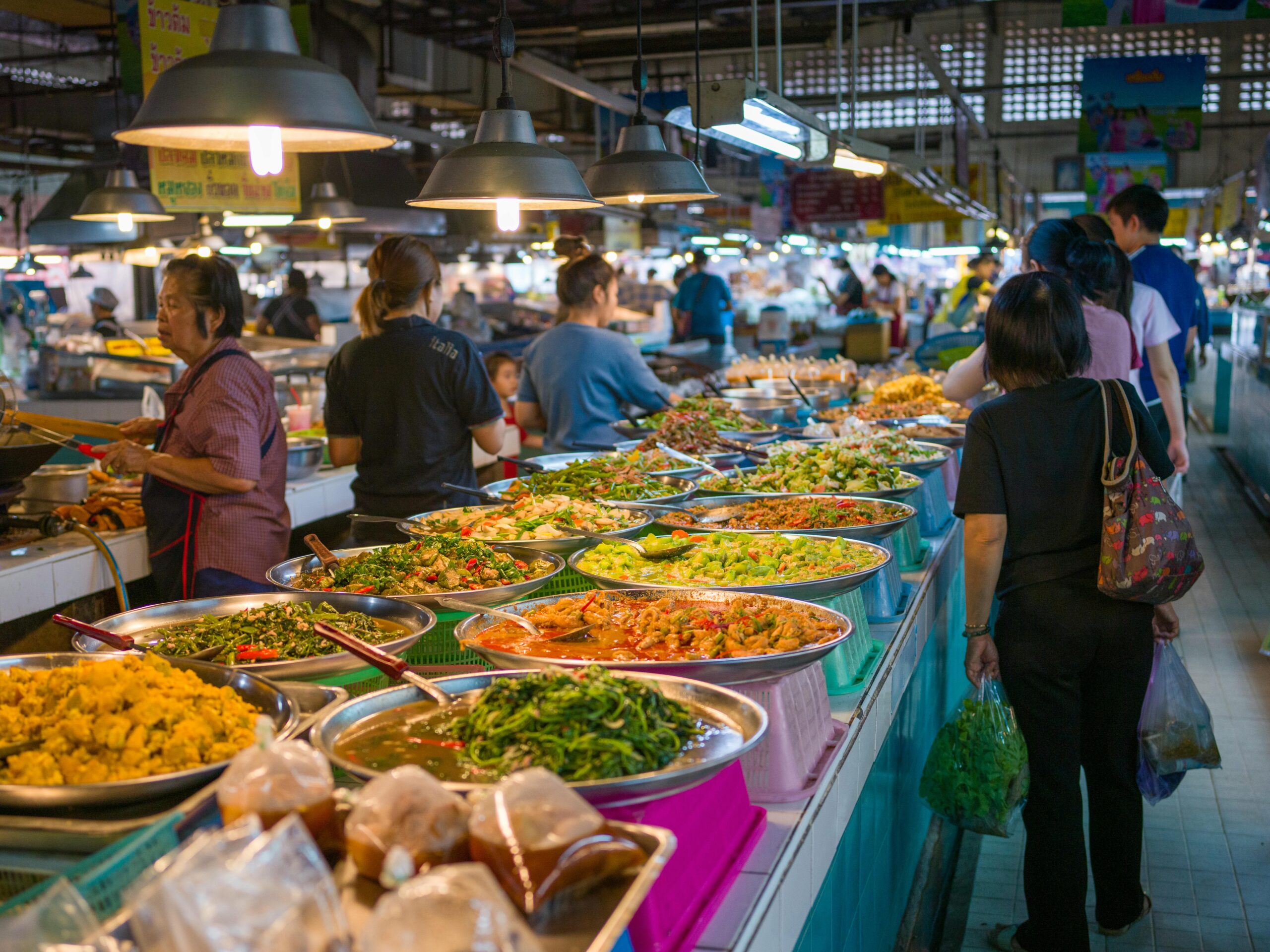
The railway market feel very different. It is busy, noisy, full of smell of fresh fish and chili and herb. When you walk between the stalls, you feel the heat from the sun mixing with the cool shade of the umbrellas. You hear vendors calling out prices, chopping fish, laughing with each other, arguing a little bit but still smiling. It is the kind of noise that feel alive, not stressful – like the sound of a community breathing together.
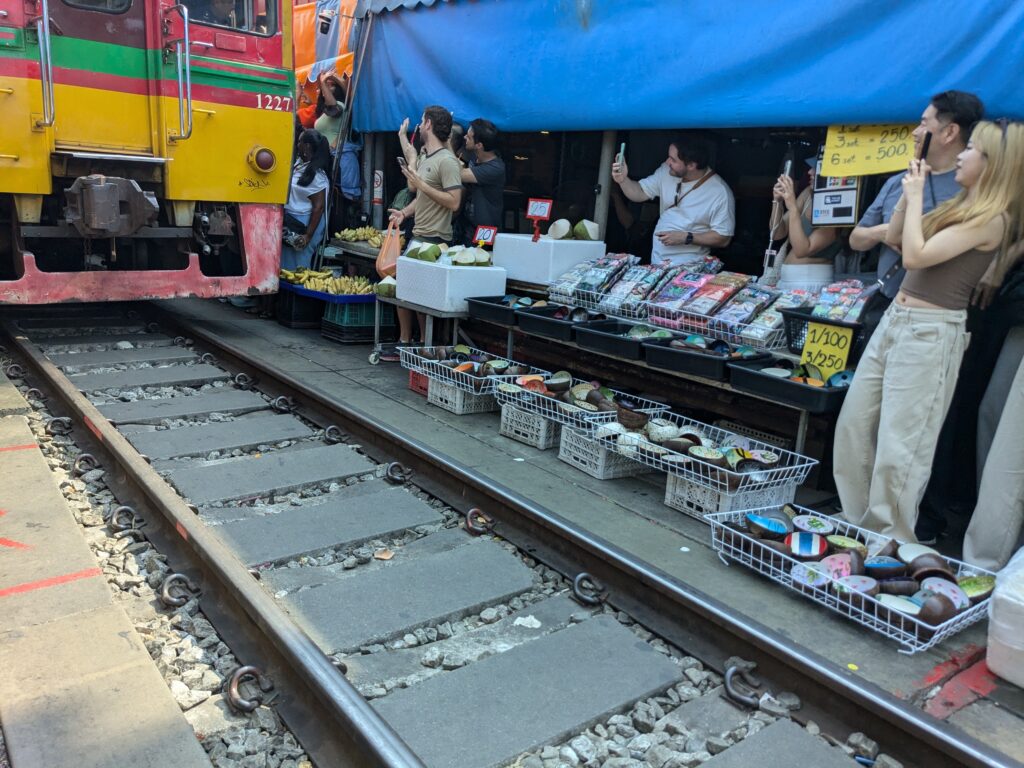
Then suddenly someone shout, “Train coming!” and the whole world change in one second. The noise stop. The movement stop. It is like someone press pause on life. But only for a moment. Then everything start again, but this time fast and sharp. Umbrellas fold down with a quick snap. Tables slide back like they are on wheels, even when they are not. Baskets of chili and garlic move just enough to let the train pass. Everyone get behind the faded red line, but nobody panic. They do this many time every day, so it look like dance – a strange, beautiful dance between human and machine.
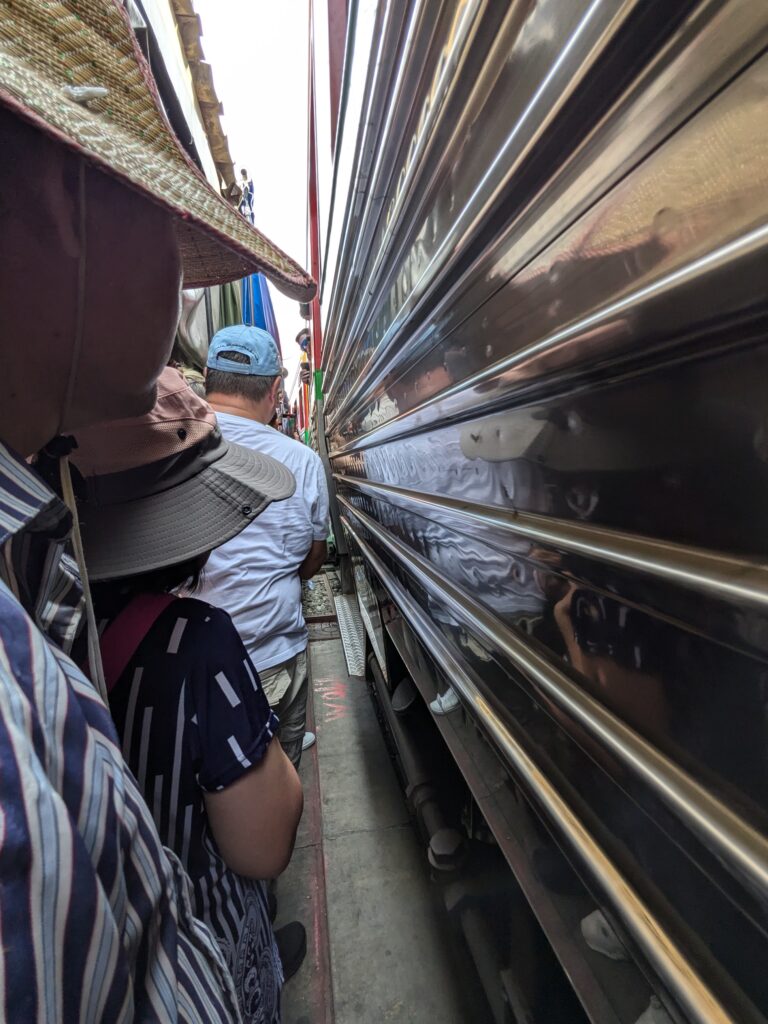
When the train finally appear, slow but heavy, you can feel the ground shake a little. You can smell the metal and the heat from the engine. You stand so close you squish between wall and train. And the vendors, they don’t look scared. They look calm, like this is normal life. Some even wave to the passengers. Some keep cutting vegetables while waiting.
Many people think the market was built because of the train, but actually the market was there first. Vendors were selling fish and vegetable long before the railway company put the track through the middle. When the company ask them to move, they say no – this is their life, their income, their home. Thai people not like to fight, but we also not like to give up. So they find middle way: when train come, they move a little bit; when train go, they continue selling like nothing happen.
Later, avoiding rent become part of the reason they stay. If you sell on the track, you don’t pay for shop, you don’t pay for stall. But this was not the first reason – it was just smart benefit. The real reason is location. Maeklong is most famous railway market (but they exist all over Thailand). The area is famous for seafood. The market must be close to the fishing port, close to the people who buy fresh fish every morning. If they move far away, they lose everything.
And then tourism come. People from all over the world want to see the train pass through the market. So now the vendors have even more reason to stay. When you stand there and the train pass just one arm away, you feel excitement but also respect. You see how Thai people adapt, how they stay calm, how they smile even when train almost touch their basket of chili.
Two Markets, One Thai Heart
Floating market and railway market look very different, but they teach the same thing: Thai people know how to live with what we have. If we have water, we build life on water. If train come through our shop, we move a little bit and continue selling. We don’t fight nature, we don’t fight change – we bend, we adjust, we smile, and we keep going.
These markets are not only place to buy food. They are stories of how Thailand grow, survive, and stay gentle at the same time. When you visit them, you don’t only see market – you see the Thai heart.