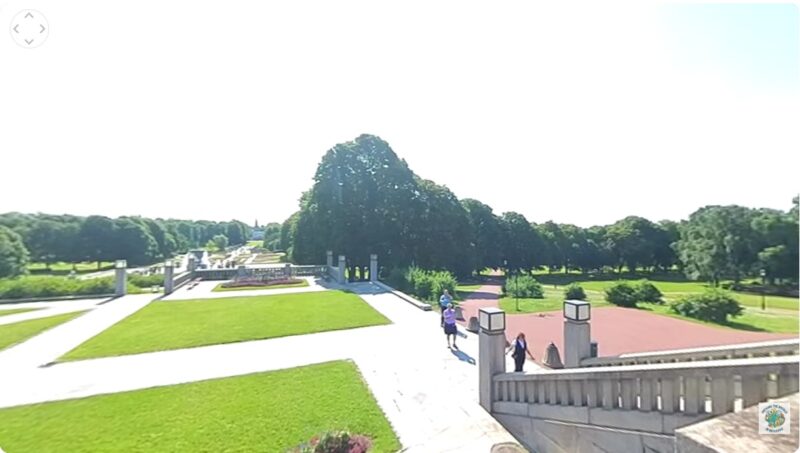
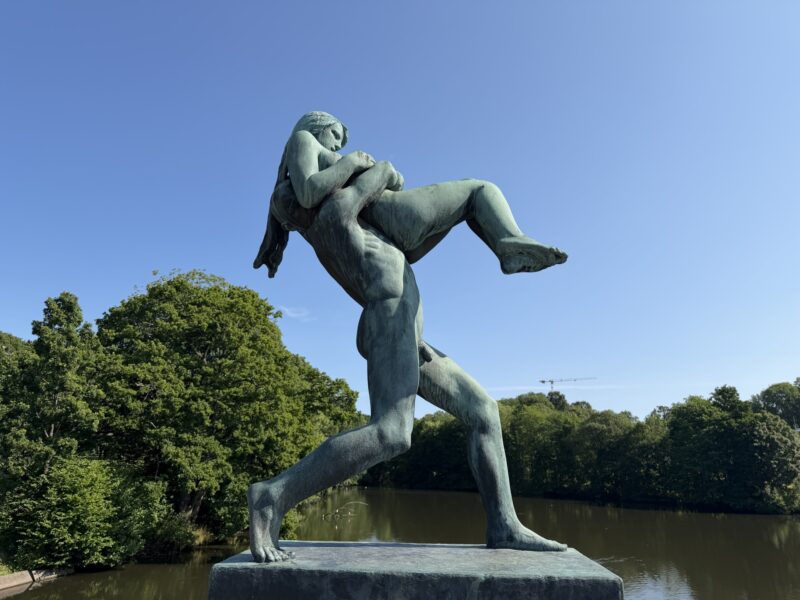
Vigeland Park is the life’s work of a single man, the Norwegian sculptor Gustav Vigeland. It is quite unlike anywhere I’ve been. Set within the green expanse of Frogner Park, it holds more than 200 sculptures in bronze, granite, and cast iron, all of them made by him or under his direction. It’s said to be the largest sculpture park in the world created by one artist. And I love that it’s free, open, and entirely unfenced – you simply just wander in.
But what stays with you isn’t the scale. It’s the subject.
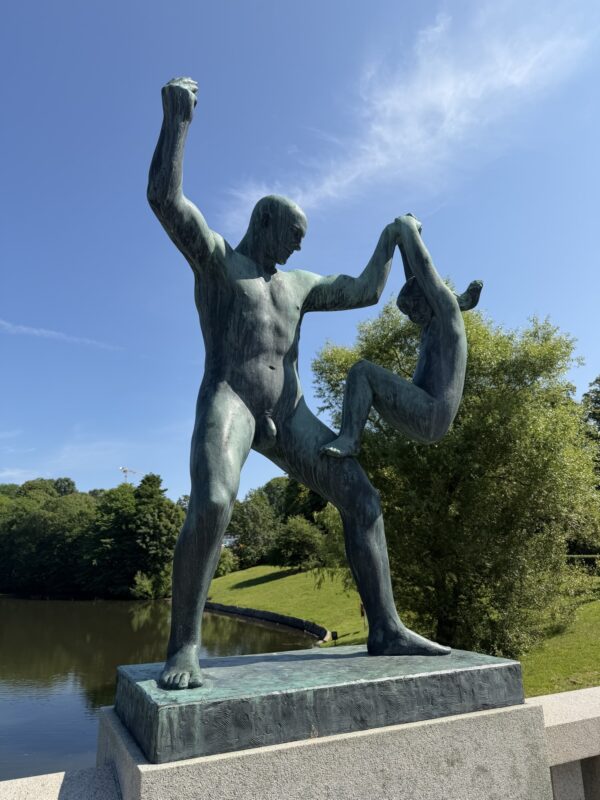
There are no kings here, no generals on horseback, no heroes of battle. Vigeland sculpted something braver and far more universal: just everyday human beings, entirely naked, moving through the whole arc of life. Babies, lovers, families, the old and the frail. Figures who wrestle, embrace, dance, cradle, and rage at each other. It’s the human condition, cast in stone.
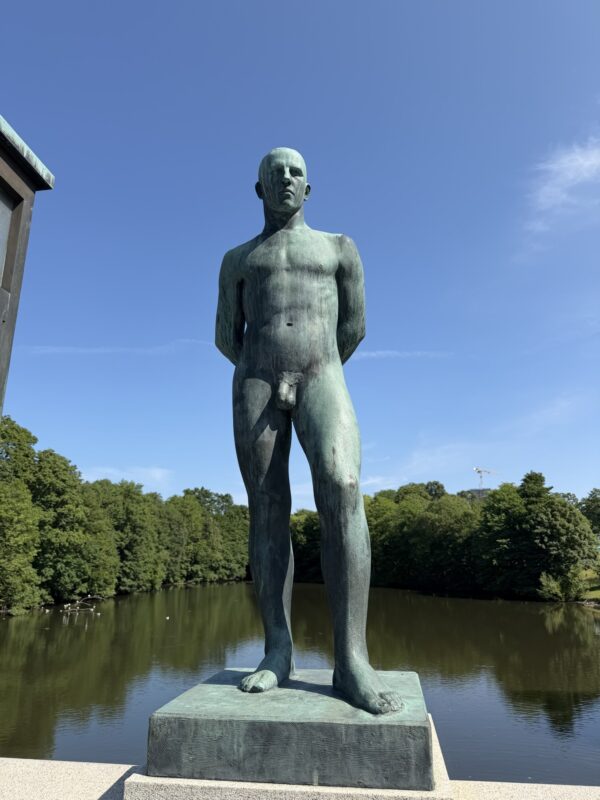
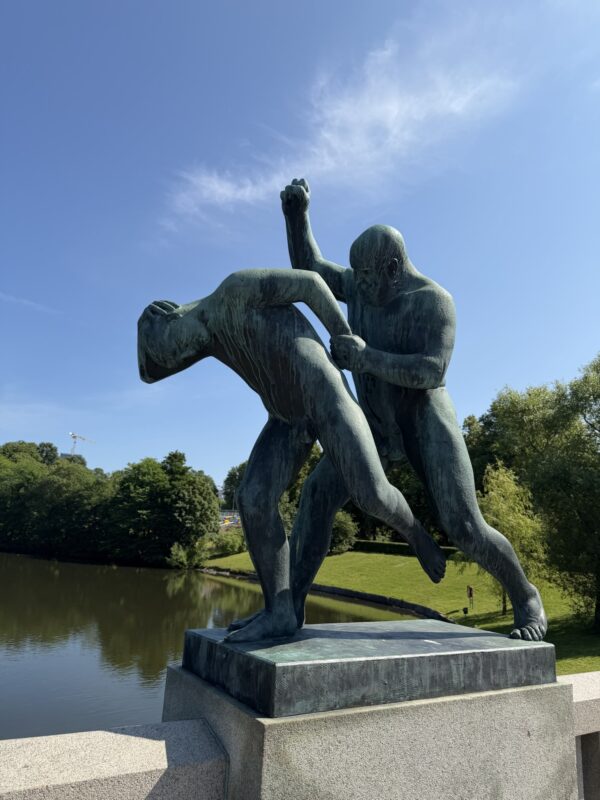
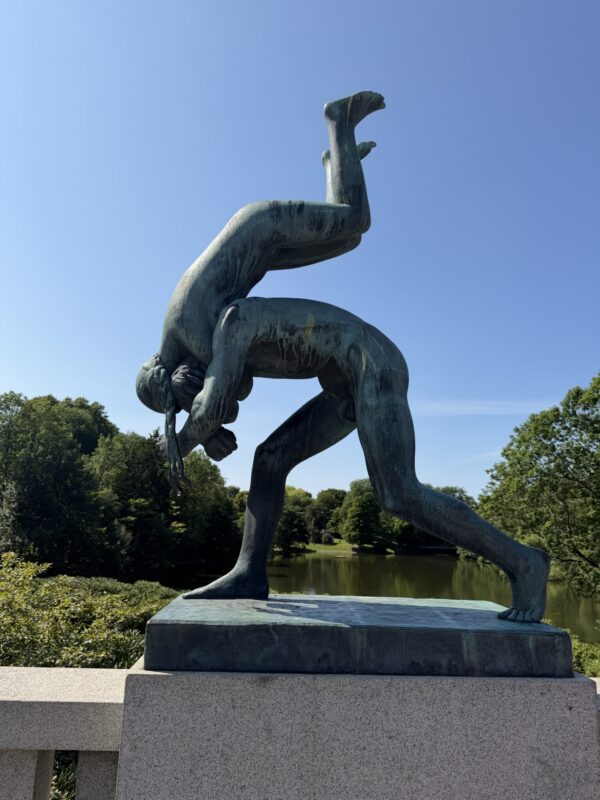
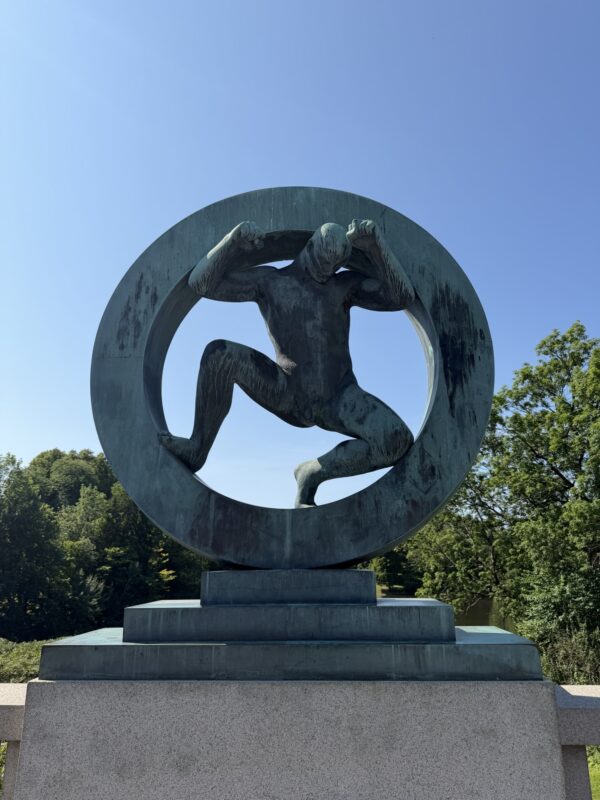
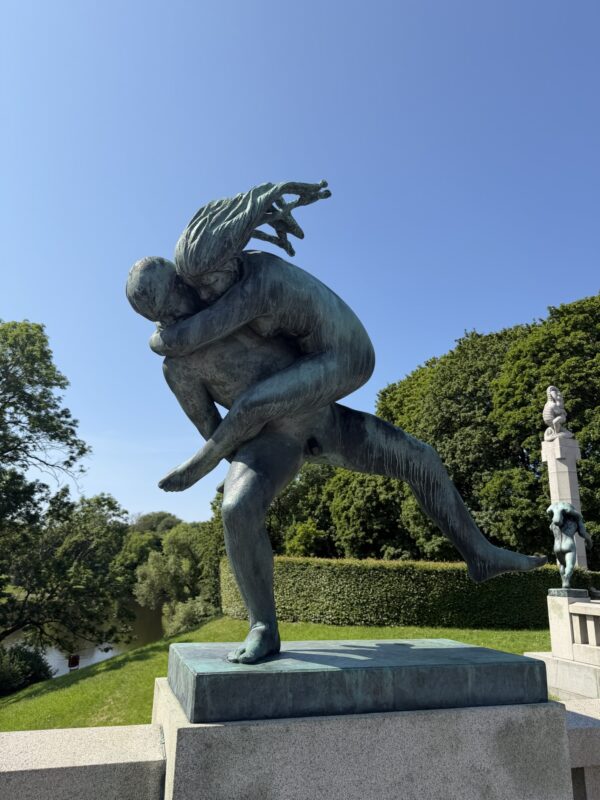
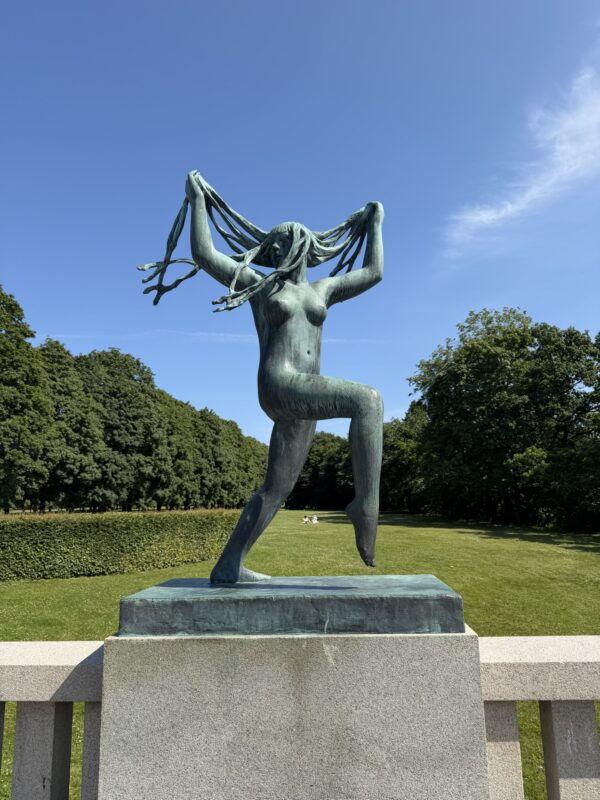
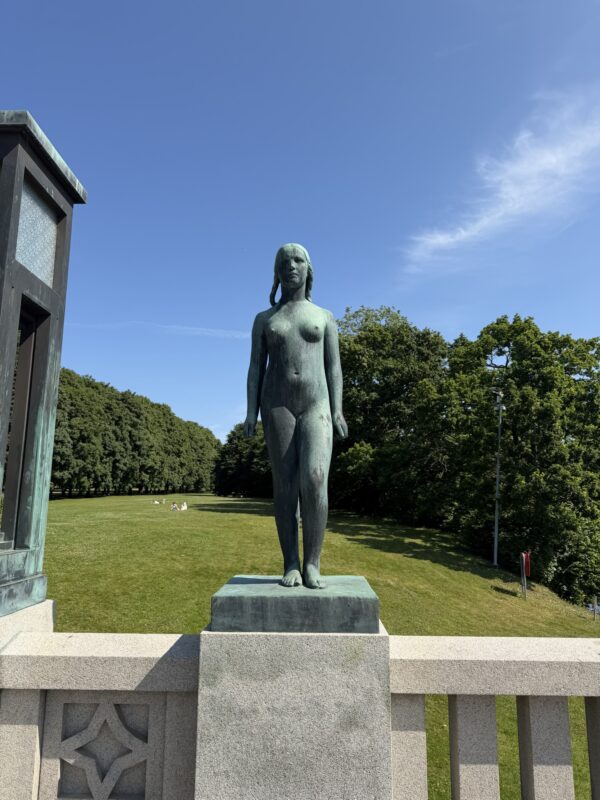
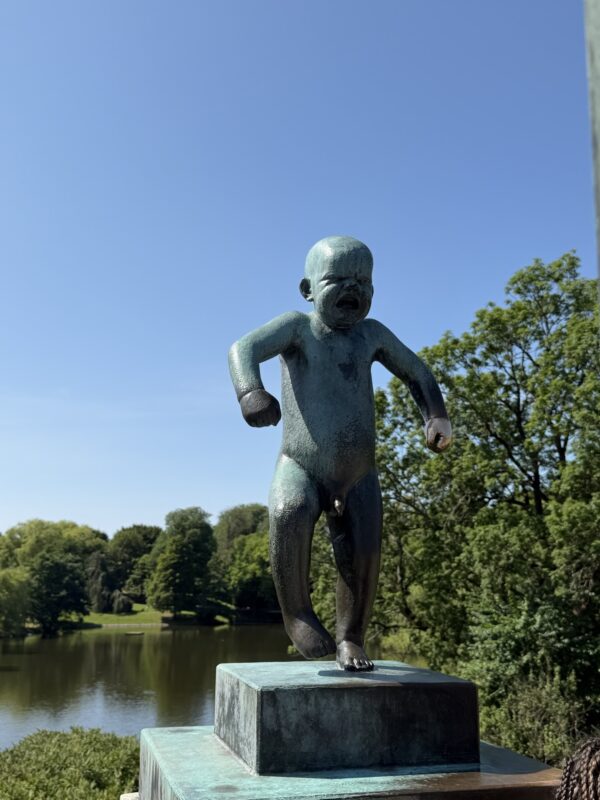
The most famous of them is a small bronze toddler mid-tantrum, fists clenched, face twisted in fury — the Sinnataggen, or “Angry Boy.” Everyone photographs him, because we recognize that we’ve all felt exactly like that. Look closely and you’ll notice his left hand is polished to a bright gold, gleaming against the dark bronze of the rest of him. That’s the work of countless visitors who’ve reached out to hold it over the years – some for a photo, some for luck – slowly rubbing it smooth. It seems even a furious little boy can’t resist being loved.
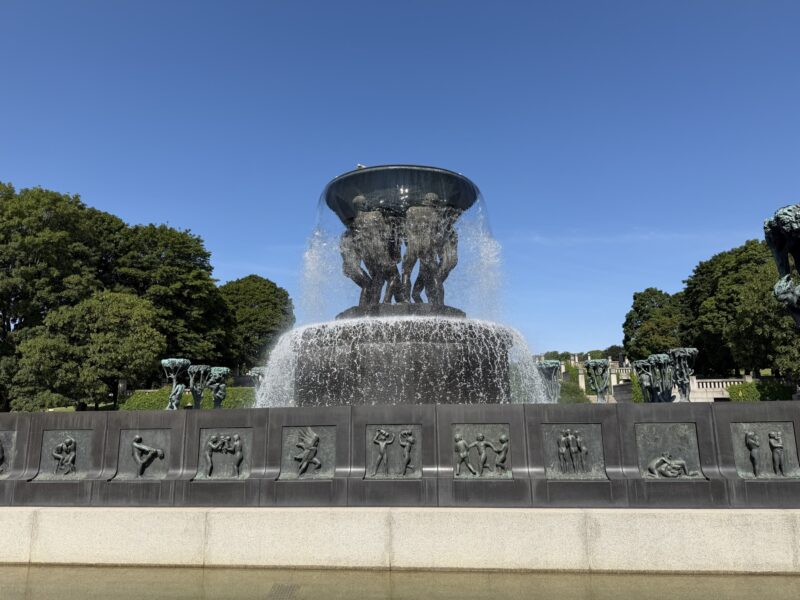
In the first plateau, you’ll find the Fountain. Six great bronze giants strain to hold an enormous saucer aloft, water spilling down around them like a curtain. They are men of different ages, bowed beneath their burden, and it’s hard not to read them as all of us, labouring under the weight of life. Ringing the basin stand twenty bronze “tree groups,” human figures entwined with branches, carrying you through every stage of existence – childhood, young love, middle age, old age, and death. Water, the oldest symbol of life there is, ties the whole thing together.
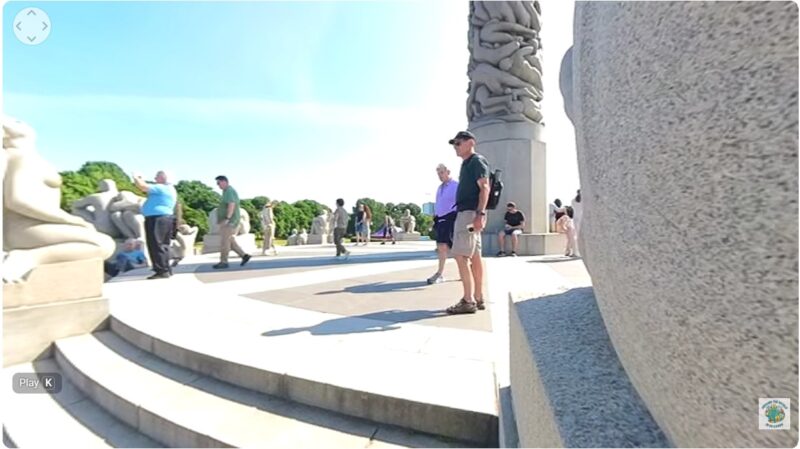
At the very centre stands the Monolith: a single towering column of granite, over 14 metres high, carved with 121 human figures climbing and clinging to one another as they strive toward the top. It took three stonemasons some 14 years to carve. Standing beneath it, you can read it however you like — as struggle, as longing, as the whole restless business of being alive.
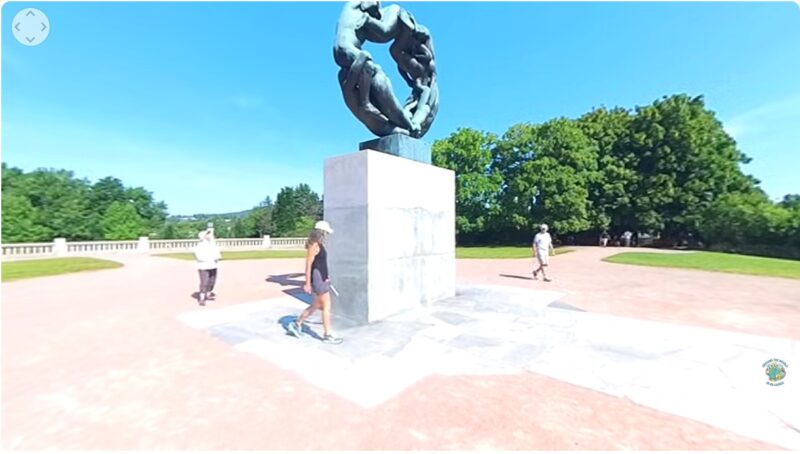
At the far end beyond the Monolith, sits the Wheel of Life. It’s a bronze ring of men, women, and children holding fast to one another, tumbling round in an endless circle. Vigeland meant it as a symbol of eternity, and standing before it, that’s exactly how it reads: birth, growth, love, decline, and round again, with no beginning and no end. He is said to have found it the most difficult and the most satisfying thing he ever made.
I lingered far longer at this park than I meant to. There’s something disarming about a place that skips the emperors and the saints and simply says: this is what it is to be human.
If you go to Oslo, don’t miss it.
🎥Wander the Park With Me
Photos don’t do Vigeland justice — you need to stand among the statues to feel it. So here it is in 360°.
🥽 VR headset: Pop it on and simply look around — up, down, anywhere.
🖱️ Computer: Click and drag with your mouse to look in any direction.
** Tip: Full Screen & Choose the highest resolution your internet connection can manage **
Go on — take a stroll, and see which figure catches your eye. 👇