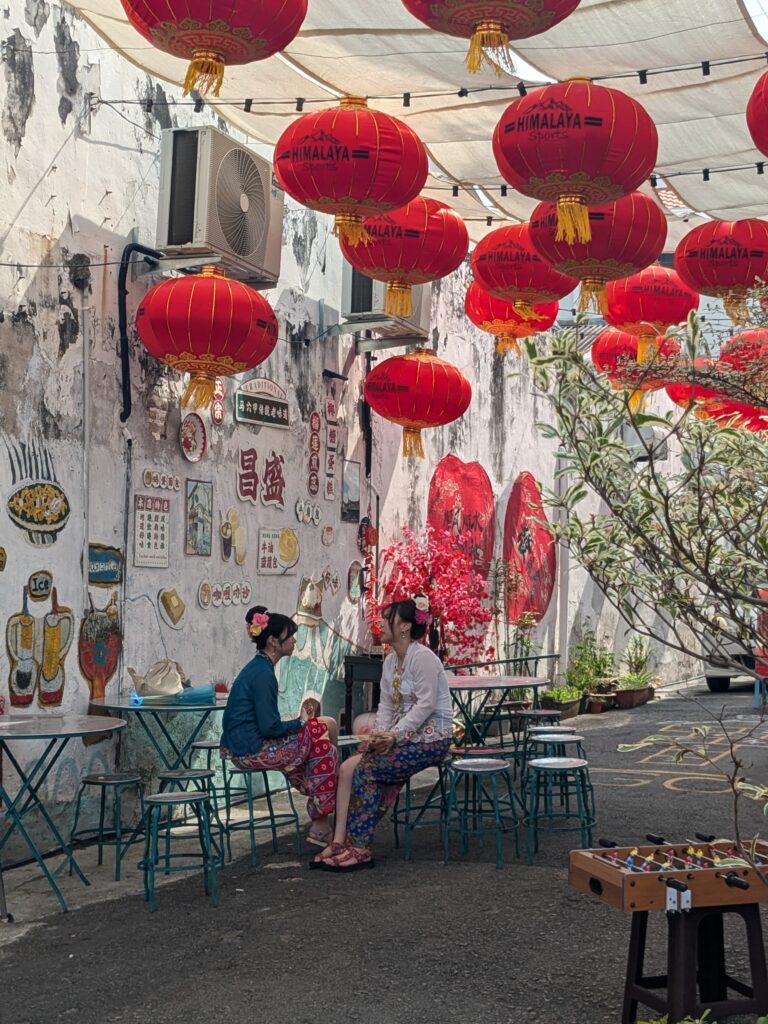
Some of the most meaningful travel experiences don’t happen in museums or famous landmarks. They through quiet conversations with people who generously open a window into their world. My new friends, Guek Neo and Siew Neo spent an afternoon introducing me to Nonya — or Peranakan — culture in Malaysia.
How I Met Guek Neo and Siew Neo
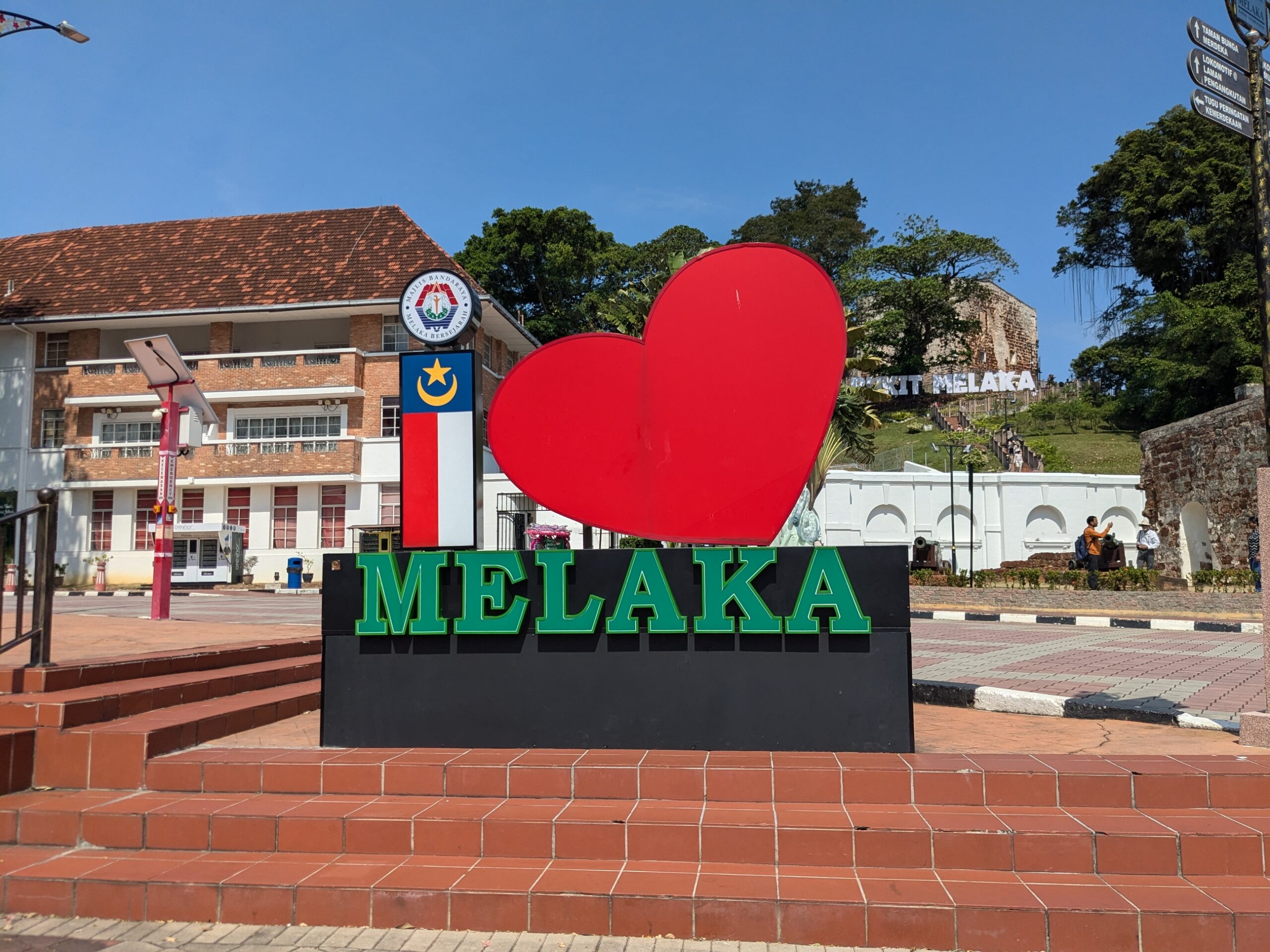
I met Guek Neo and Siew Neo completely by chance. I was wandering through Melaka on a hot afternoon when I saw the two of them standing together, dressed in their traditional Nonya outfits – bright sarongs, delicate kebayas. They were laughing about something, trying to take a picture of themselves, but the angle wasn’t working.
One of them caught my eye and waved me over. “Can you help us take a photo?” she asked, holding out her phone. Of course I said yes. After I handed the phone back, we started talking. What began as a simple exchange turned into a long, easy conversation about where they were headed, and what they were celebrating. When they learned I was curious about Peranakan culture, their faces lit up. “Come,” they said. “We’ll show you something.” And just like that, I found myself welcomed into their world.
A Culture Rooted in Blending
Before meeting them, I knew the basics: Peranakan culture grew from Chinese traders who settled in the Malay Archipelago centuries ago and married local Malay women. Their families blended traditions so naturally that a new culture emerged — not Chinese, not Malay, but something beautifully in between.
But hearing it from Guek Neo and Siew Neo made it feel alive. They spoke about their heritage the way people talk about family recipes — with pride, affection, and a sense of continuity. “We grew up with both sides,” one of them said. “You don’t choose one or the other. You carry both.”
Stepping Into Their World
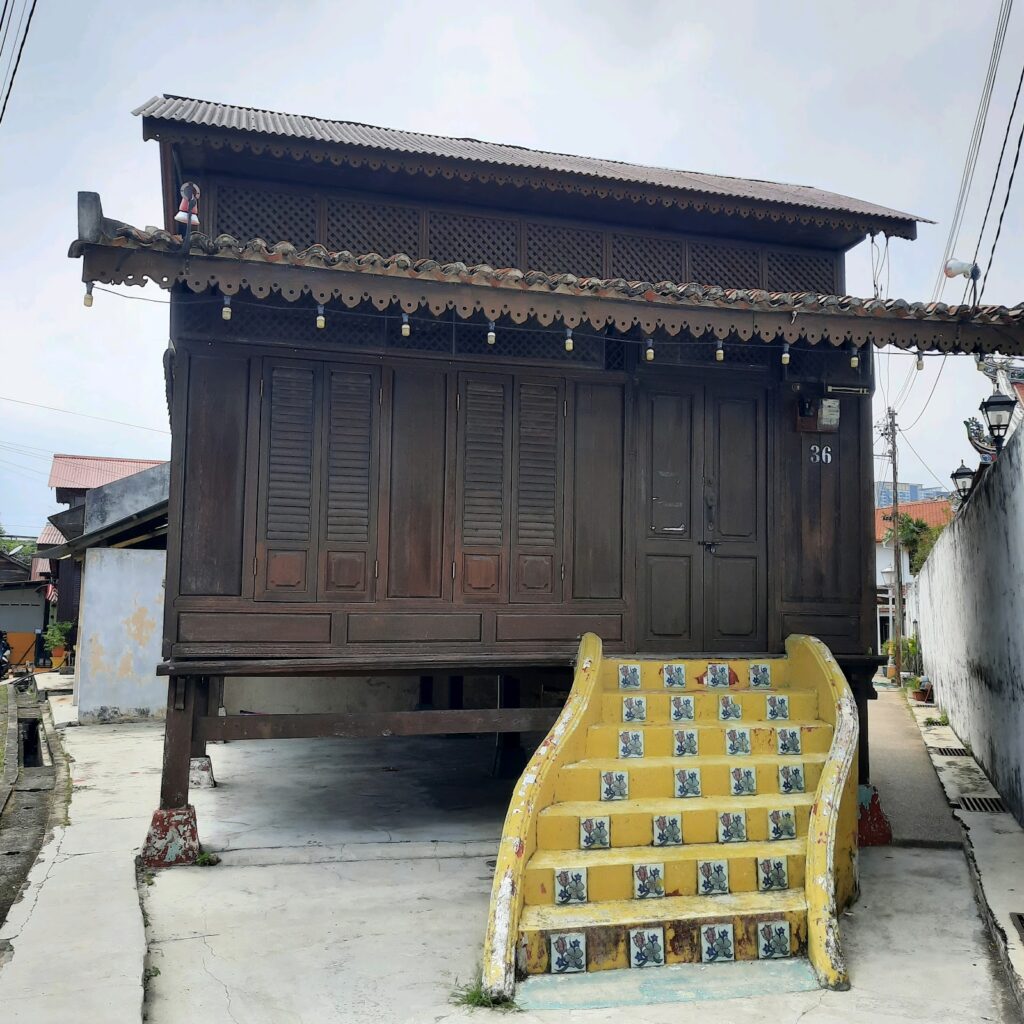
They brought me to see a historic Rumah Kampung, a traditional wooden Peranakan‑Malay house in the neighborhood. It stood gracefully on stilts, lifting the whole structure above the ground the way older homes here have for generations — for airflow, for protection from floods, and, as they told me, “because houses need to breathe too.”
What caught my eye immediately were the curved, yellow stairs leading up to the front door. They had tiles were painted with flowers, the colors slightly faded from sun and rain, but still cheerful. The curve gave the house a gentle, welcoming feel, like it was inviting you to slow down before stepping inside.
The Shoes That Tell a Story
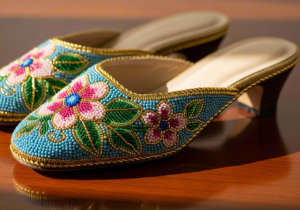
Back at their home, Siew Neo brought out a pair of Nonya beaded shoes, and I think my heart actually skipped. They were delicate and colorful, stitched with tiny glass beads arranged into flowers so precise they looked painted.
She told me that traditionally, young Nonyas would bead their own shoes as part of their wedding trousseau – a way of showing patience and skill. But she laughed and admitted she never learned. “Too much work for my eyes,” she said. Instead, she bought hers from a craftsman who still practices the old techniques. There aren’t many left, she explained. The art takes time, and fewer people today have the patience or the eyesight for such tiny beads.
Holding the shoes, I felt a mix of admiration and sadness – admiration for the craftsmanship, and sadness knowing it’s a tradition slowly fading. There’s something deeply moving about an object that carries hours of someone’s quiet attention, especially when you realize how rare that kind of work is becoming.
The Babas — The Men Who Hold the Stories
I asked about the men, and that opened a whole new door. Peranakan men, called Babas, were often the ones who handled business outside the home. Many were multilingual and well‑educated, navigating trade and colonial society with ease. But at home, they were the storytellers – the keepers of family history, the ones who made sure traditions didn’t fade.
“They remember everything,” Guek Neo said with a laugh. “Every ancestor, every story, every recipe.” It made me think of how every culture has its memory‑keepers, the people who hold the threads so the rest of us don’t lose the pattern.
Food That Feels Like Home, Even When It’s New
Of course, we talked about food – you can’t talk about Peranakan culture without it. They described dishes like ayam pongteh and laksa as they recounted their childhood memories.
“Nonya food is slow food,” they told me. “You can’t rush flavor.” I smiled at that. It felt like a philosophy I could get behind.
Peranakan culture is built on connection: between families, between traditions, between past and present. It’s a reminder that identity doesn’t have to be one thing. It can be layered, blended, and richer because of it. Before I left, Guek Neo said something that has echoed in my mind ever since: “Peranakan culture is about becoming more, not less.” I loved that. It felt like a lesson not just about heritage, but about life.
Malaysia is full of vibrant cultures, but discovering Nonya heritage through the kindness of these two women made it feel personal. It wasn’t just history — it was hospitality, memory, and craft, all woven together.
And like all the best travel moments, it reminded me that the most meaningful stories often come from the people who choose to share a piece of their world with you.