Just outside Kuala Lumpur sits one of Malaysia’s most iconic landmarks: Batu Caves, a place where geology, spirituality, and culture collide in the most dramatic way.
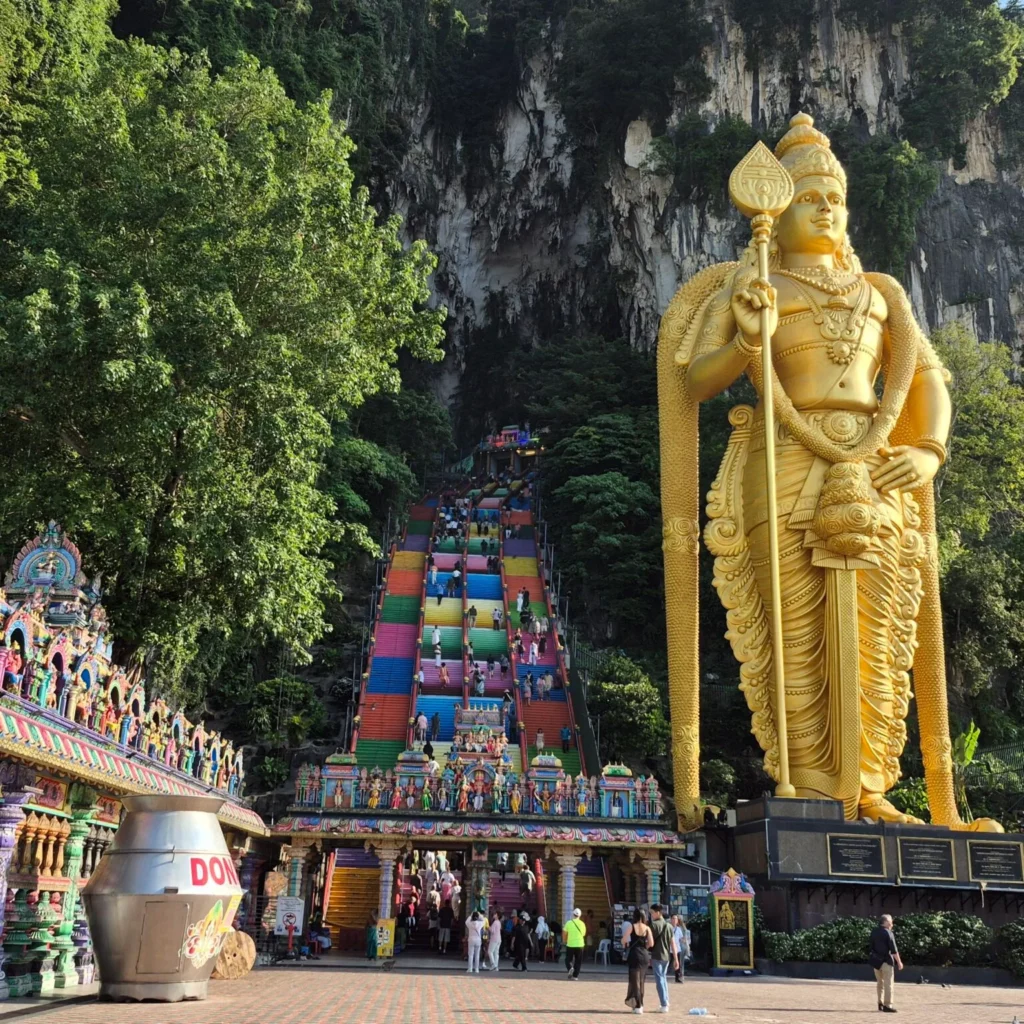
The caves themselves are ancient, around 400 million years. The limestone cliffs rise like ancient giants, their surfaces carved by millions of years of rain and sunlight. Long before they became a Hindu temple, Indigenous communities once used the cave system for shelter and ceremonies. In the late 1800s, Tamil Hindus settlers transformed the large cavern into a temple dedicated to Lord Murugan, the god of courage, virtue, and victory. Today, he stands outside in the form of a towering golden statue, gleaming in the sun like he’s watching over every visitor who climbs the 272 rainbow steps.
Arriving — and Almost Getting Scammed
We took a Grab Ride share over to the Batu caves from our location in Kuala Lumpur. The trip took around 20-30 mins. We started early, partly for the cooler temperatures and because we knew Batu caves would get busy and I wanted at least one photo without a thousand strangers photobombing in the background.
As soon as we arrived, several officially dressed staff members waved us towards the left for the entrance to the Batu Caves. More staff pointed us the same way. Eventually, we ended up at a ticket booth labeled “Batu Caves.”
This confused me — everything I’d read said the main cave is free.
The staff insisted this was the only entrance and that we needed to buy tickets. But something felt off.
And sure enough, it was a scam.
The tickets were for a small side attraction, not the main temple cave. The real entrance — the one with the rainbow stairs and the golden Murugan statue — was on the right, completely free.
We watched several tourists pay the fee, thinking they were entering the main site. We almost did too, but my sister (bless her stubborn intuition) insisted we keep looking. Even as we walked away, staff kept telling us we were “going the wrong way.” We ignored them.
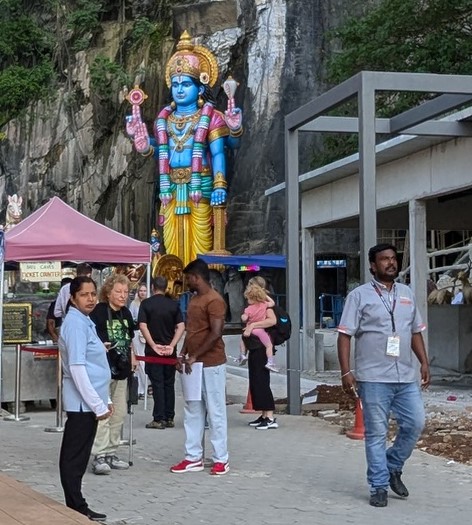
The Real Batu Caves – and getting mugged by a monkey
We went back out to our drop-off point and just walked past the “staff” directing everyone left.
A few minutes later, the path opened into a huge courtyard… and there it was.
The Batu Caves in all their glory.
The massive golden Murugan statue.
The rainbow staircase glowing in the morning light.
The shrines and mini‑temples flanking the sides.
It felt like stepping into a color explosion.
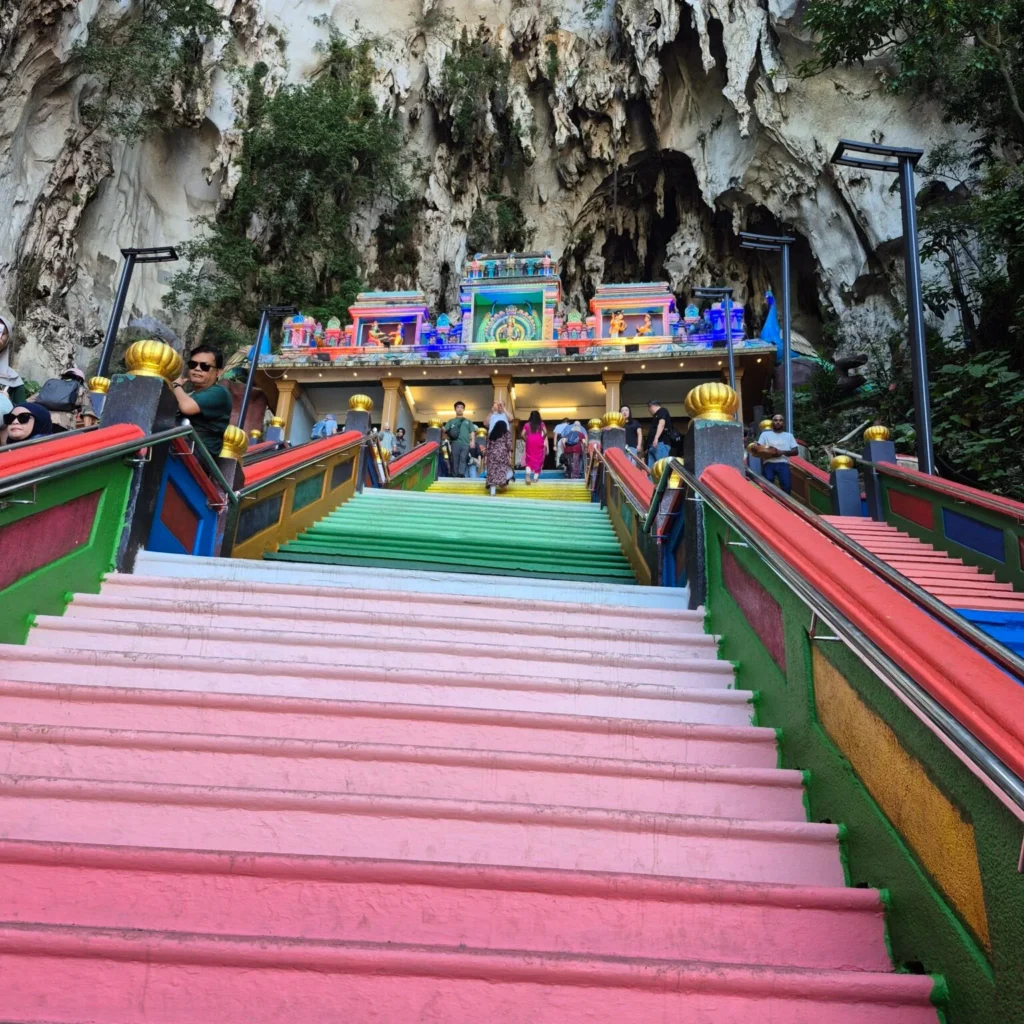
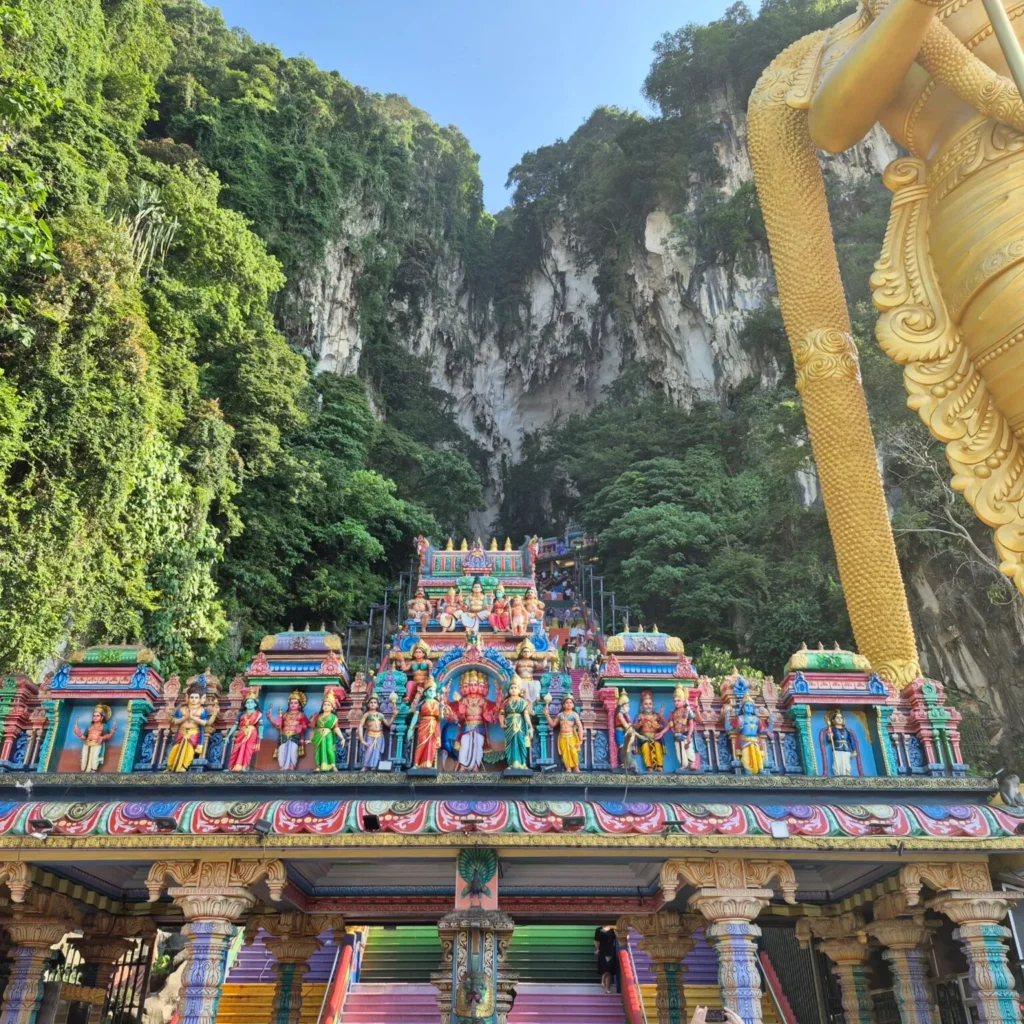
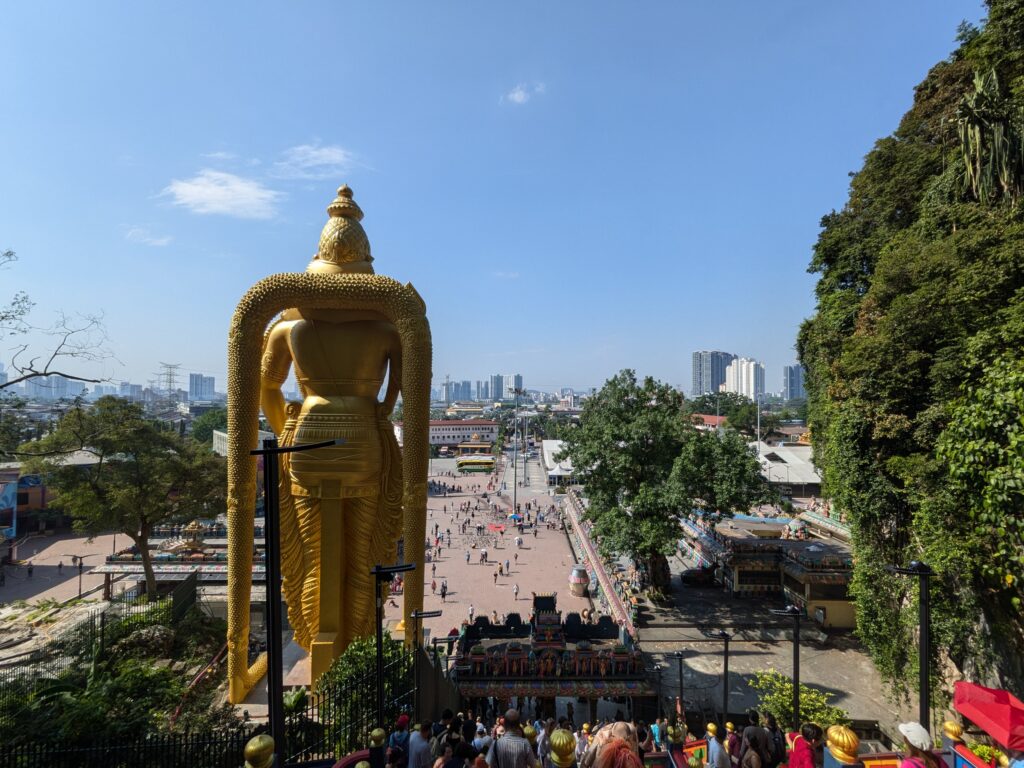
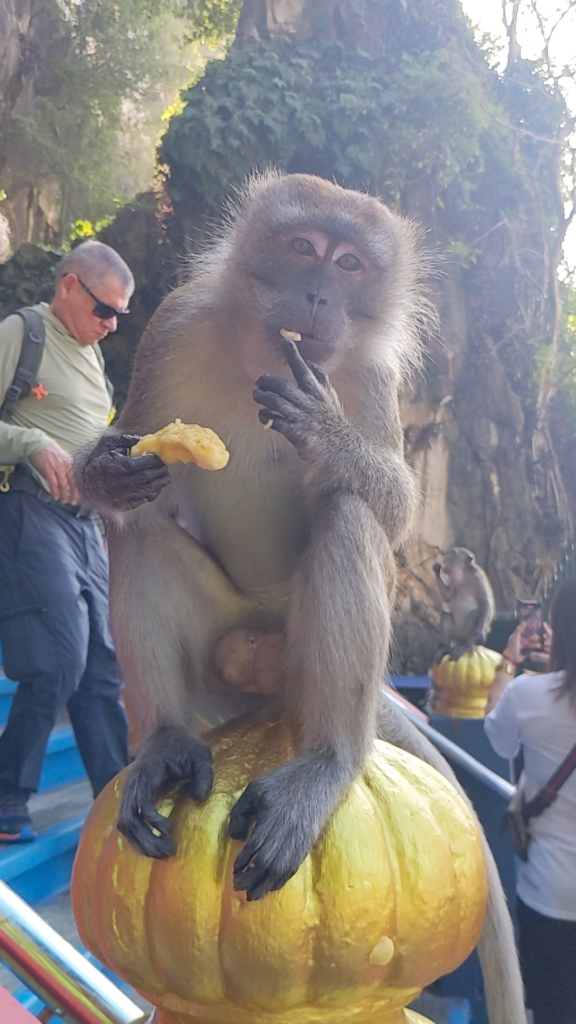
As I was climbing the famous steps, minding my own business, a monkey — small, fast, and apparently very determined — launched itself at my bag. Before I could react, it had yanked out an entire pack of tissues like it was pulling a prize from a claw machine.
Instinctively, I reached for it. The monkey turned, hissed, and gave me a look that said, “Try me.”
I did not try.
He wasn’t the only one. All around us, monkeys were stealing snacks, water bottles, and offerings from visitors and vendors. I watched one pour out a bottle of milk and lap it up like it was running a tiny beverage stand. It was chaotic, hilarious, and slightly alarming — but it also made the whole experience feel alive and unpredictable.
Inside the Cave: A Shift in Energy
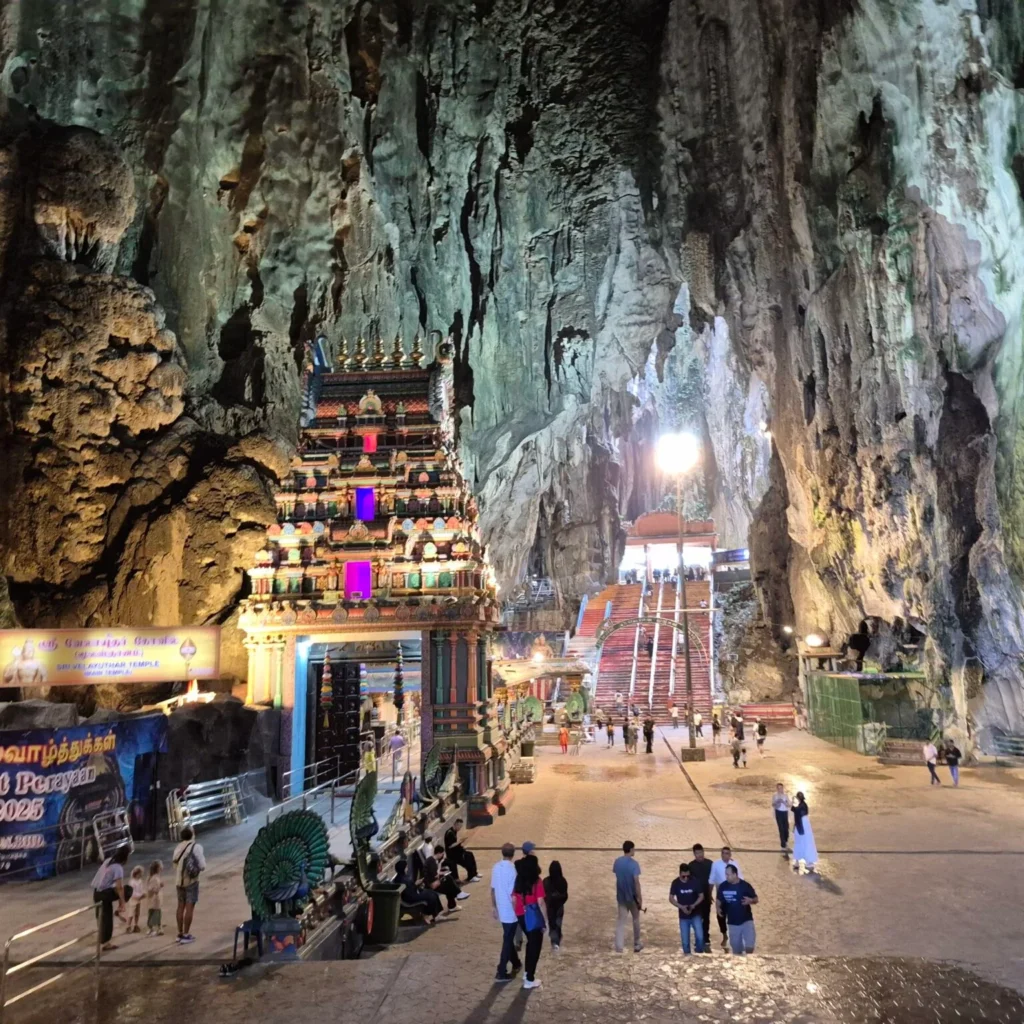
Once I reached the top and stepped into the main cavern, everything changed. The noise of the monkeys faded, replaced by the echo of bells, chanting, and the soft glow of oil lamps. The air smelled like incense and damp stone. It felt ancient and alive.
The main cavern is enormous — a cathedral carved by nature. Birds swooped overhead. Moss and ferns clung to the limestone walls. The echo of bells and chanting created a rhythm that felt ancient and grounding.
A second set of stairs led to an upper chamber open to the sky. Rainwater dripped down the rock, and the light filtered in.
At the main temple: My First Blessing
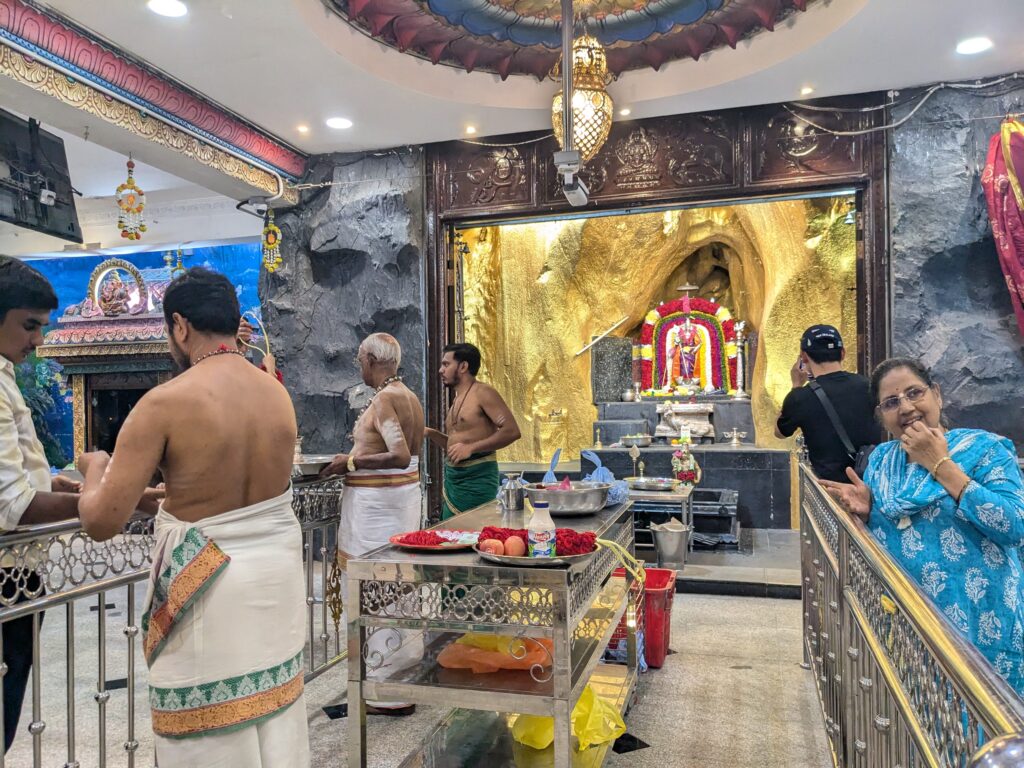
Inside the main temple — Sri Subramaniar Swamy Devasthanam — we removed our shoes and stepped closer to the shrines. Devotees lit oil lamps. Bells rang softly. The air felt thick with prayer.
Two priests were offering blessings. People gathered around them, palms pressed together.
A priest motioned for me to come forward. He dipped his fingers into a bowl of vibhuti, sacred ash made from burnt offerings. When he pressed it onto my forehead, it felt cool and grounding.
He murmured a blessing as he applied it — a prayer for protection, clarity, and spiritual strength. Even though I didn’t understand the words, the intention was unmistakable. The ash left a soft white mark between my eyebrows. I felt so humbled to be included.
At the Bottom of the Stairs: My Second Blessing
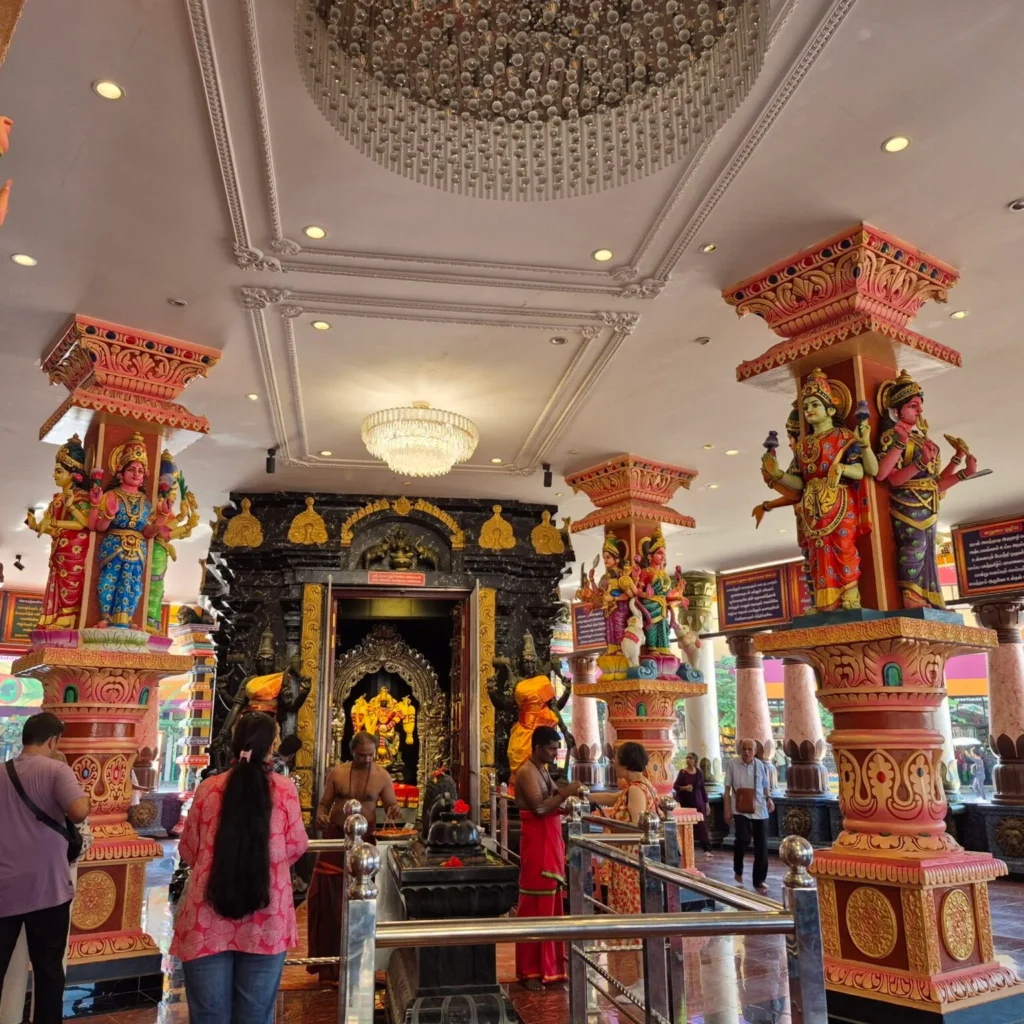
After exploring the cave, I made my way back down the steps (carefully avoiding eye contact with any monkeys). At the base of the staircase, there’s another temple — smaller, quieter, and easy to miss if you’re distracted by the crowds.
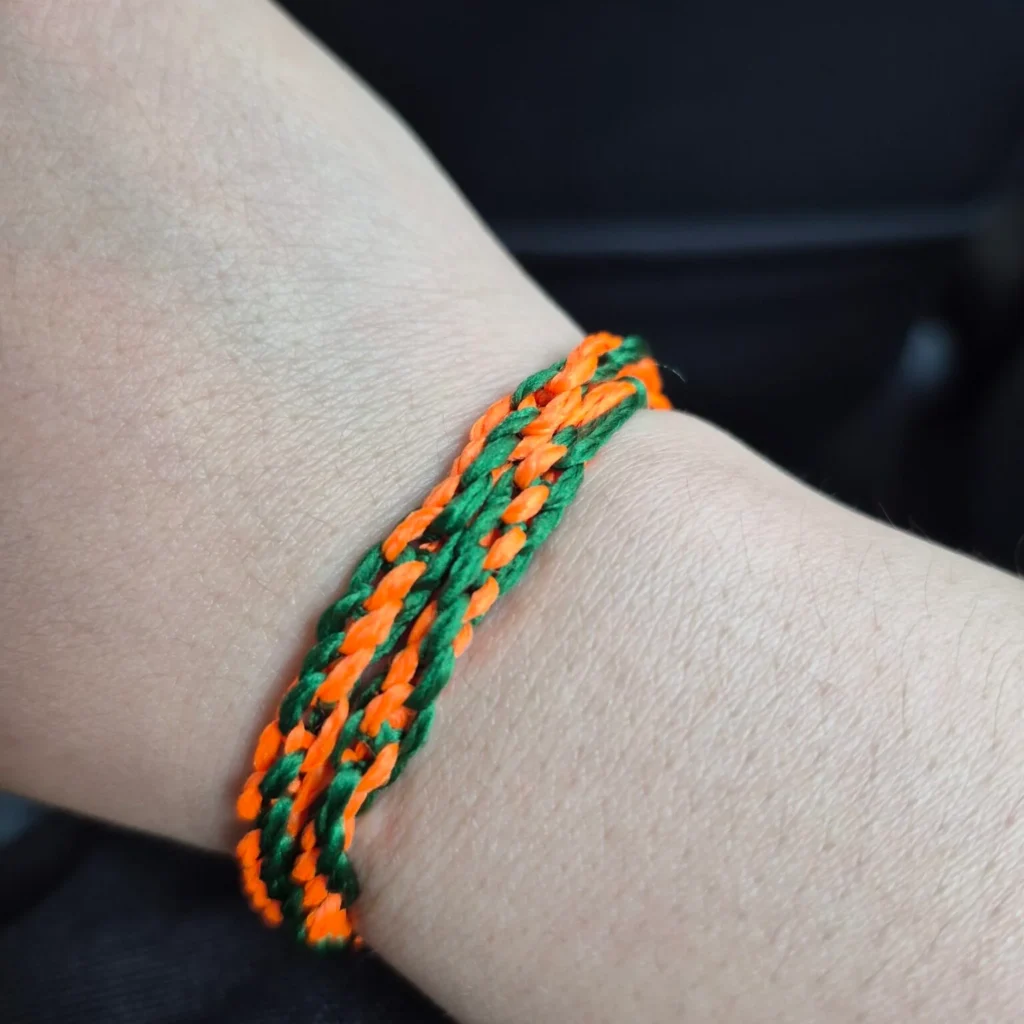
A priest there offered me a second blessing. He tied a simple bracelet made of red and yellow thread around my wrist. Before tying it, he held it to a small flame and murmured a prayer, infusing it with intention.
He told me it was for good fortune, protection, and safe travels. The gesture was gentle and unexpected, and it felt like a perfect closing note to the experience. I wore the bracelet for a few days more until it fell of naturally.
Thaipusam: Batu Caves’ Biggest Festival
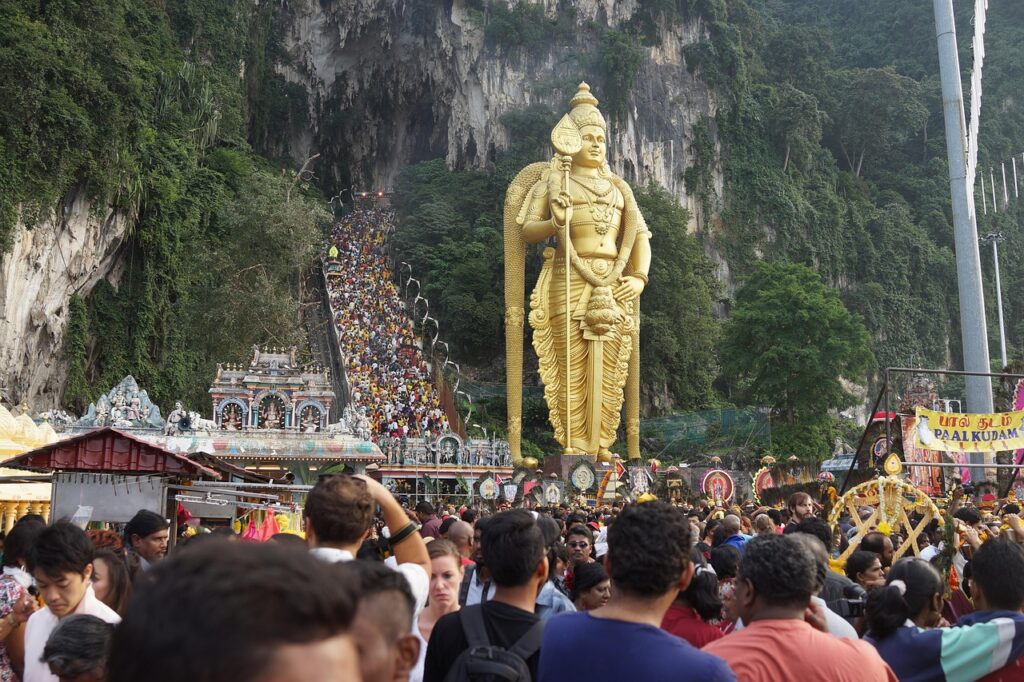
If Batu Caves feels powerful on a normal day, it becomes something entirely different during Thaipusam, a major Hindu festival celebrated by Tamil communities.
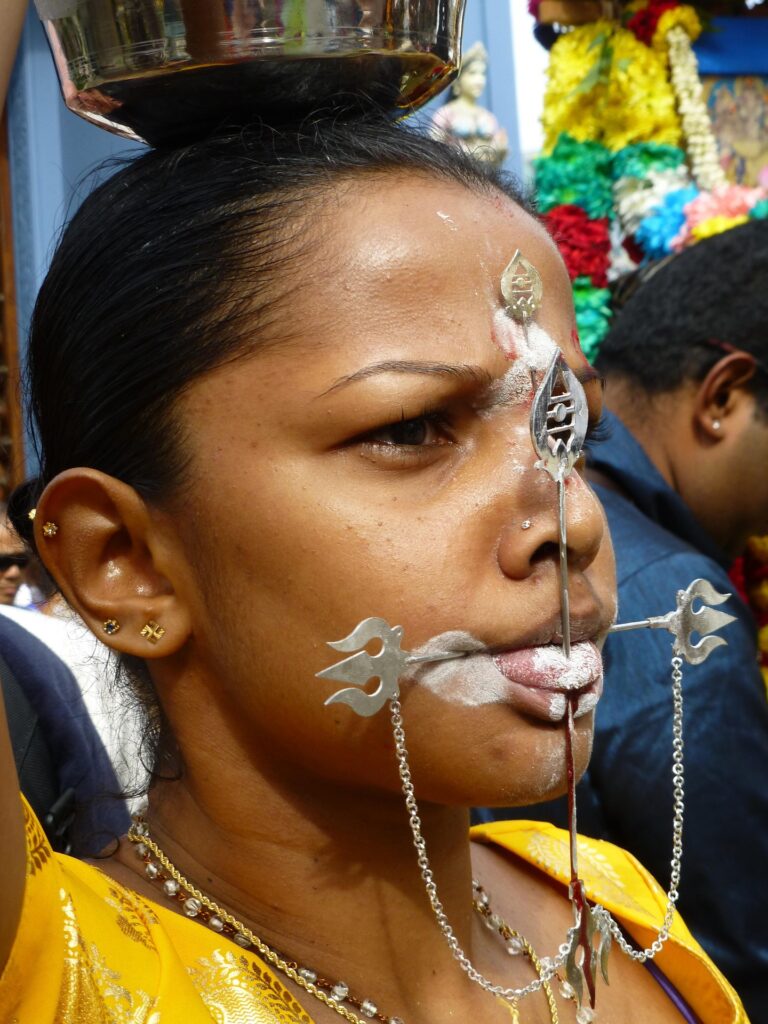
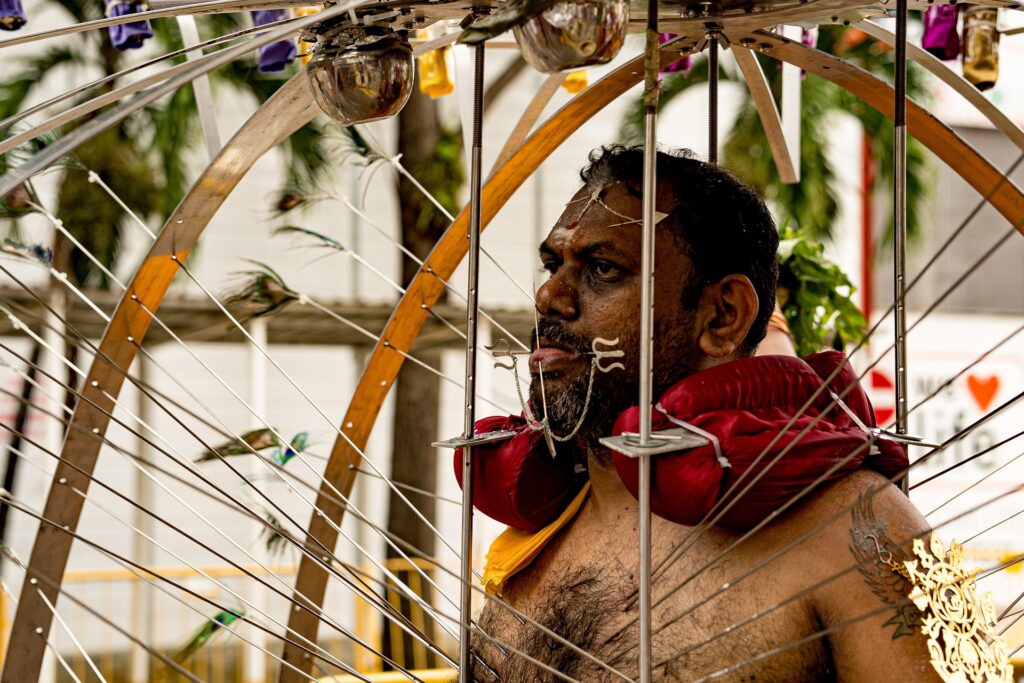
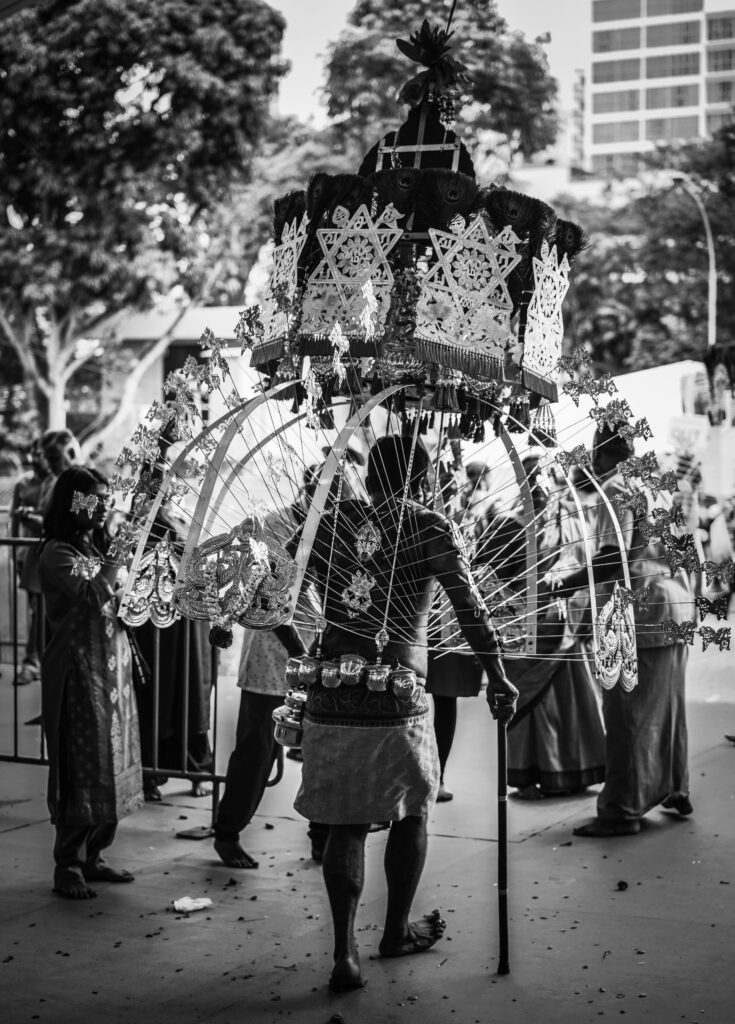
Thaipusam honors Lord Murugan and celebrates devotion, gratitude, and spiritual cleansing. Many devotees make vows and carry offerings called kavadi, which can range from simple pots of milk to elaborate, decorated structures. There’s loud music, religious chanting, brilliant colors, and huge crowds – it’s overwhelming in the best way. It’s one of the most significant cultural events in Malaysia.
Some participants choose to express their devotion through intense forms of endurance and self‑discipline. These practices are deeply symbolic within the tradition and are always voluntary. They’re meant to represent faith, sacrifice, and the fulfillment of vows—not harm.