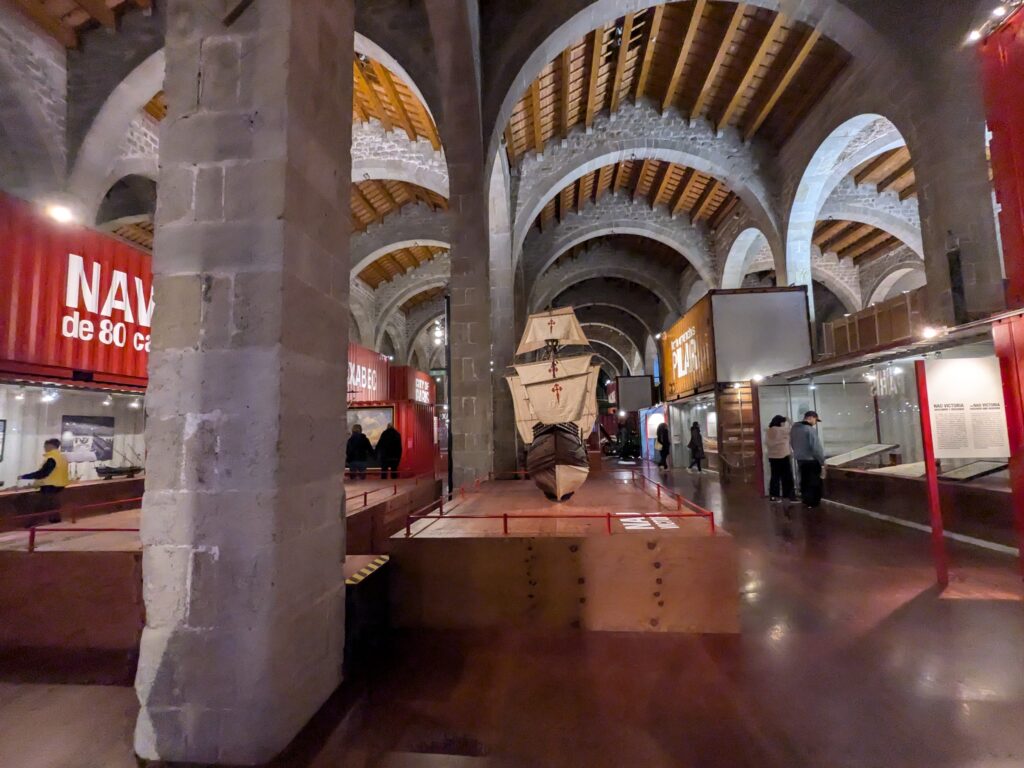
Barcelona is a city that has always faced the water. Long before the modern beach promenades and cruise terminals, the Mediterranean shaped its fortunes, its defences, its trade routes, and even its identity. Tucked at the base of Montjuïc, inside the vast Gothic shipyards of the Drassanes Reials, the Maritime Museum of Barcelona feels like a reminder of that older Barcelona – the one built by sailors, merchants, and shipwrights who understood the sea not as a postcard backdrop but as a force that could make or break a kingdom.
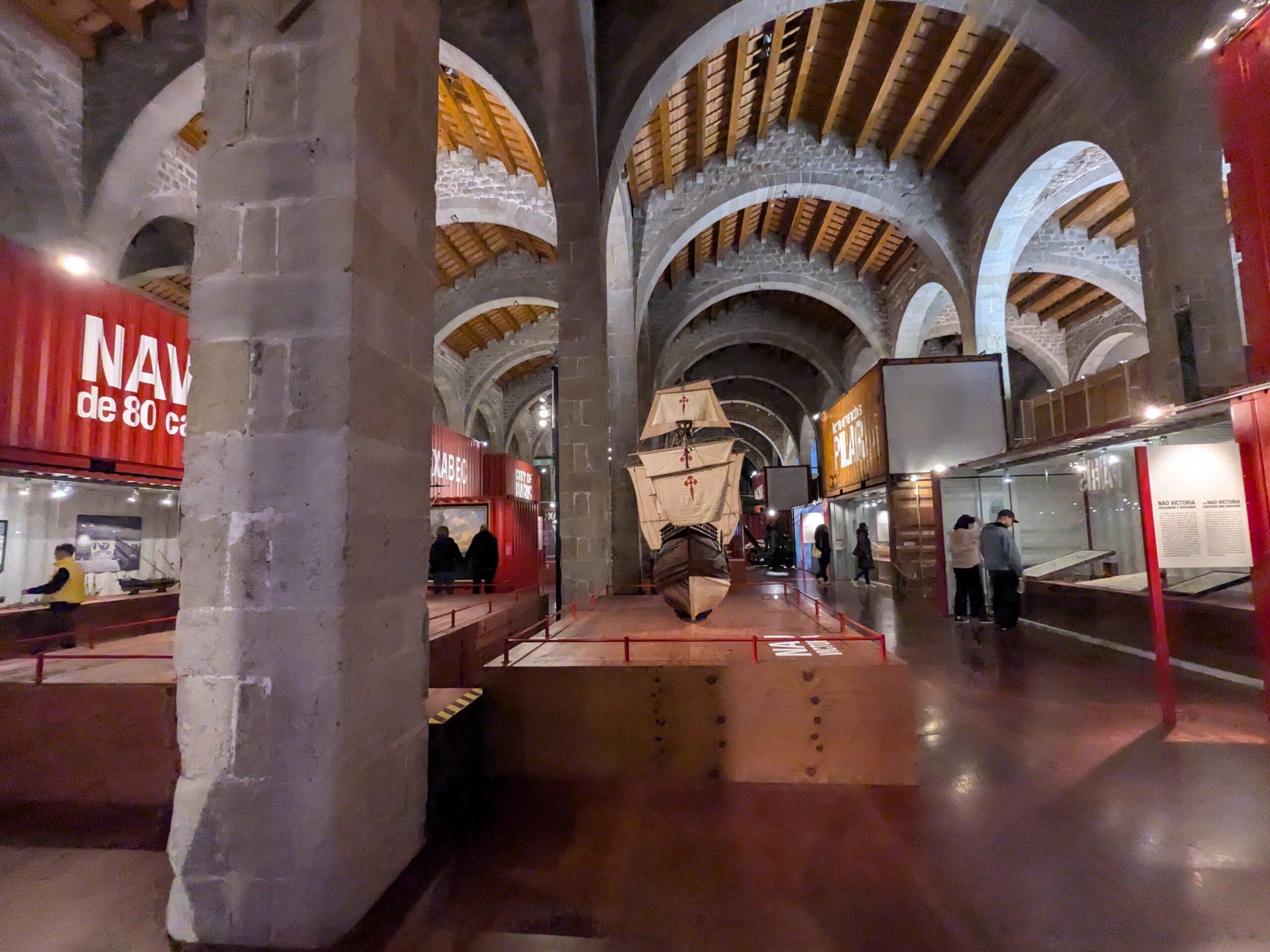
The museum is housed in the very shipyards where Catalan craftsmen once built the vessels that carried the Crown of Aragon across the Mediterranean. Walking inside is like stepping into a cathedral of maritime history: stone arches, vaulted ceilings, and the lingering sense that something enormous once took shape here.
And then you turn a corner and see it — the ship.
The Royal Galley — A Floating War Machine
The vessel on display is a reconstruction of the Royal Galley, the flagship that led the victorious fleet at the Battle of Lepanto on 7 October 1571. That battle changed the balance of power in the Mediterranean, halting Ottoman expansion at sea and marking a turning point for the Western Christian kingdoms. It’s hard to imagine such a moment in history until you’re standing in front of the ship that carried it.
The original galley was built right here in Barcelona — not inside the shipyard, but on the beach outside, where the hull could be launched straight into the water. Catalan shipwrights constructed it, and many of the sailors and soldiers who served aboard were Catalan as well. The replica you see today was built in 1971 for the 400th anniversary of the battle, using the same traditional techniques that have almost vanished from the world.
Even as a replica, the scale is staggering: 60 metres long, over 200 tonnes, and designed for a kind of warfare that feels almost unimaginable now.
A Tour of the Bow — Where Battle Began
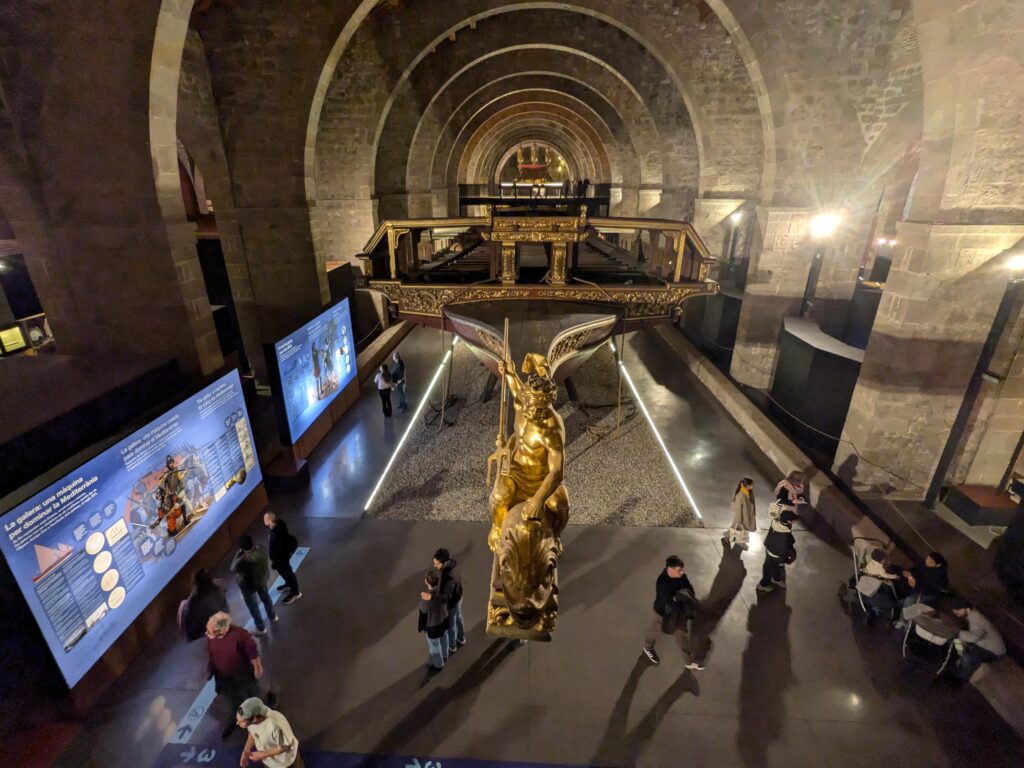
From the bow — the angle you see in the photo — the ship looks like a weapon in its own right. The structure jutting forward is the rambad, the platform where the guns were mounted. Beneath it, the ram was designed to smash into enemy hulls, splintering wood and opening the way for boarding.
Above it all, a carved Neptune presides, a reminder that this ship didn’t just represent military power — it symbolised the authority of the crown over the sea.
Look forward, in the direction the ship would have sailed, and you can picture the small forecastle crowded with soldiers. Arquebusiers ready to fire. Gunners loading the cannons. The bow was where the heaviest artillery sat, and where the first clash of battle would have been felt.
Life Aboard — 500 Men in a Floating Furnace
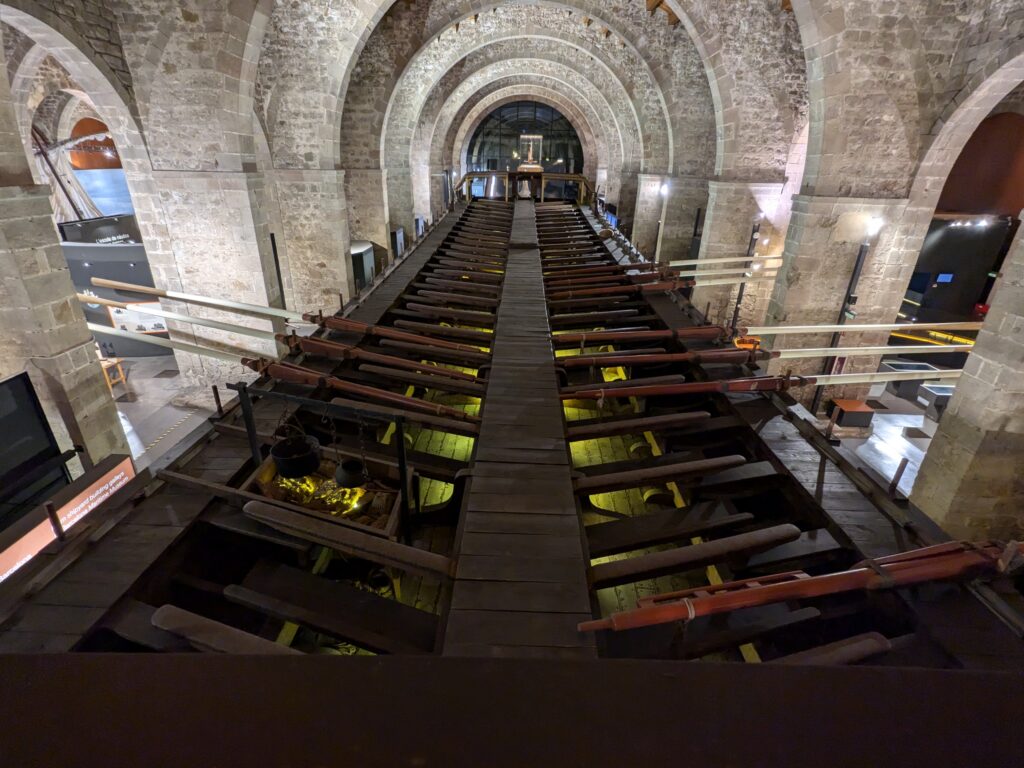
Now imagine the benches — empty today — filled with the galliots, the oarsmen. Nearly all were prisoners or slaves. Fifty oars, each one twelve metres long, each worked by four men. That’s at least 236 oarsmen, chained to their benches, rowing in brutal unison to the beat of a drum.
They never left their place. The heat, the sweat, the smell — it must have been overwhelming.
In total, when the galley entered battle, there were around 500 men aboard. Soldiers, sailors, officers, gunners, oarsmen. A floating city compressed into a narrow wooden hull.
Above them, two immense sails would have towered overhead — the main mast rising 22 metres, the foremast 15. Together, the sails covered nearly 700 square metres of canvas. Indoors, you have to imagine them; they would be far taller than the museum ceiling.
The Stern — Power and Privilege
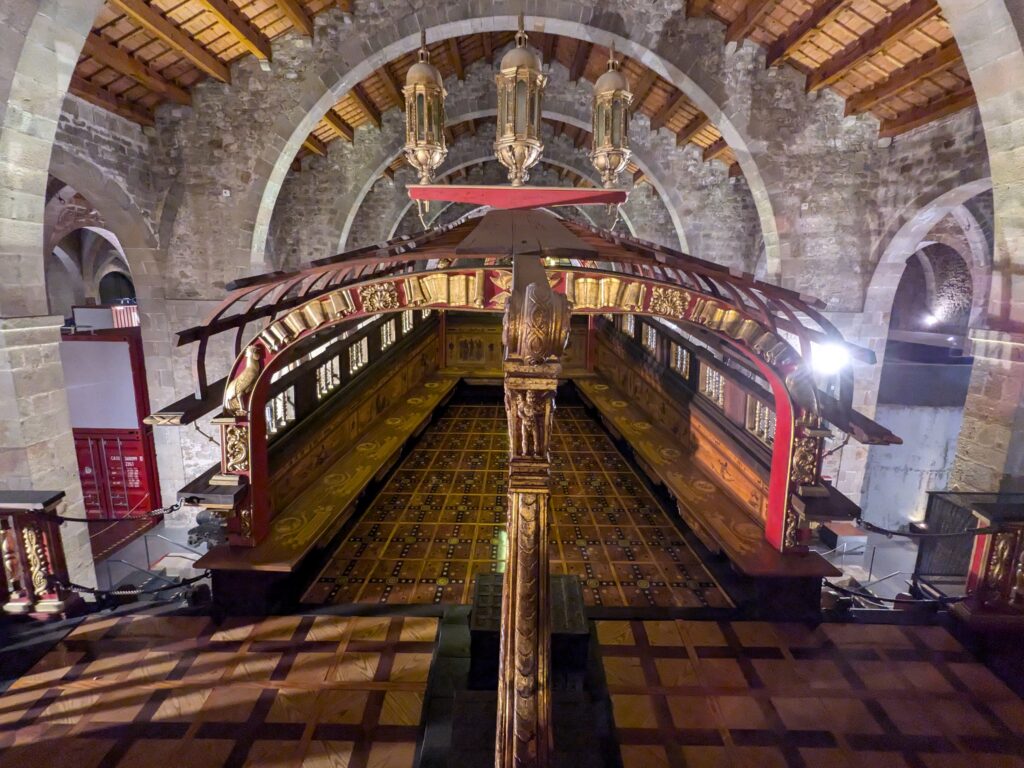
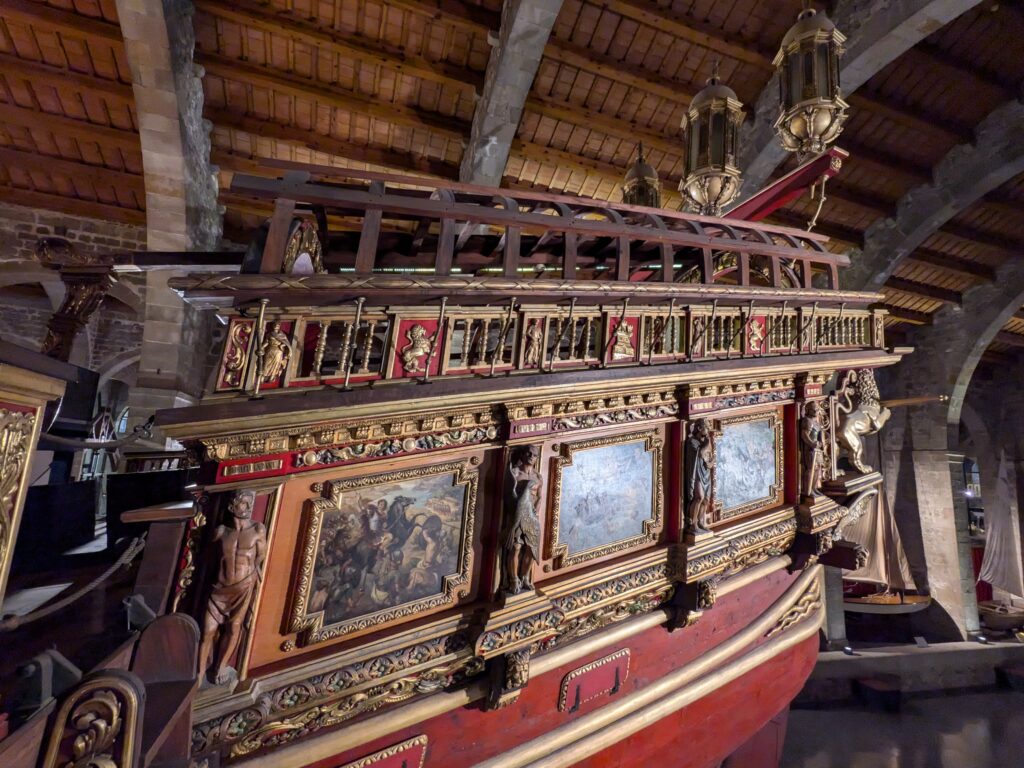
At the opposite end of the ship sits the carroça, the aftercastle. This was the domain of the most important person on board. In this case, it was meant for John of Austria, the illegitimate son of Charles V and commander of the fleet at Lepanto. The space was richly decorated and fitted with every luxury a flagship could carry — a stark contrast to the misery of the oarsmen below.
Into Battle
And now picture the whole thing in motion.
The drum beating time. The oars hitting the water in perfect rhythm. Soldiers braced on the forecastle and sterncastle. Cannons firing. Arquebuses cracking. Enemy fire whistling past. The ship surging forward toward an opposing galley.
Hold on tight – the impact could throw you straight into the sea.
Standing in front of this reconstruction, it’s impossible not to feel the weight of history. Not just the battle, but the human lives packed into every corner of this immense machine. The Maritime Museum doesn’t just show you a ship; it shows you the world that built it.