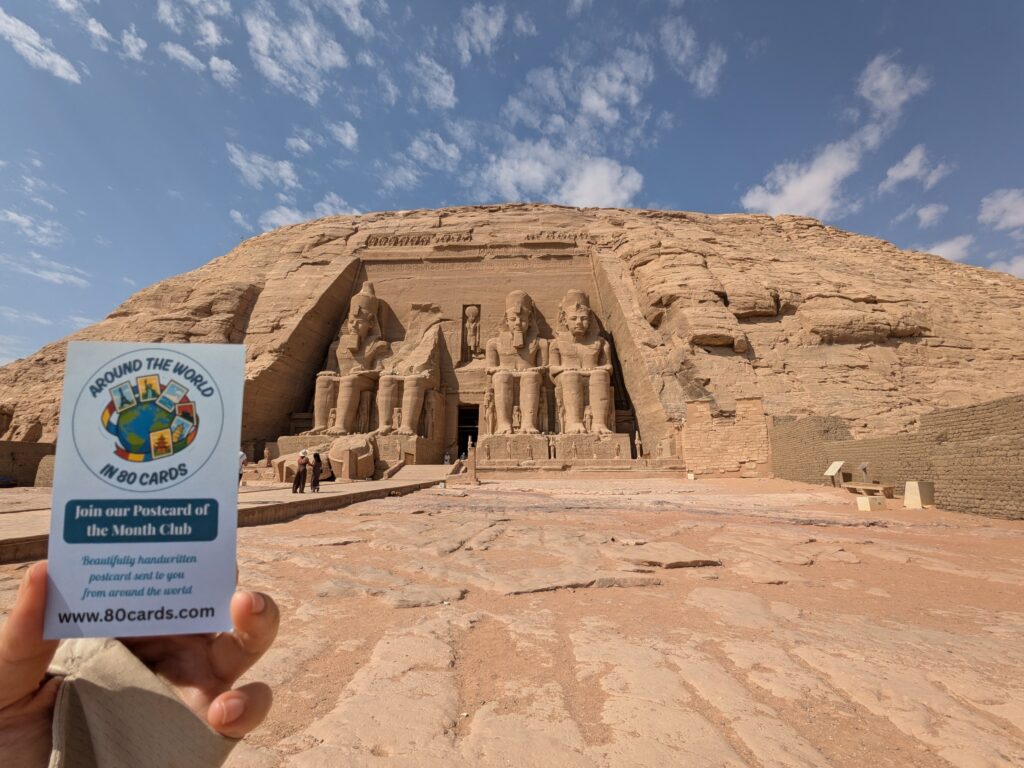
Carved into a sandstone cliff more than 3,200 years ago, the two colossal temples at Abu Simbel built by Ramesses II stand as some of the most iconic structures in Egypt. Abu Simbel isn’t just a temple complex. It’s a testament to ambition — ancient and modern.
🏺 A Little Background: Ramesses II’s Monument to Power
Abu Simbel was constructed during the reign of Ramesses II, around 1264 BCE, during Egypt’s New Kingdom. The site consists of two temples:
- The Great Temple, dedicated to Ramesses II himself and the gods Amun‑Ra, Ra‑Horakhty, and Ptah.
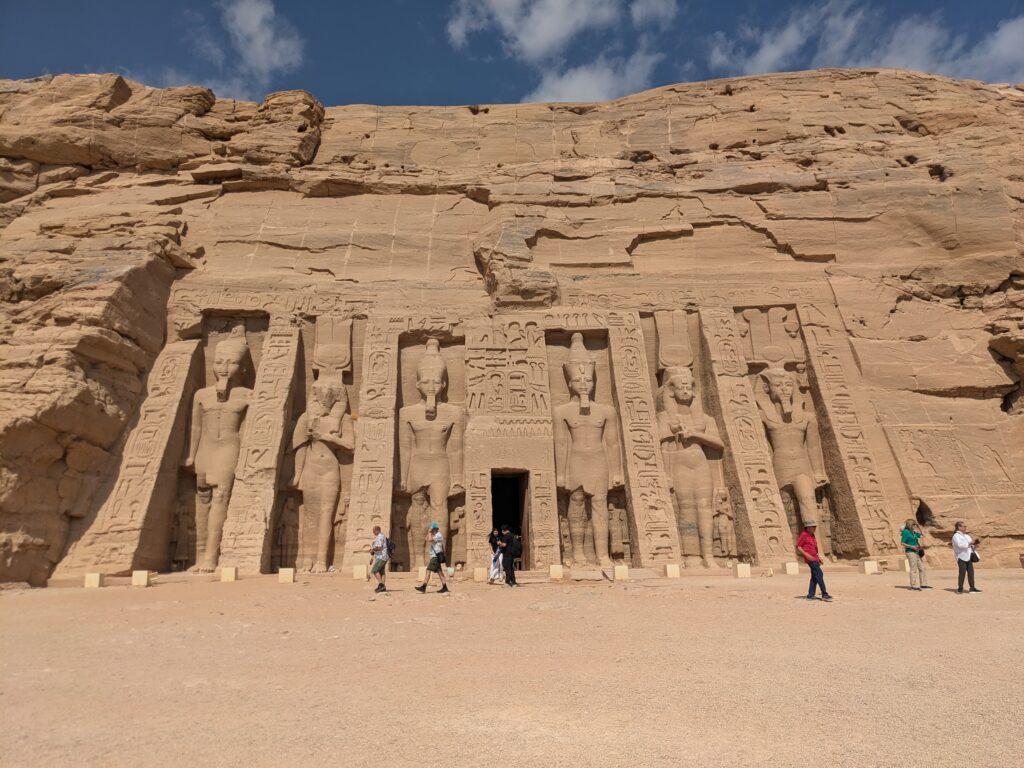
- The Small Temple, dedicated to Queen Nefertari and the goddess Hathor.
The façade of the Great Temple is one of the most recognizable images in Egypt: four colossal statues of Ramesses II, each standing between 20 and 30 meters tall. They stare out over the desert like guardians carved from the mountain itself.
Inside, the temple extends deep into the rock, with pillared halls, carved reliefs, and a sanctuary aligned so that twice a year, the rising sun illuminates the statues within — a solar event that still occurs today.
The Small Temple is equally impressive in its own way. Its façade features six statues — four of Ramesses and two of Nefertari — carved at equal height. This was a rare honor for a queen and speaks to Nefertari’s importance.
🌊 The Threat: When the Nile Rose
For centuries, Abu Simbel sat partially buried in sand, forgotten by the outside world. But in the 20th century, it faced a far greater danger.
When Egypt built the Aswan High Dam, the rising waters of Lake Nasser threatened to submerge the temples entirely. By the early 1960s, it was clear that Abu Simbel would disappear beneath the reservoir unless something drastic was done.
🏗️ The Rescue: Moving a Mountain
What happened next is one of the most astonishing engineering projects ever attempted.
Between 1964 and 1968, an international team — coordinated by UNESCO — cut the temples into massive blocks, some weighing up to 30 tons, and moved them 200 meters inland and 65 meters higher. The pieces were then reassembled inside an artificial mountain designed to mimic the original cliffs.
More than 25,000 workers took part in the operation.
The relocation preserved not only the temples themselves but also their solar alignment — a detail that required extraordinary precision.
Today, when you stand in front of Abu Simbel, it’s almost impossible to tell that the entire complex was once taken apart and rebuilt. The illusion is seamless.
🏛️ What You’ll See at Abu Simbel
Both temples are carved entirely from the rock — a feat that still feels unbelievable even when you’re standing right in front of them.
The Great Temple
- Four colossal statues of Ramesses II dominating the façade
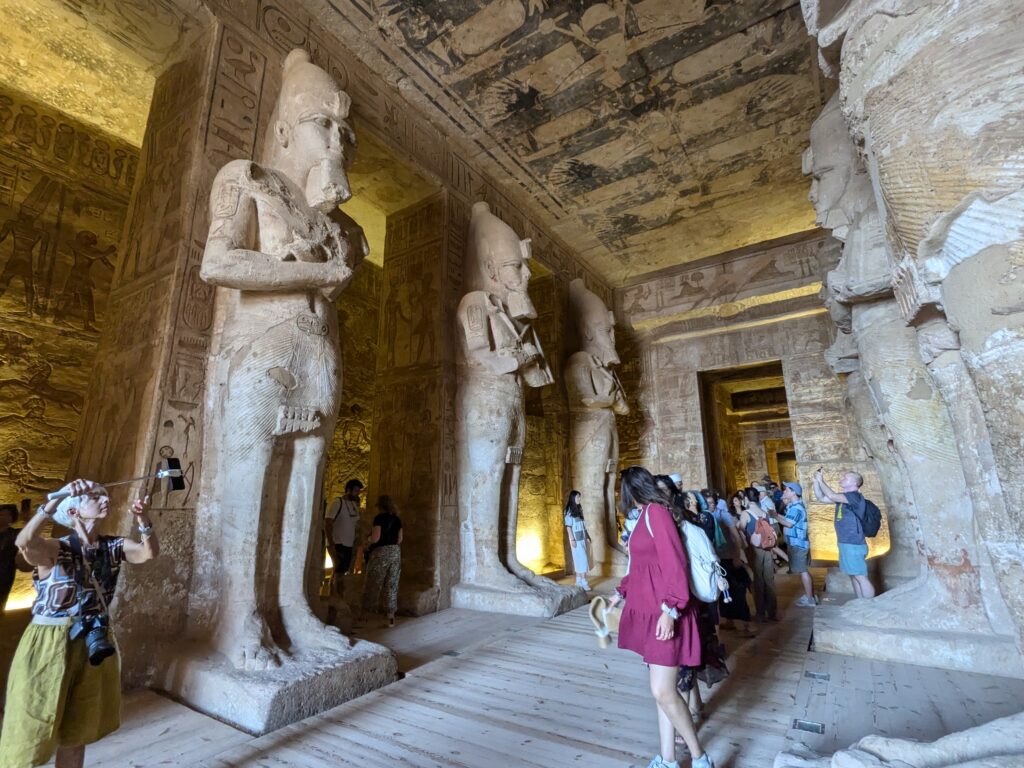
- A hypostyle hall with pillars shaped like Osiris
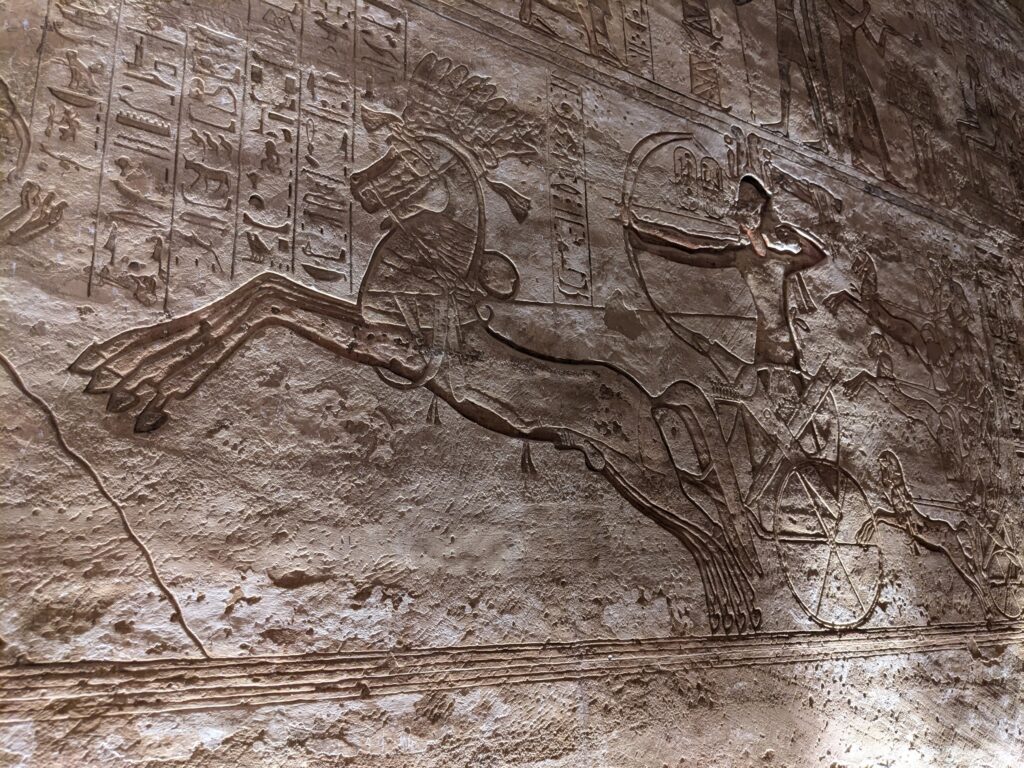
- Detailed reliefs depicting the Battle of Kadesh
- A sanctuary aligned with the rising sun twice a year
The Small Temple
- Six statues of Ramesses II and Nefertari
- Interior chambers decorated with scenes honoring Hathor
- A more intimate atmosphere compared to the Great Temple
Final Thoughts
Abu Simbel is one of those places that stays with you long after you’ve left. It’s a masterpiece of ancient craftsmanship, a triumph of modern engineering, and a reminder of how far people will go to preserve the past.
If Philae shows you the poetry of ancient Egypt, Abu Simbel shows you its power.
And knowing that the entire complex was once cut apart and moved — without losing its magic — makes standing there feel even more extraordinary.

🖋️Writer Spotlight: Mimi
🇪🇬 Egypt (Oct 2025 Postcard)
ℹ️ Important Notice for Our U.S. Members: Postcards from Egypt
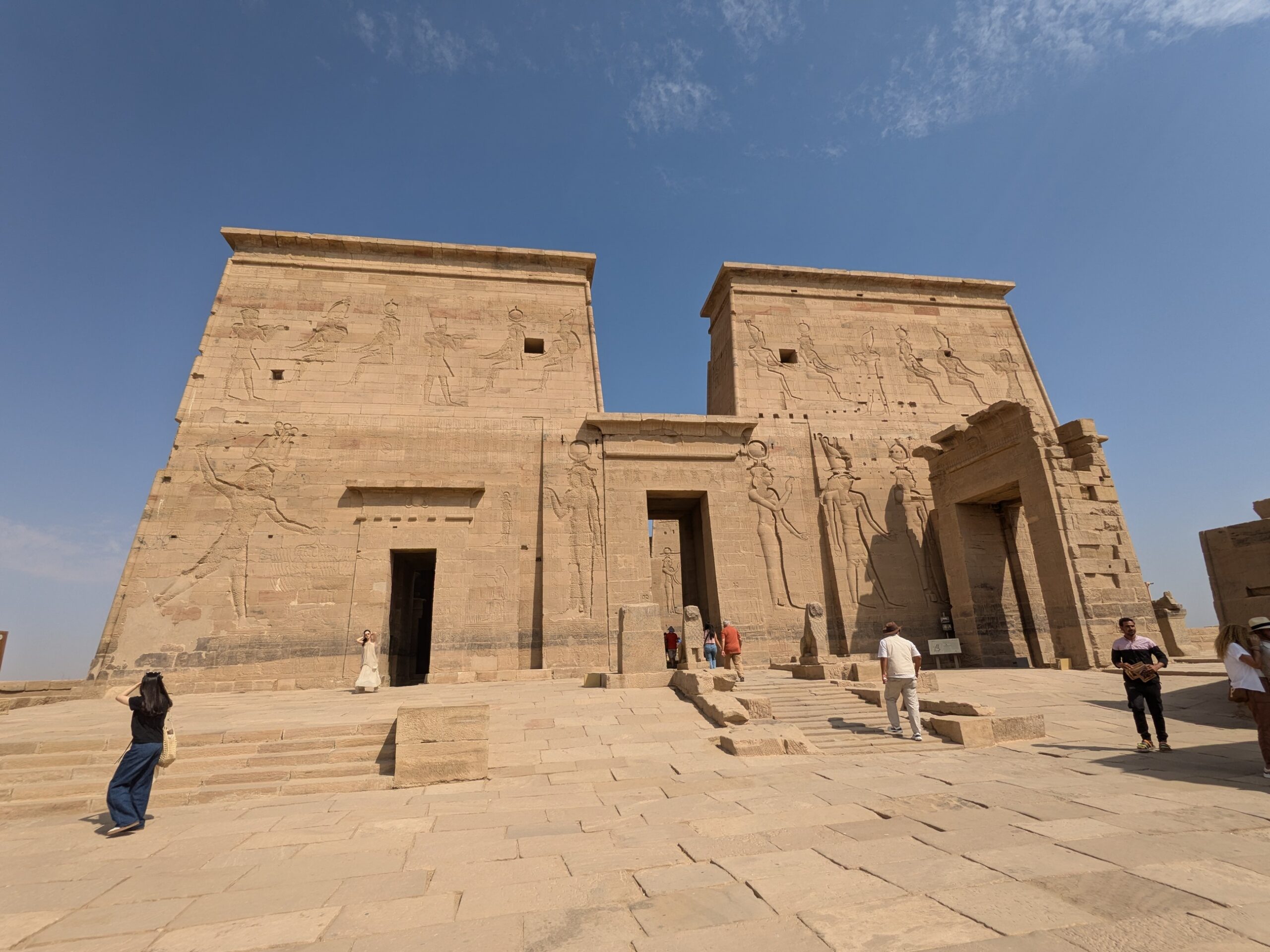
🇪🇬🏺 Philae Temple: Where Ancient Myth Meets the Nile
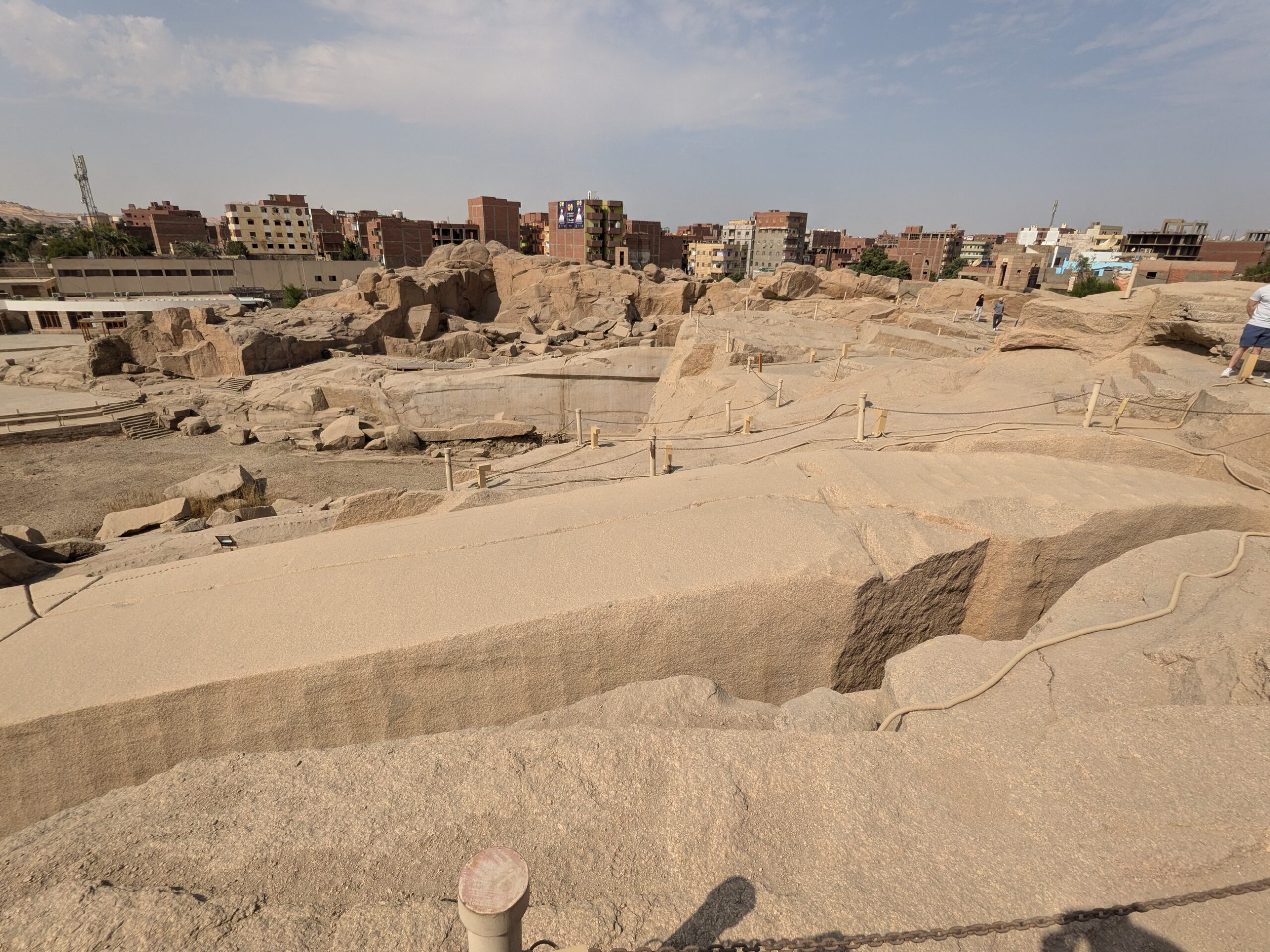
🇪🇬🪨 The Unfinished Obelisk: Egypt’s Monument That Reveals Everything
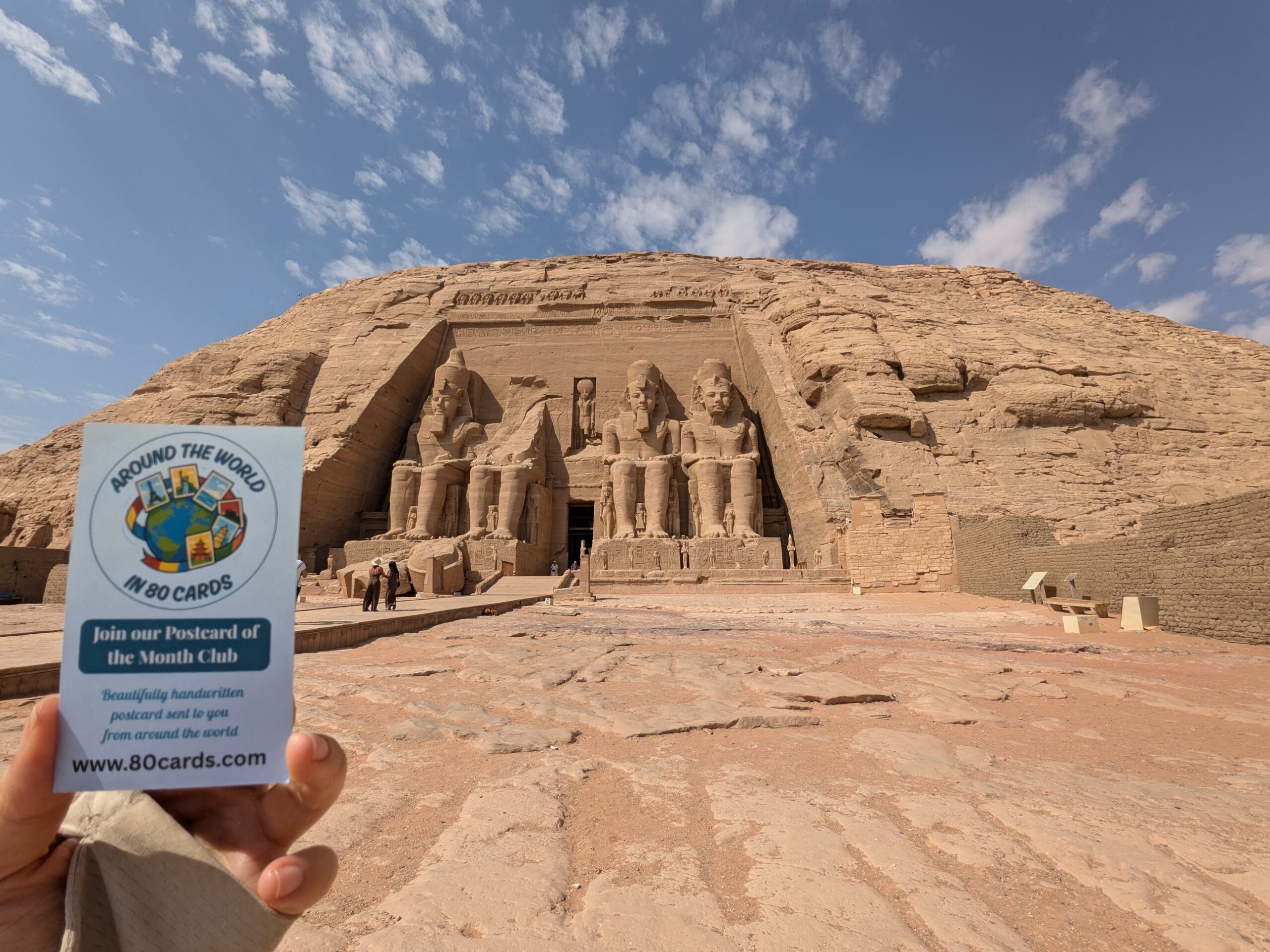
🇪🇬 Abu Simbel: From Pharaoh’s Vision to UNESCO’s Greatest Rescue
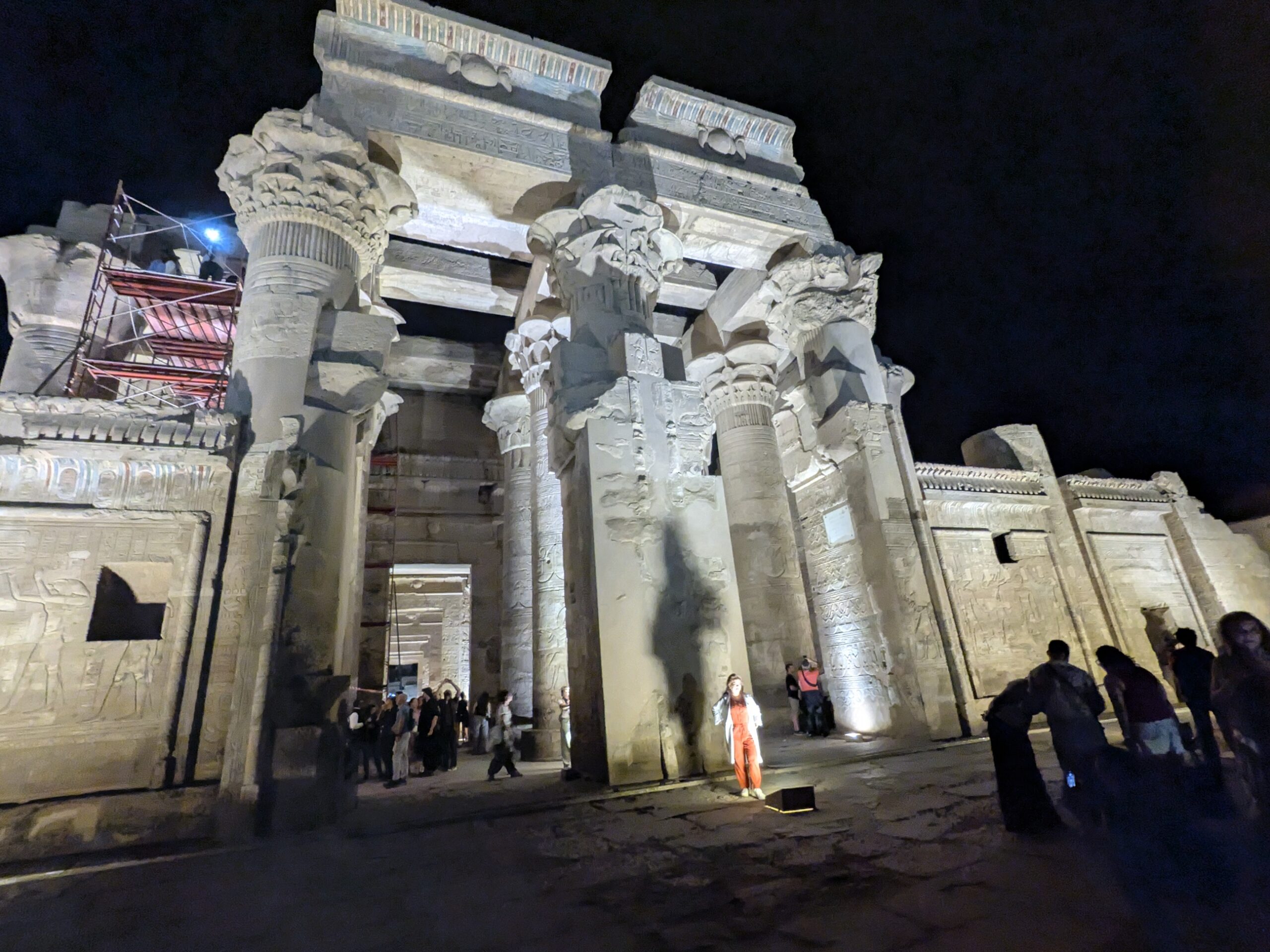
🇪🇬🐊 Kom Ombo: My Favorite Temple on the Nile
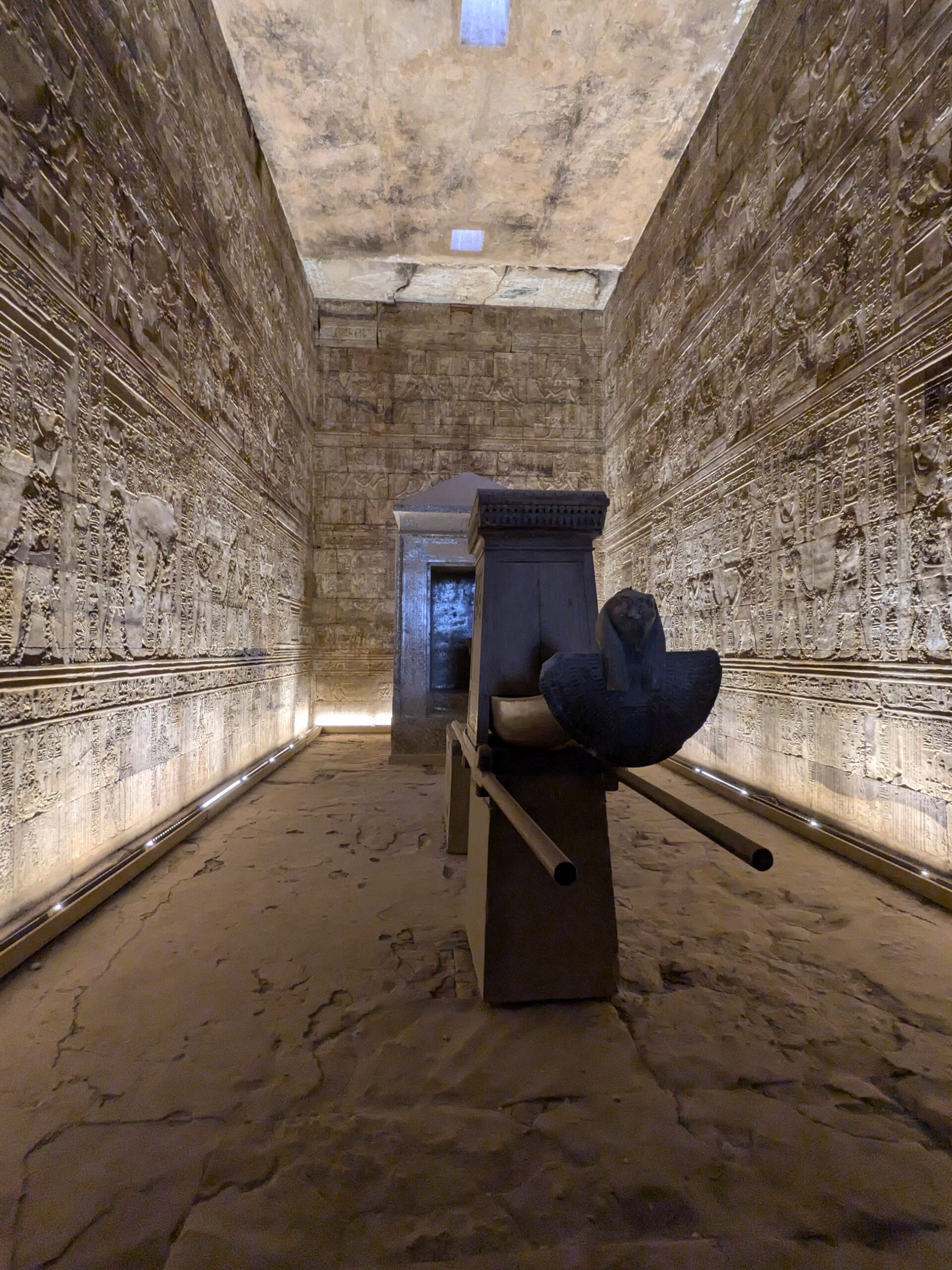
🇪🇬🦅 Edfu: Where a God Awaits for his Beloved
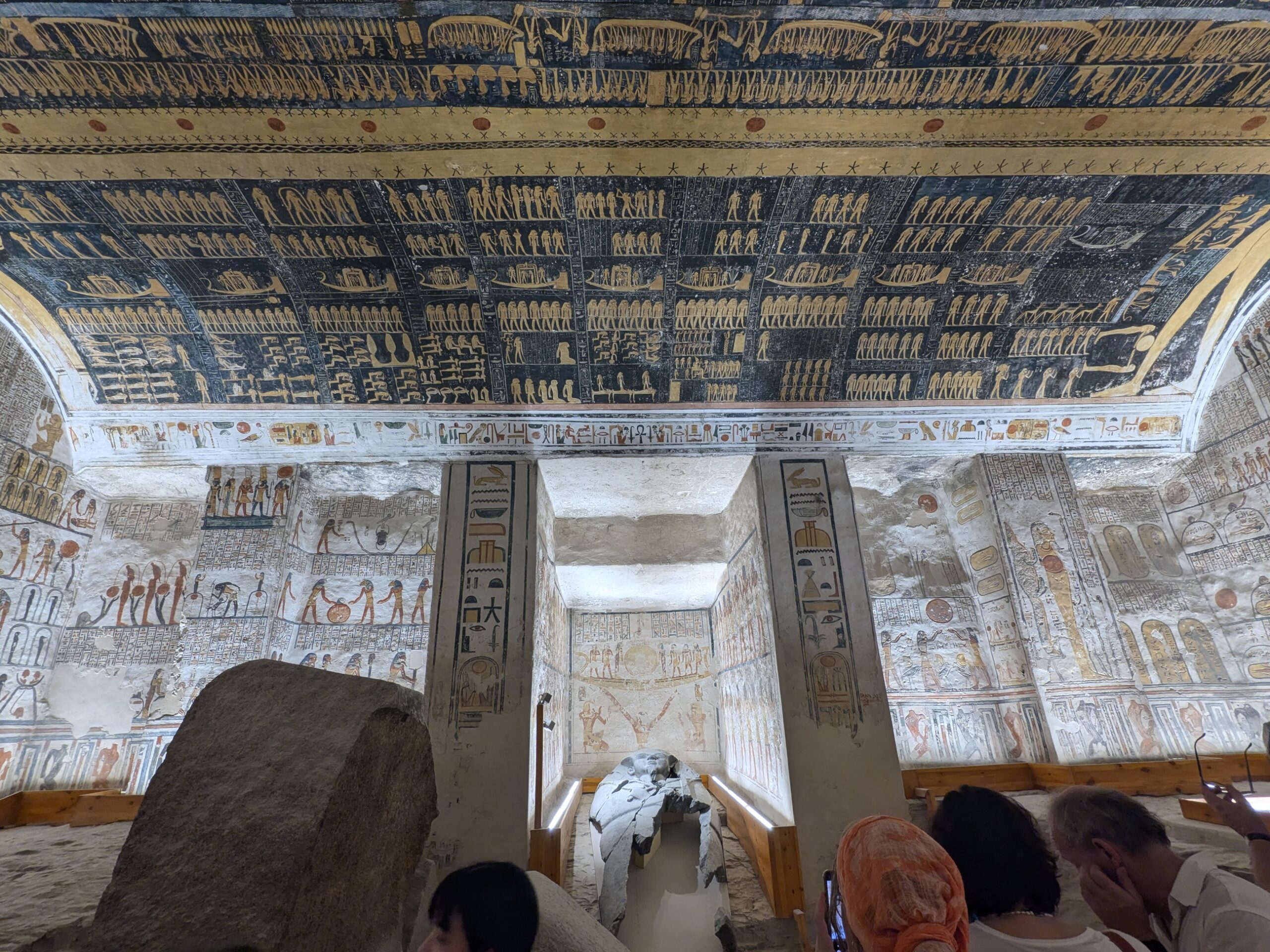
🇪🇬 Valley of the Kings: Where the Pharaohs Sleep
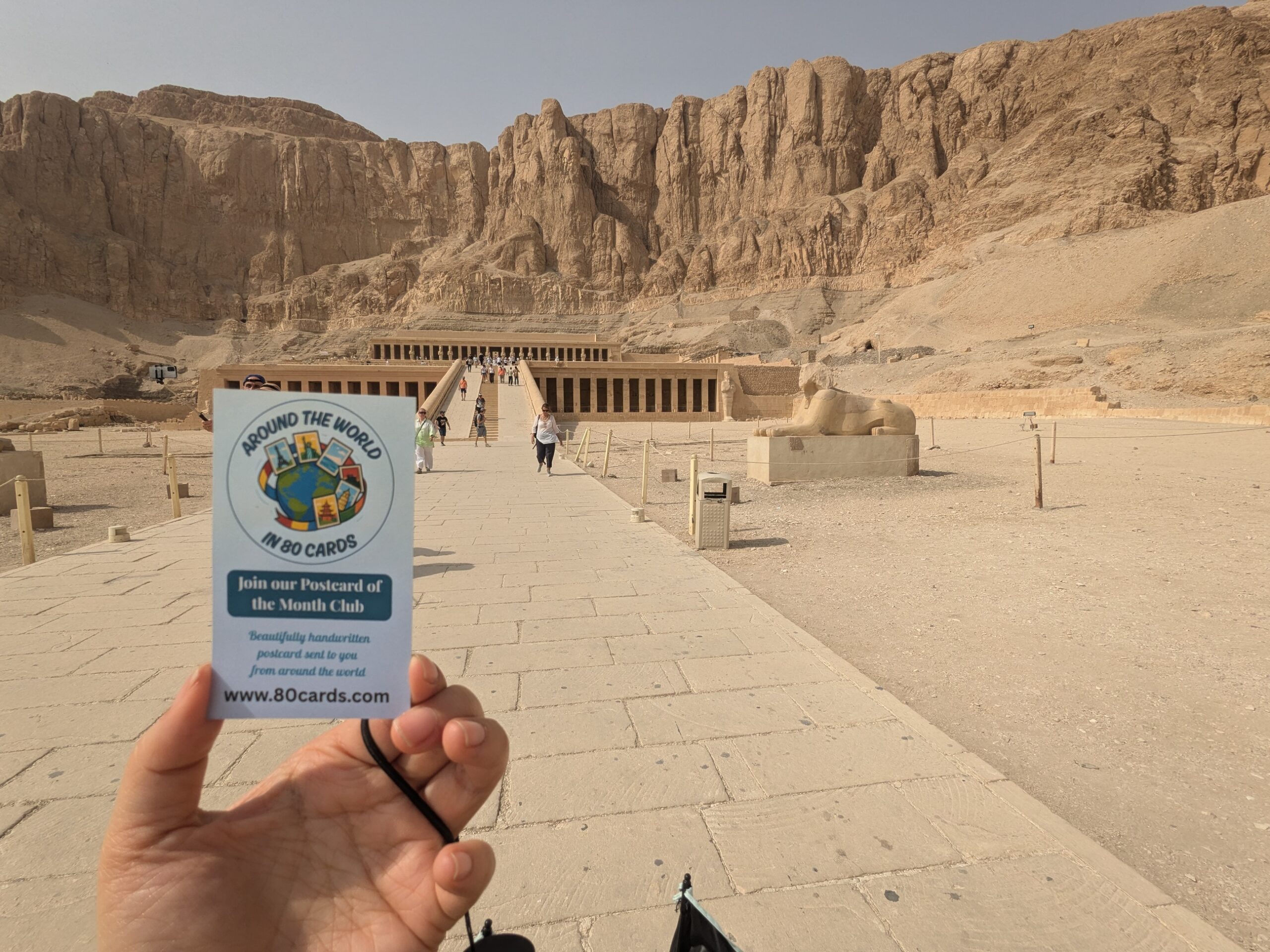
🇪🇬 The Temple of Hatshepsut: The Woman who Became King