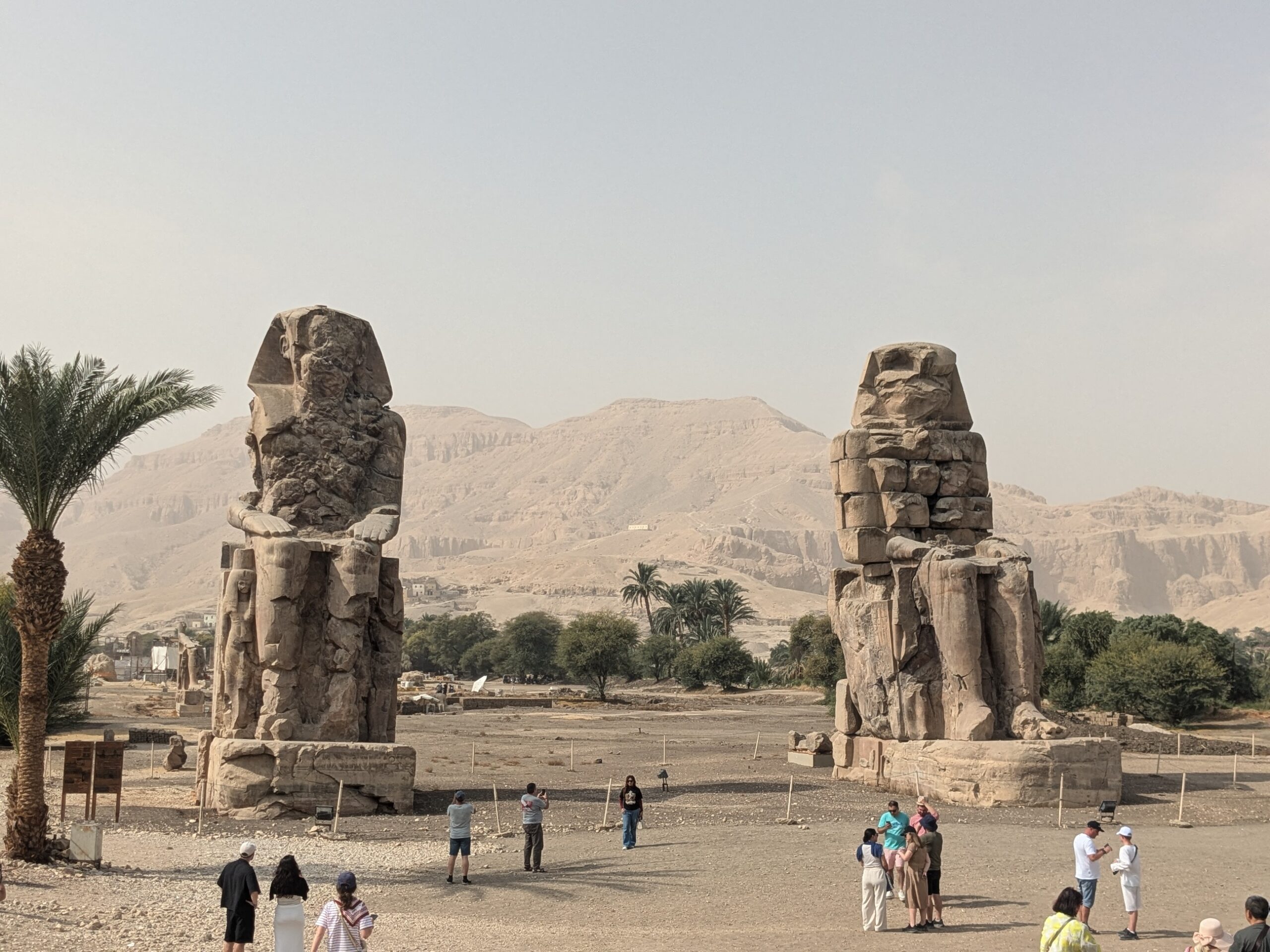
The Temple of Edfu is one of those places that makes you feel like ancient Egypt is still alive just beneath the surface. Standing on the west bank of the Nile between Luxor and Aswan, it rises out of the modern town like a sandstone time capsule — towering pylons, shadowed halls, and falcon‑headed guardians carved with a precision that feels almost impossible.
What makes Edfu so extraordinary is not just its beauty, but its preservation. Buried for centuries under layers of sand and settlement debris, the temple remained sealed away until the 19th century, when French archaeologist Auguste Mariette excavated it. Because of that long slumber, Edfu is now considered one of the best‑preserved temples in all of Egypt.
🏺 A Temple Born in the Ptolemaic Age
Construction of the Temple of Edfu began in 237 BCE under Ptolemy III and continued for nearly two centuries, finally finishing in 57 BCE during the reign of Ptolemy XII. Despite being built in the Greco‑Roman period, the temple is a masterpiece of traditional Egyptian architecture — a deliberate revival of older styles meant to honor the ancient gods in the ancient way.
Edfu is dedicated to Horus, the falcon‑headed sky god, son of Isis and Osiris, and one of the most important deities in Egyptian religion. In the Hellenistic world, Horus was identified with Apollo, which is why the Greeks called the city Apollonopolis Magna.
But here, in the quiet halls of the temple, Horus feels fierce, protective, and eternal.
🦅 Meeting Horus at the Gate
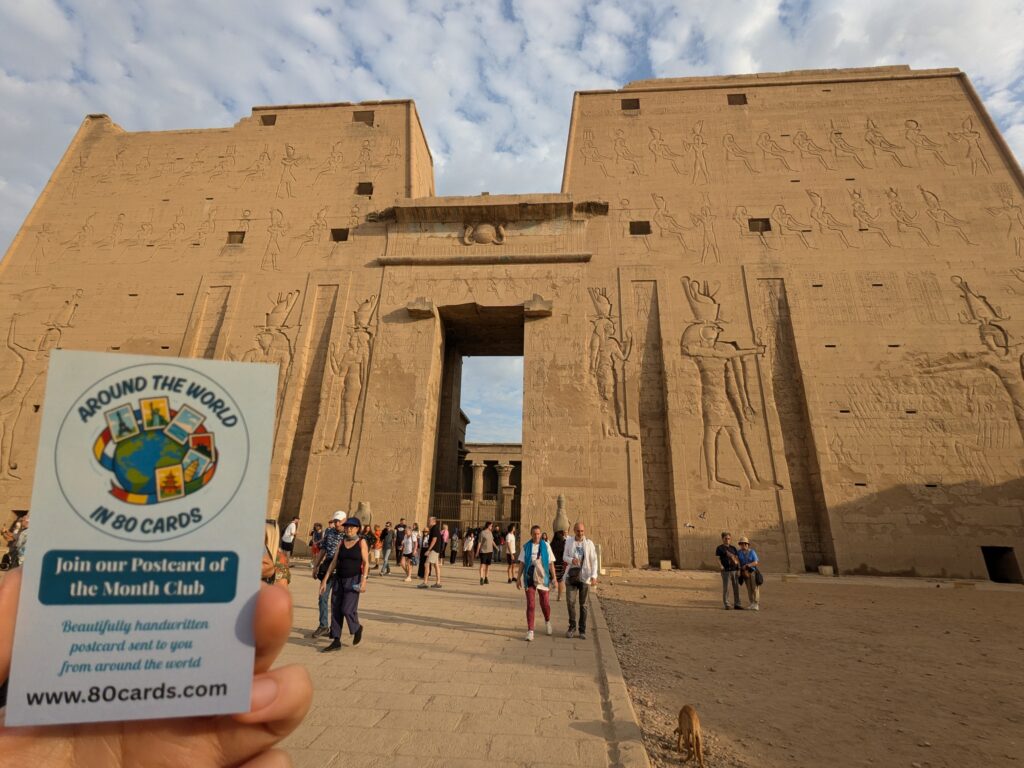
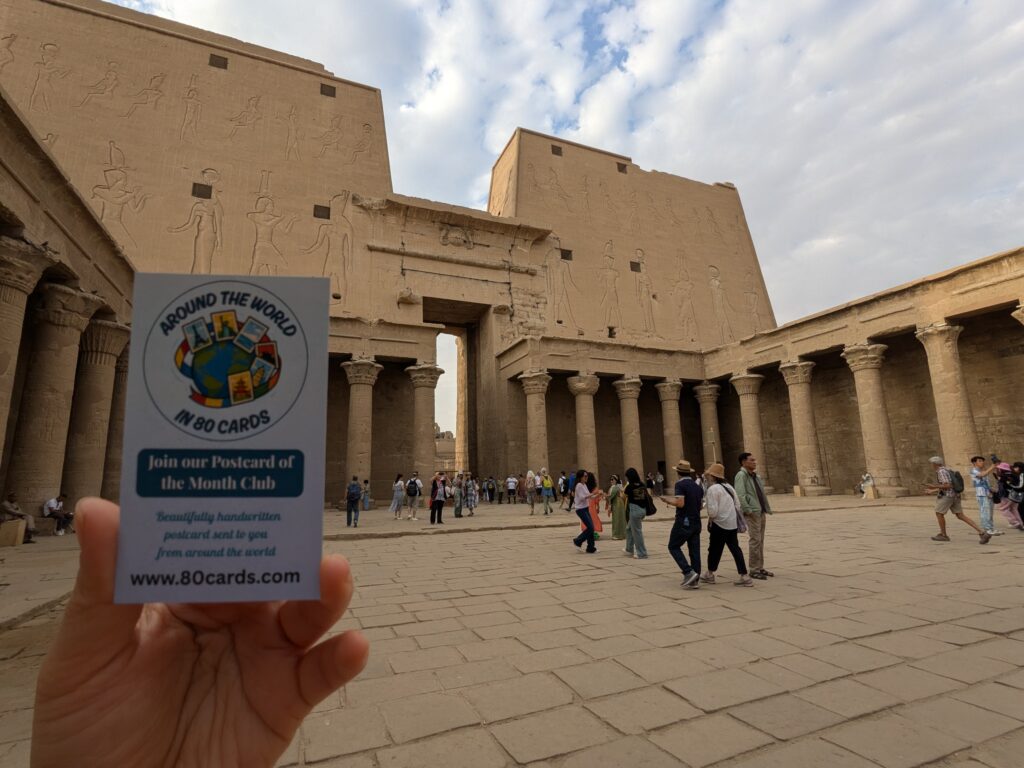
The entrance to Edfu is one of the most dramatic in Egypt. Two massive pylons rise 36 meters high, carved with scenes of Ptolemy XII smiting his enemies and offering to the gods. At their base stand two enormous black‑granite statues of Horus in falcon form, watching over the threshold with an intensity that stops you in your tracks.
Passing between them feels like stepping into another world.
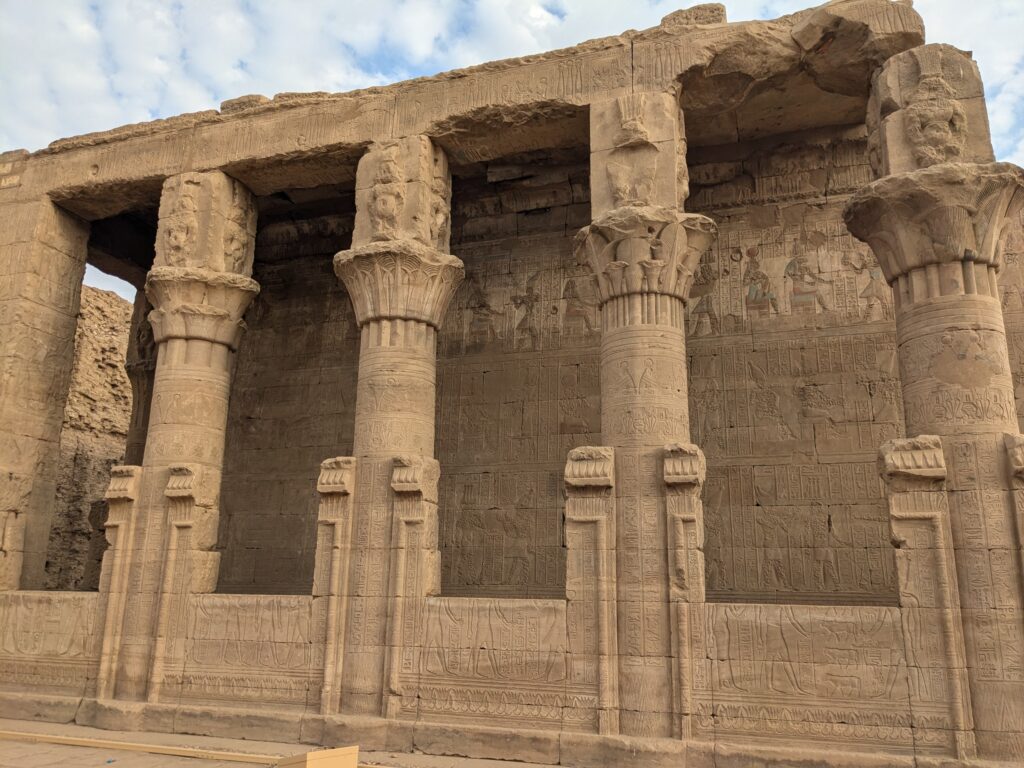
Inside, the temple unfolds in a series of courtyards, hypostyle halls, and darkened chambers, each one drawing you deeper into the mythic story of Horus. The walls are covered in reliefs that recount the eternal struggle between Horus and Set — a cosmic battle between order and chaos. These scenes aren’t just decorative; they were part of the temple’s ritual life, reenacted during festivals to renew the divine balance.
💛 The Beautiful Meeting: When Horus Reunites With Hathor
One of the most enchanting traditions connected to Edfu is the annual reunion of Horus and Hathor, known as the “Beautiful Meeting.” Once a year, Hathor would leave her temple at Dendera and travel up the Nile to visit her consort Horus at Edfu. This wasn’t just a symbolic gesture — it was one of the most joyful and anticipated festivals in ancient Egypt.
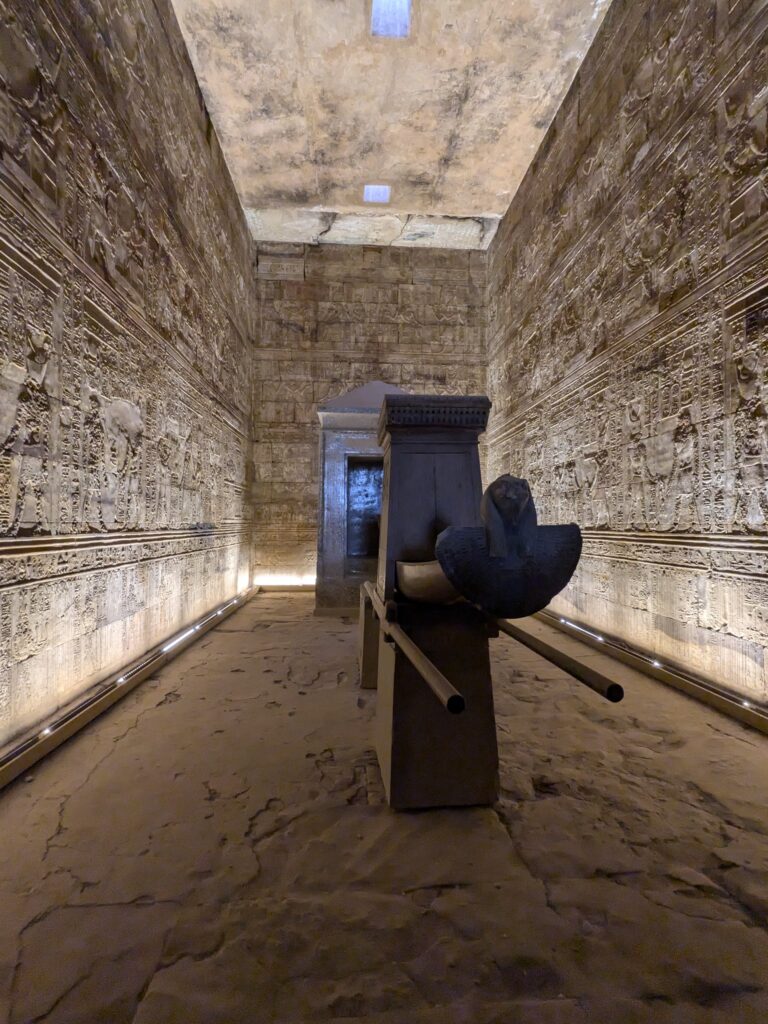
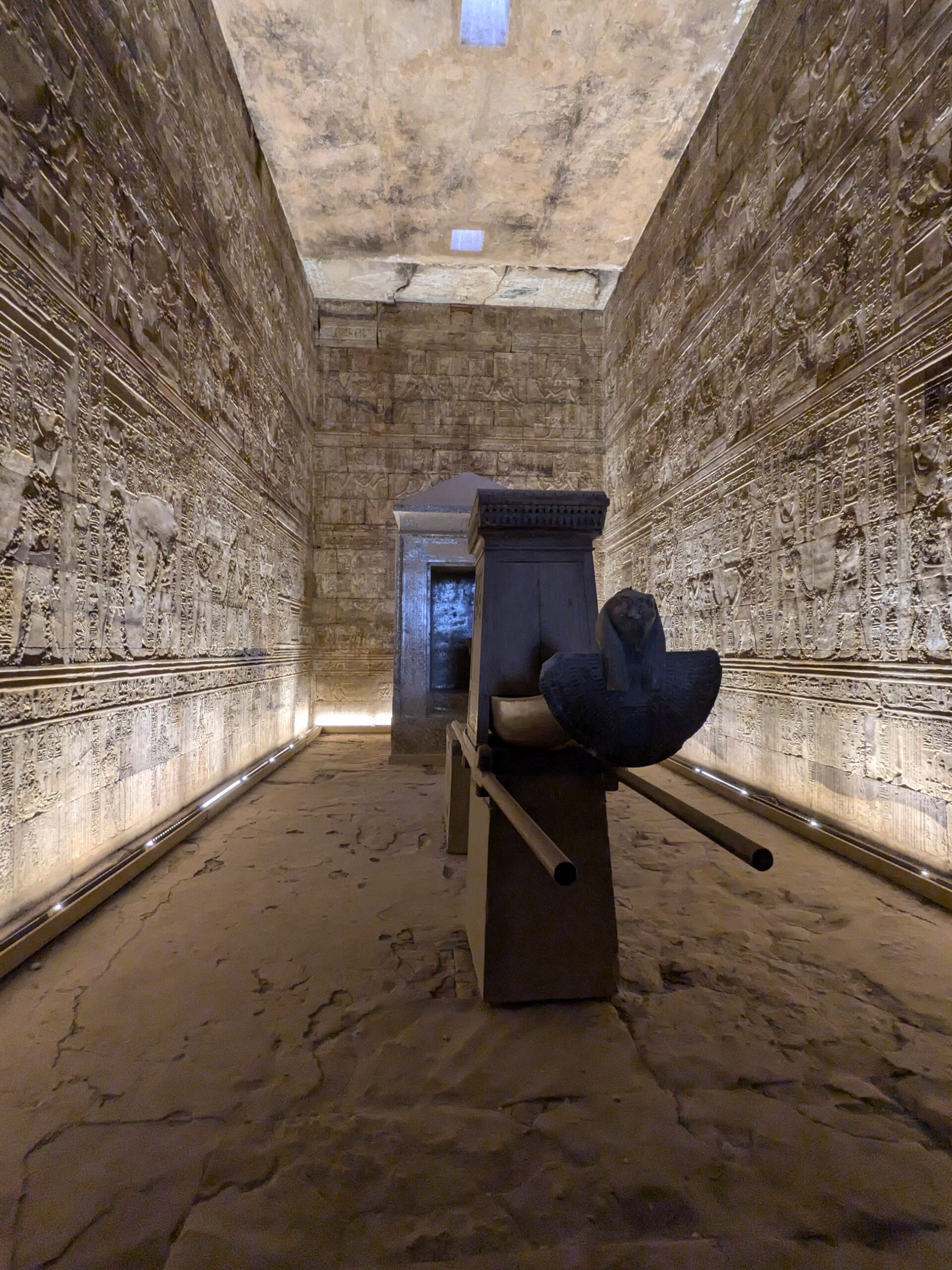
Hathor’s journey was a spectacle in itself. Her sacred statue was placed inside an ornate barque shrine, a wooden ceremonial boat covered in gold, carvings, and protective symbols. Even when carried on land, the shrine kept its boat‑shape, symbolizing her connection to the Nile and the cosmic waters. Long wooden poles ran along its sides, and teams of priests lifted the barque onto their shoulders, moving in a slow, rhythmic procession. Incense curled into the air, musicians shook sistrums — Hathor’s sacred instrument — and crowds gathered along the riverbanks to greet the goddess as she passed.
When the procession reached the Nile, Hathor’s barque was transferred onto an actual boat for the river voyage. The priests continued to accompany her, chanting hymns as the flotilla made its way south toward Edfu. Upon arrival, the barque was lifted once again and carried through the temple gates, where Horus awaited her. The moment the two divine barques were brought together was the emotional heart of the festival — a ritual reenactment of their sacred marriage, symbolizing harmony, fertility, and the renewal of cosmic order.
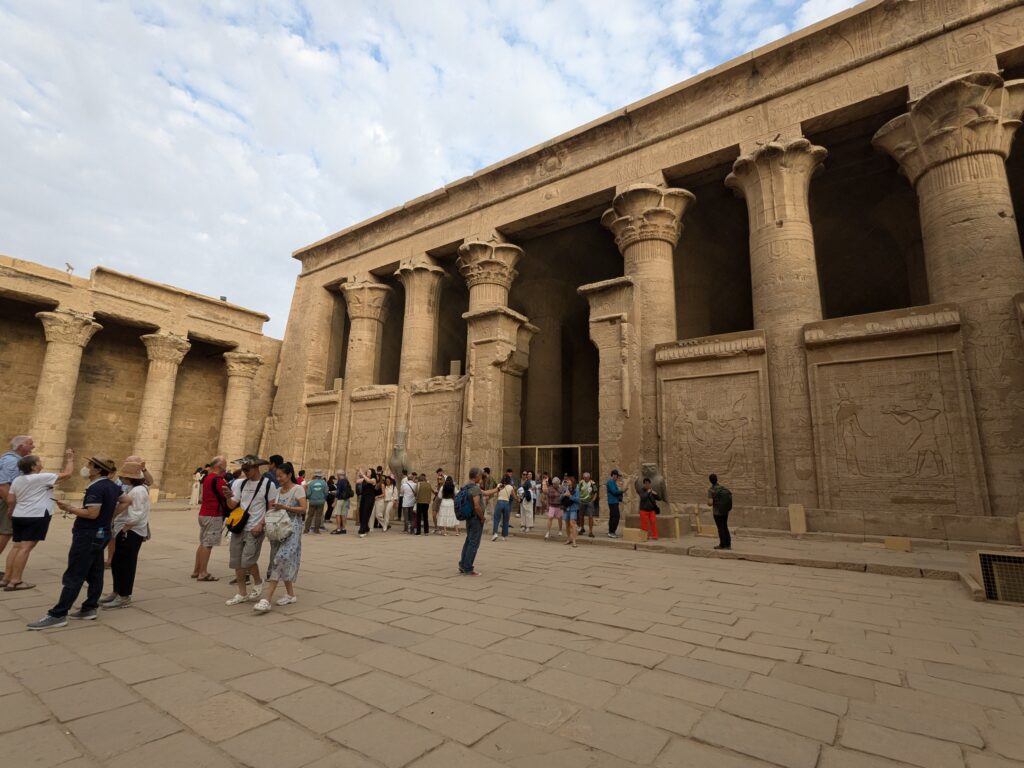
Standing in Edfu’s great courtyard today, it’s easy to imagine the scene: the shimmer of the barque in the sunlight, the sound of sistrums echoing off the stone, and the joyful anticipation of a community welcoming their goddess. The Beautiful Meeting adds a tender, almost romantic dimension to a temple otherwise dominated by scenes of cosmic battle — a reminder that even gods had relationships, journeys, and reunions that mattered deeply to the people who worshipped them.
🌑 Into the Inner Sanctuary
At the heart of the temple lies the Holy of Holies, where the sacred barque of Horus once rested. The sanctuary is small, quiet, and deeply atmospheric — a place where the air feels heavier, as if the centuries have gathered there and refused to leave.
Behind it sits the naos, a polished black‑granite shrine that once held the cult statue of Horus. It’s one of the few surviving naoi in Egypt, and its presence gives the sanctuary an almost magnetic pull.
Edfu is one of those places that stays with you. It’s not the largest temple in Egypt, nor the most famous, but it might be the most immersive. It offers a glimpse into the religious life of ancient Egypt.

🖋️Writer Spotlight: Mimi
🇪🇬 Egypt (Oct 2025 Postcard)
ℹ️ Important Notice for Our U.S. Members: Postcards from Egypt
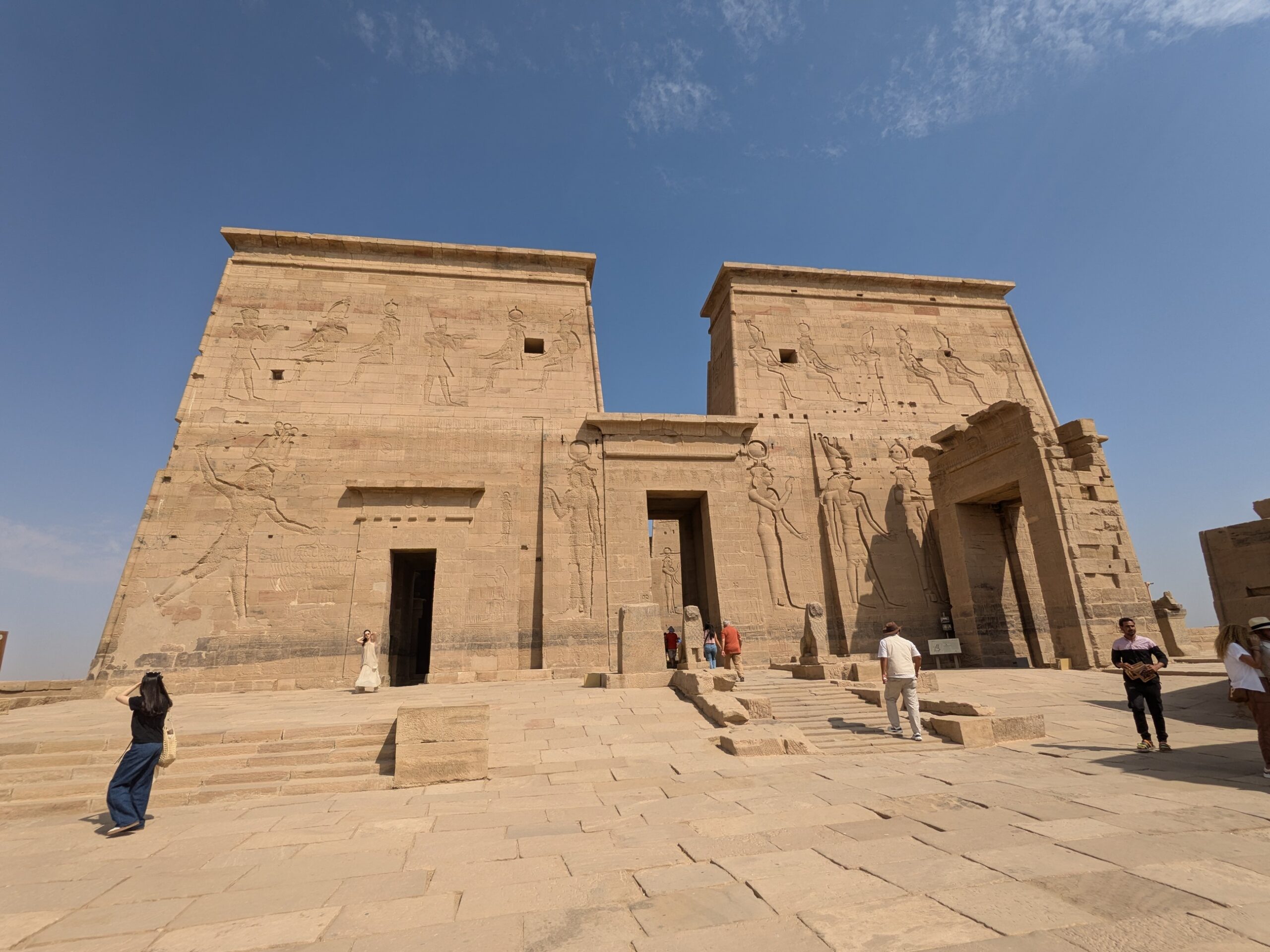
🇪🇬🏺 Philae Temple: Where Ancient Myth Meets the Nile
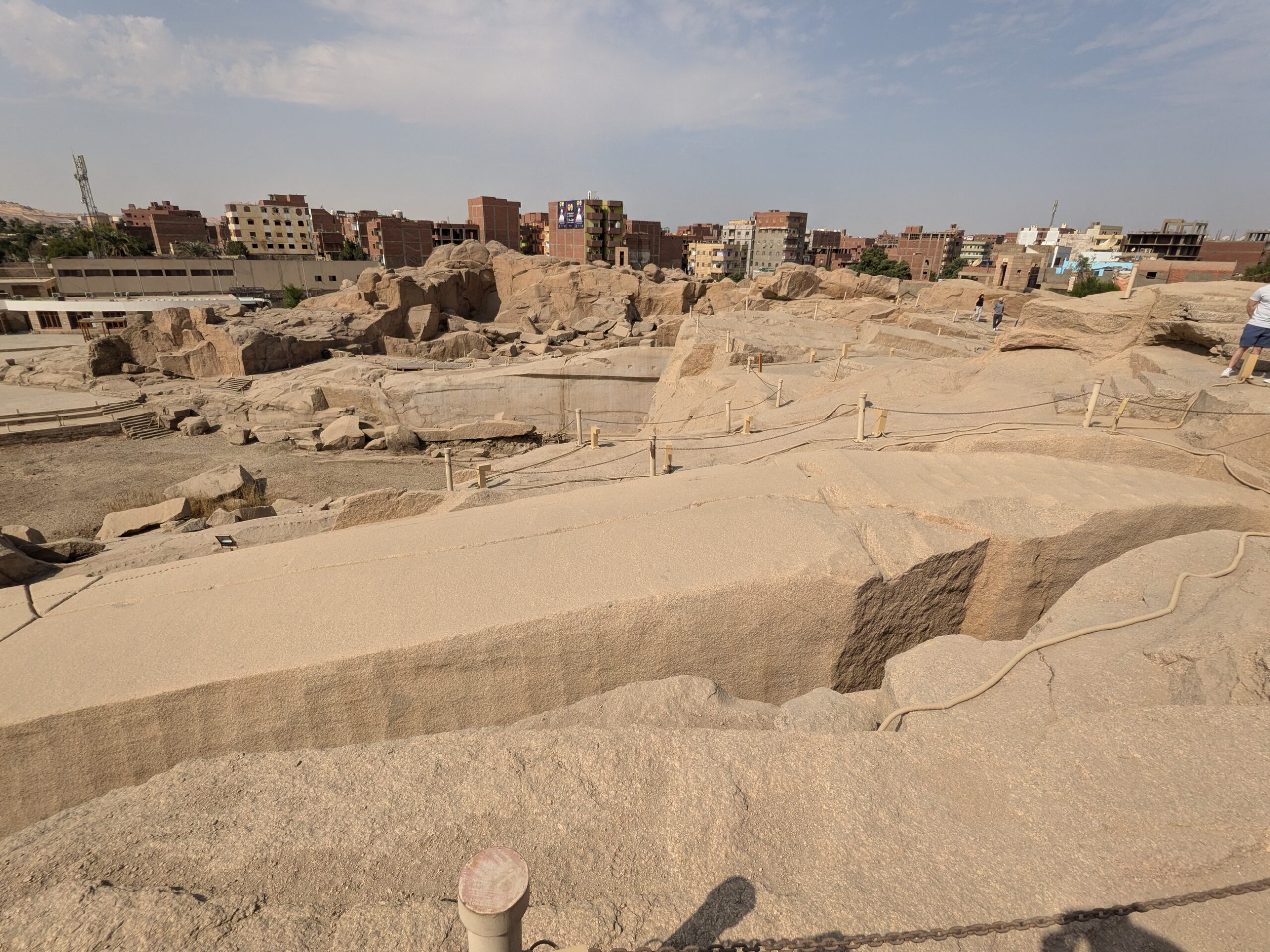
🇪🇬🪨 The Unfinished Obelisk: Egypt’s Monument That Reveals Everything
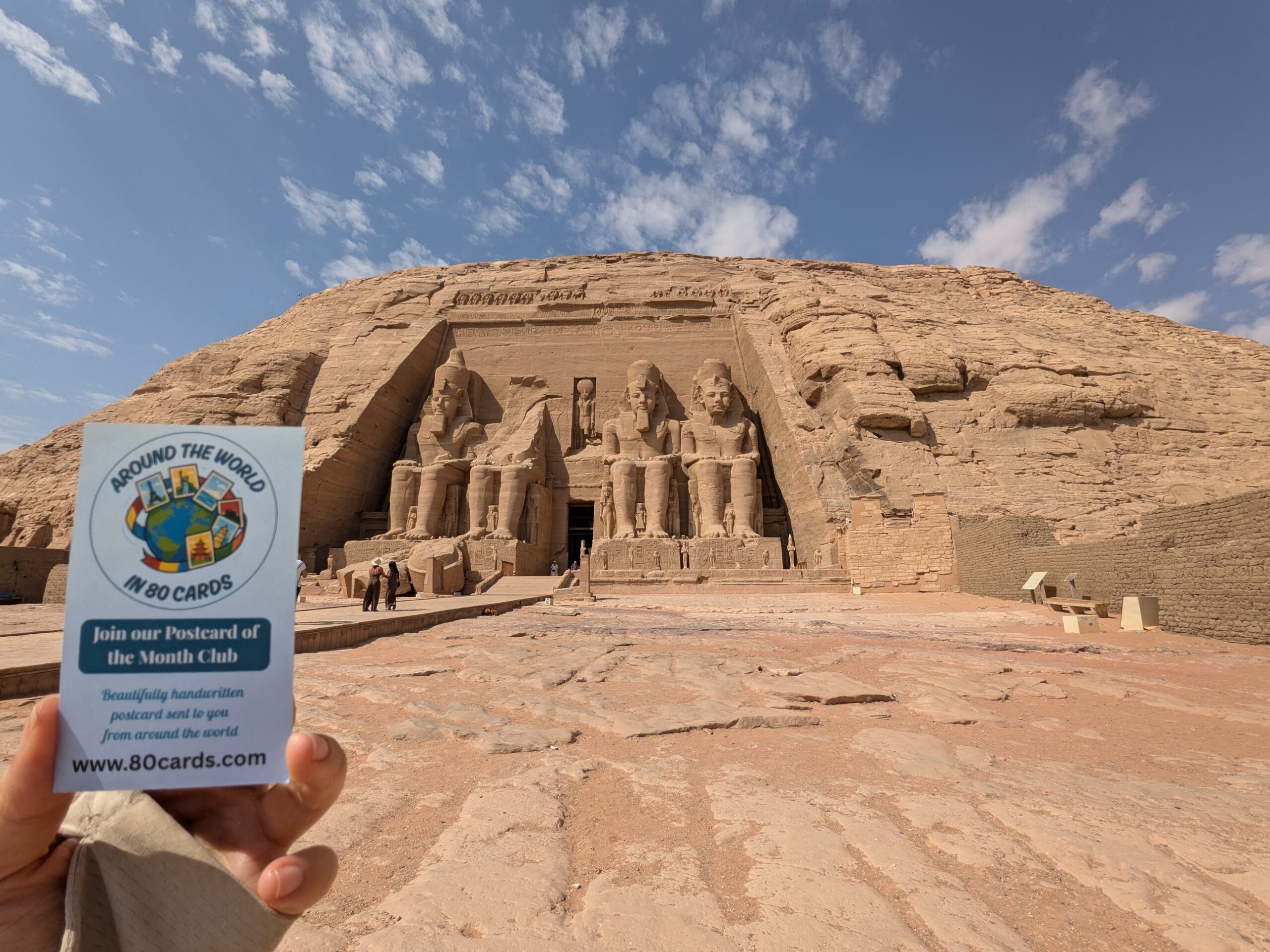
🇪🇬 Abu Simbel: From Pharaoh’s Vision to UNESCO’s Greatest Rescue
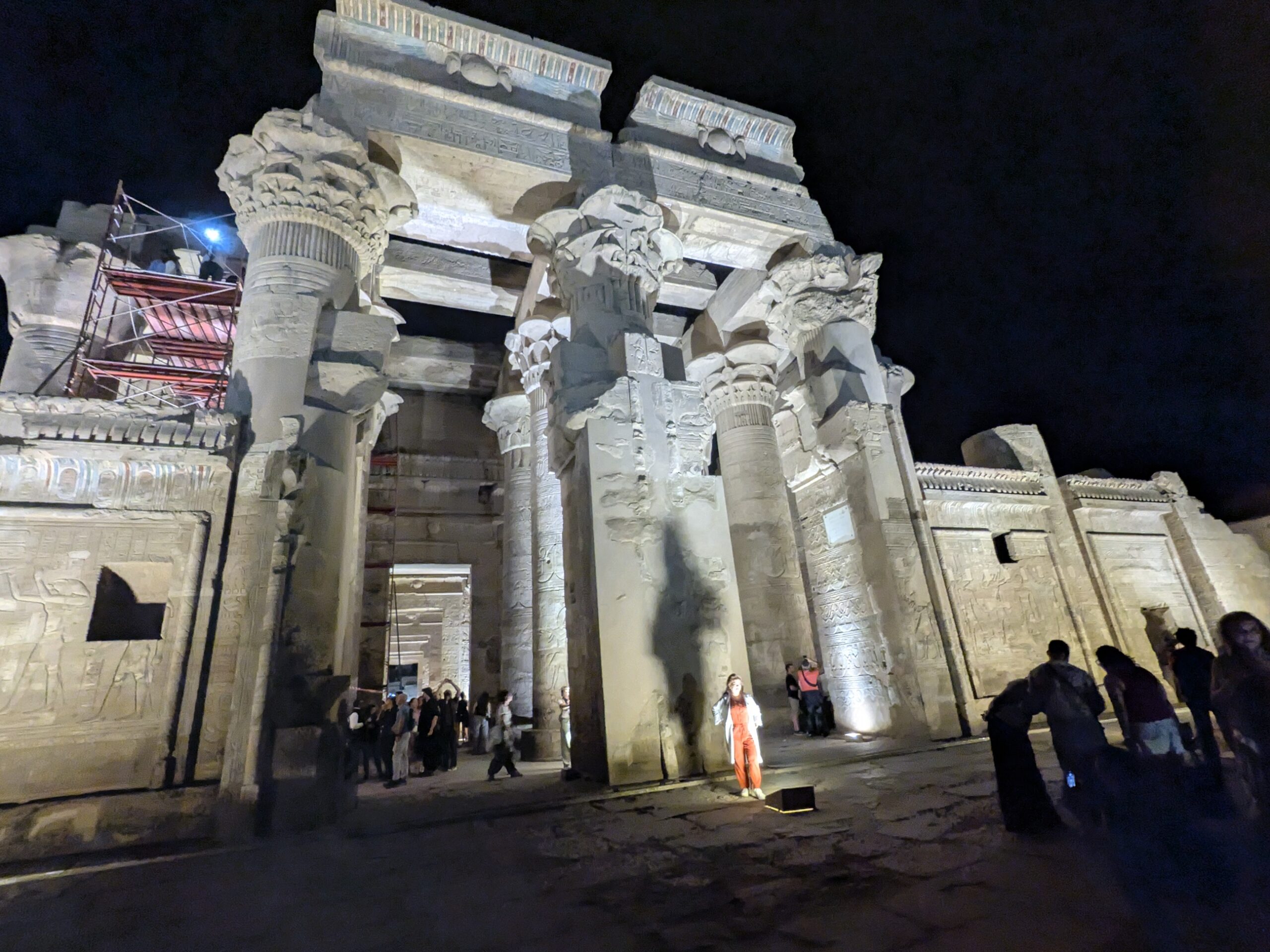
🇪🇬🐊 Kom Ombo: My Favorite Temple on the Nile
🇪🇬🦅 Edfu: Where a God Awaits for his Beloved
🇪🇬 Valley of the Kings: Where the Pharaohs Sleep
🇪🇬 The Temple of Hatshepsut: The Woman who Became King