🇹🇭 Thailand (Mar 2026 Postcard)

Thailand
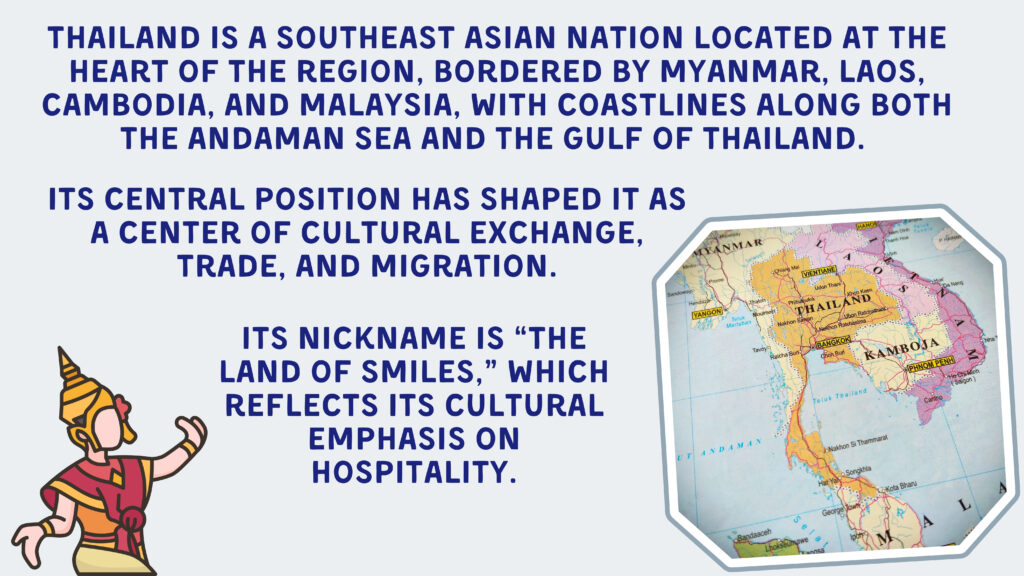
Thailand is a Southeast Asian nation located at the heart of the region, bordered by Myanmar, Laos, Cambodia, and Malaysia, with coastlines along both the Andaman Sea and the Gulf of Thailand.

Its central position has shaped it as a center of cultural exchange, trade, and migration.

its nickname is “The Land of Smiles,” which reflects its cultural emphasis on hospitality.
History of Thailand

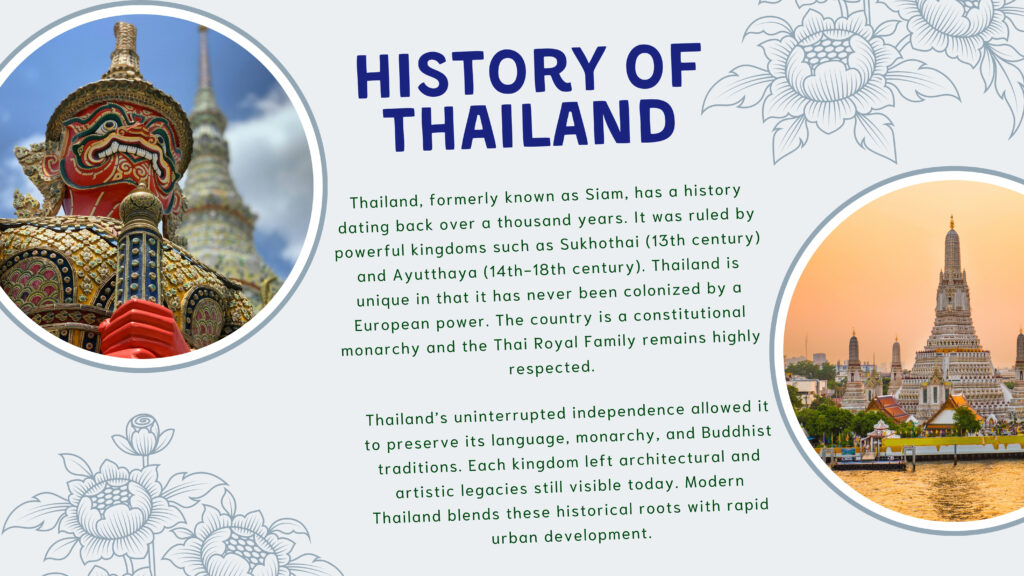
Thailand, formerly known as Siam, has a history dating back over a thousand years. It was ruled by powerful kingdoms such as Sukhothai (13th century) and Ayutthaya (14th-18th century). Thailand is unique in that it has never been colonized by a European power. The country is a constitutional monarchy and the Thai Royal Family remains highly respected.

Thailand’s uninterrupted independence allowed it to preserve its language, monarchy, and Buddhist traditions. Each kingdom left architectural and artistic legacies still visible today. Modern Thailand blends these historical roots with rapid urban development.
40,000 Temples

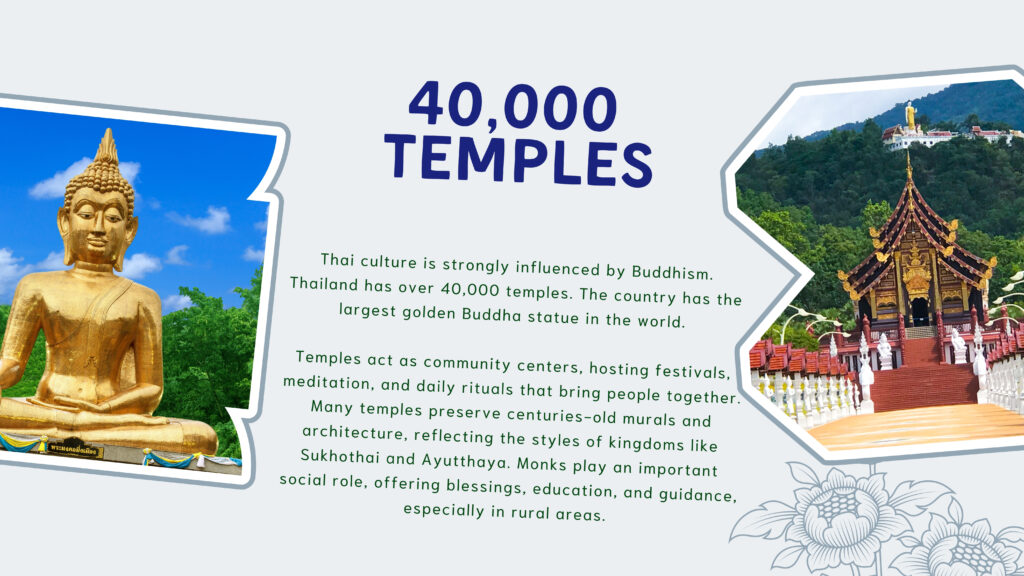
Thai culture is strongly influenced by Buddhism. Thailand has over 40,000 temples. The country has the largest golden Buddha statue in the world. 

Temples act as community centers, hosting festivals, meditation, and daily rituals that bring people together. Many temples preserve centuries‑old murals and architecture, reflecting the styles of kingdoms like Sukhothai and Ayutthaya. Monks play an important social role, offering blessings, education, and guidance, especially in rural areas.
Festivals and Traditions in Thailand

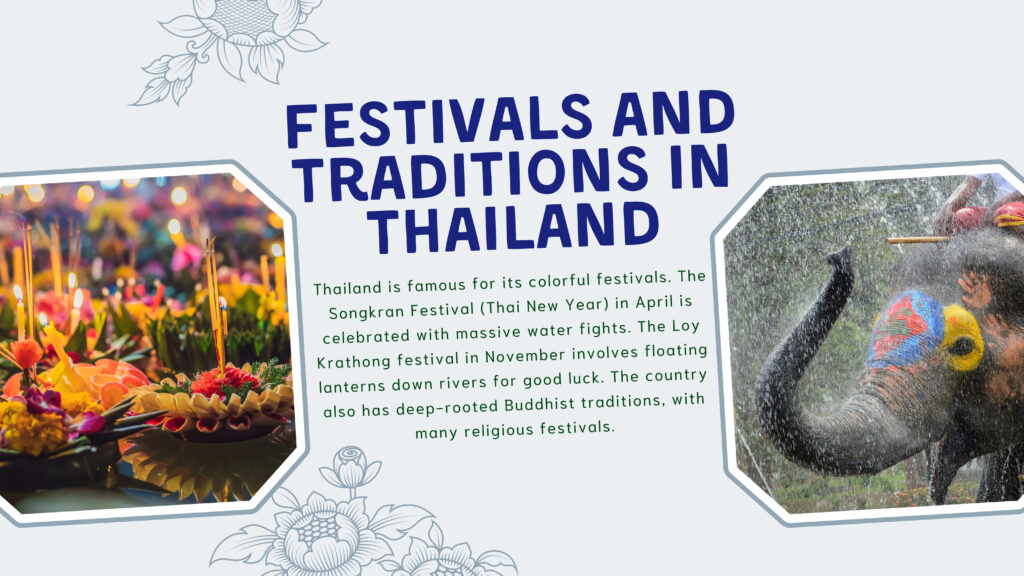
Thailand is famous for its colorful festivals. The Songkran Festival (Thai New Year) in April is celebrated with massive water fights. The Loy Krathong festival in November involves floating lanterns down rivers for good luck. The country also has deep-rooted Buddhist traditions, with many religious festivals.
Muay Thai

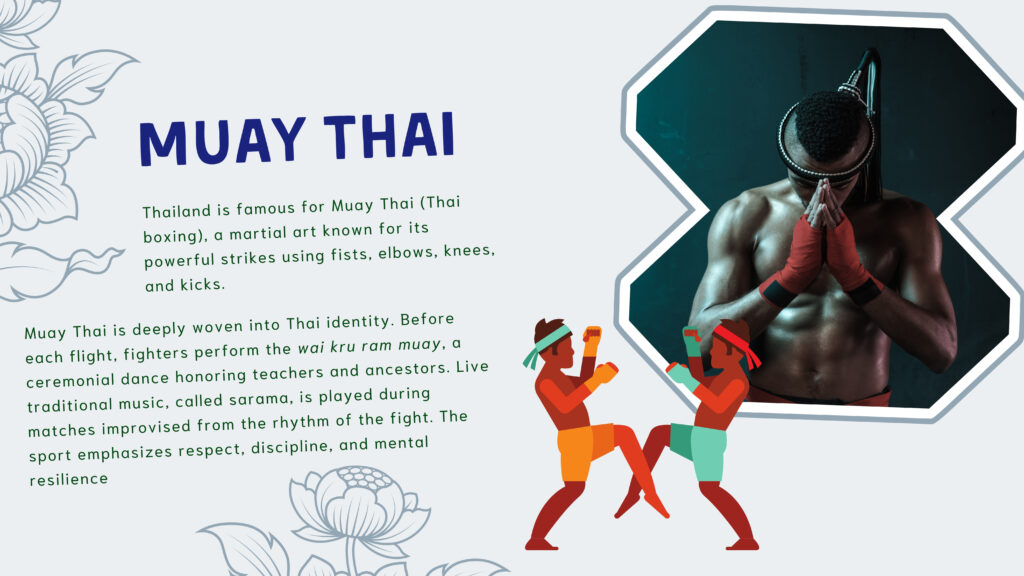
Thailand is famous for Muay Thai (Thai boxing), a martial art known for its powerful strikes using fists, elbows, knees, and kicks.

Muay Thai is deeply woven into Thai identity. Before each flight, fighters perform the wai kru ram muay, a ceremonial dance honoring teachers and ancestors. Live traditional music, called sarama, is played during matches improvised from the rhythm of the fight. The sport emphasizes respect, discipline, and mental resilience
Thai Cuisine

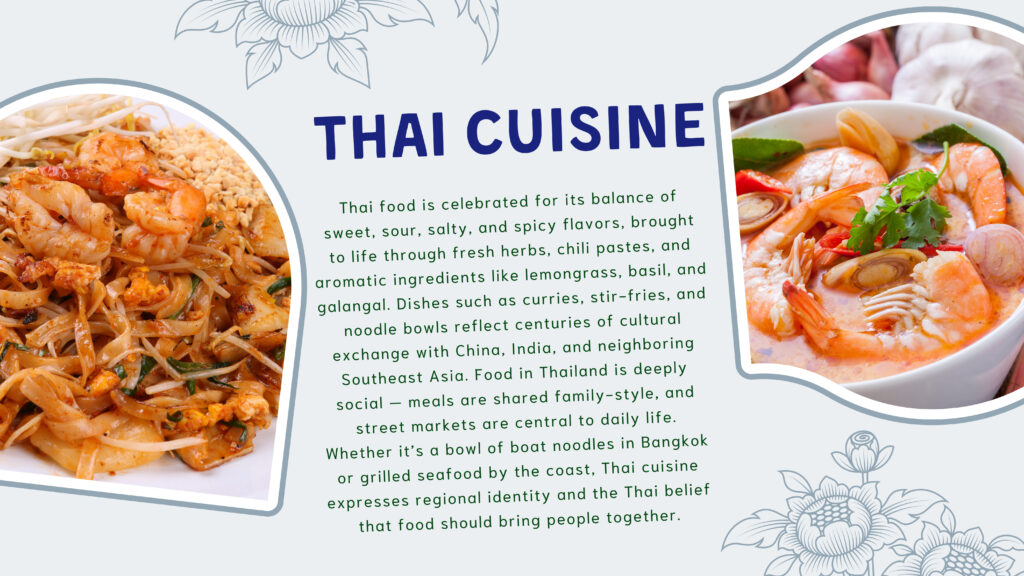
Thai food is celebrated for its balance of sweet, sour, salty, and spicy flavors, brought to life through fresh herbs, chili pastes, and aromatic ingredients like lemongrass, basil, and galangal. Dishes such as curries, stir‑fries, and noodle bowls reflect centuries of cultural exchange with China, India, and neighboring Southeast Asia. Food in Thailand is deeply social — meals are shared family‑style, and street markets are central to daily life. Whether it’s a bowl of boat noodles in Bangkok or grilled seafood by the coast, Thai cuisine expresses regional identity and the Thai belief that food should bring people together.
Nature in Thailand

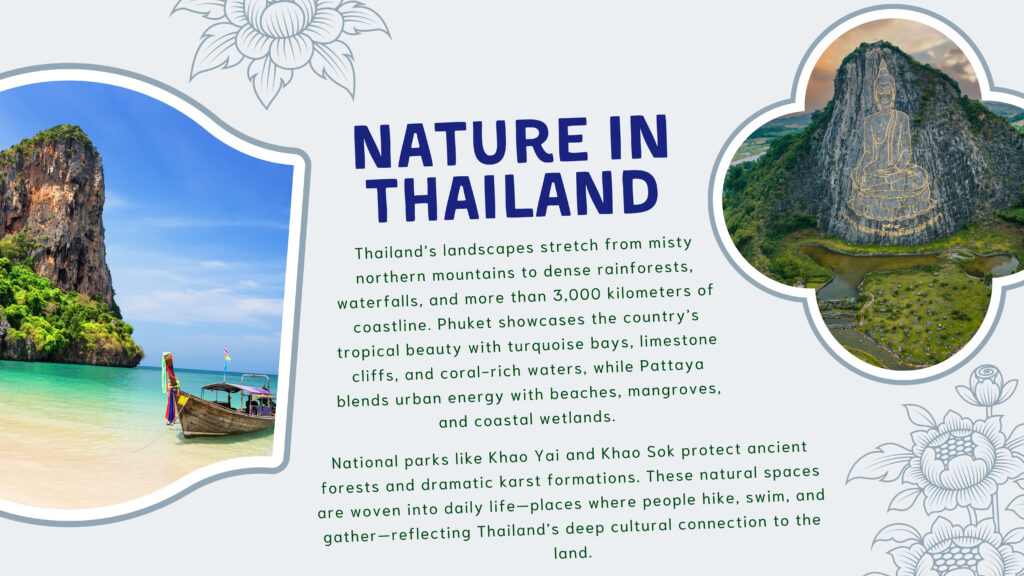
Thailand’s landscapes stretch from misty northern mountains to dense rainforests, waterfalls, and more than 3,000 kilometers of coastline. Phuket showcases the country’s tropical beauty with turquoise bays, limestone cliffs, and coral‑rich waters, while Pattaya blends urban energy with beaches, mangroves, and coastal wetlands.

National parks like Khao Yai and Khao Sok protect ancient forests and dramatic karst formations. These natural spaces are woven into daily life—places where people hike, swim, and gather—reflecting Thailand’s deep cultural connection to the land.
Animals in Thailand

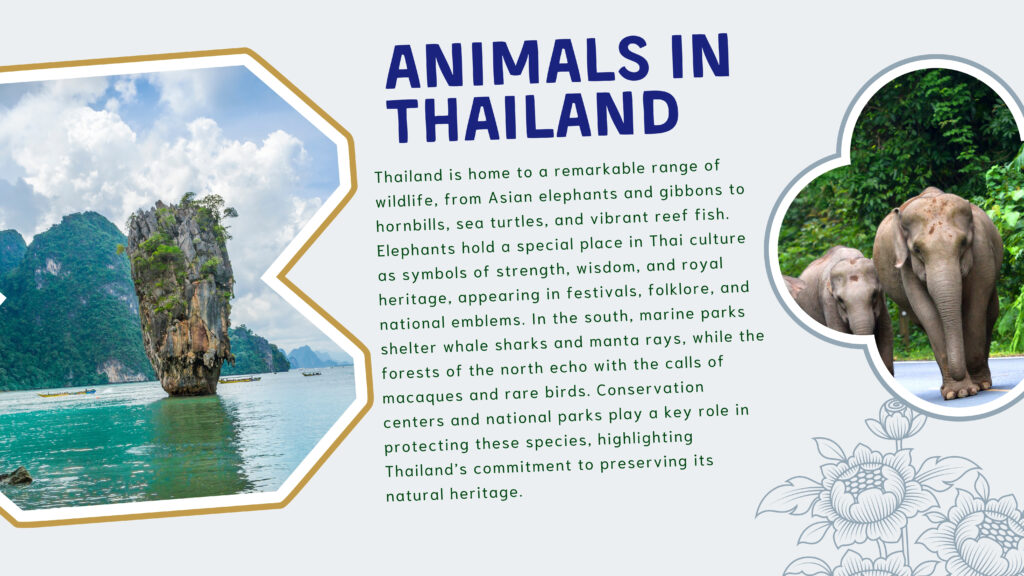
Thailand is home to a remarkable range of wildlife, from Asian elephants and gibbons to hornbills, sea turtles, and vibrant reef fish. Elephants hold a special place in Thai culture as symbols of strength, wisdom, and royal heritage, appearing in festivals, folklore, and national emblems. In the south, marine parks shelter whale sharks and manta rays, while the forests of the north echo with the calls of macaques and rare birds. Conservation centers and national parks play a key role in protecting these species, highlighting Thailand’s commitment to preserving its natural heritage.

Around the World in 80 Cards

A Handwritten Adventure Delivered to Your Door

Scroll to Top